
Pricing Strategies for Selling Custom Tarot Decks Online
- Pricing Strategies for Selling Custom Tarot Decks Online
- Why pricing matters for tarot cards sellers
- Understand all costs before pricing your tarot cards
- Use a cost-plus baseline, then layer strategic pricing
- Consider perceived value and positioning for tarot cards
- Create tiered product offerings to capture more buyers
- Use bundles, subscriptions, and limited runs to increase AOV
- Factor platform fees, shipping, and taxes into final price
- Competitive research: how to price tarot cards against market benchmarks
- Practical pricing models and an example comparison table
- Leverage manufacturing partnerships to improve margins
- How Guangdong Yuhua Playing Cards Co., Ltd. helps tarot cards sellers
- Yuhua product capabilities relevant to tarot decks
- Pricing for wholesale and retailers
- Use promotions strategically without eroding brand value
- Testing and optimizing price over time
- Compliance, claims and trust signals that support pricing
- FAQ — Common questions about pricing tarot cards
- How much should I charge for a custom tarot deck?
- Should I offer free shipping for tarot cards?
- How do limited editions affect pricing?
- Is it better to sell direct-to-consumer or wholesale?
- How can I keep manufacturing costs low without sacrificing quality?
- Next steps & call to action
- Sources and references

Pricing Strategies for Selling Custom Tarot Decks Online
Why pricing matters for tarot cards sellers
Pricing is more than a number on a product page—it communicates quality, targets customers, and determines profitability. For sellers of custom tarot cards, the right pricing strategy balances production costs, perceived value, platform fees, and market positioning. This article walks through practical steps and tested tactics to set prices that attract buyers while protecting margins for sustainable growth.
Understand all costs before pricing your tarot cards
Start with a full cost breakdown to know the bottom line. For custom tarot cards, costs typically include:
- Manufacturing (printing, specialty inks, foil, card stock)
- Packaging (boxes, instruction booklets, tissue, stickers)
- Design and artwork (one-time or ongoing royalties)
- Tooling or plate/setup fees (for custom finishes)
- Shipping & fulfillment (domestic & international rates)
- Platform and payment fees (Etsy, Shopify, Amazon, Stripe, PayPal)
- Marketing and customer acquisition costs (ads, content)
- Overhead (warehousing, returns, quality control)
Calculate cost per unit at various order quantities (MOQ vs scaled production). Many card factories provide lower unit costs at higher volumes—this influences whether you sell single decks direct-to-consumer, run preorders, or wholesale.
Use a cost-plus baseline, then layer strategic pricing
Cost-plus (cost × markup) is the simplest baseline: ensure unit cost + desired profit margin covers operating expenses. For example, if a custom tarot deck costs $7/unit to produce (including packaging) and you target a 50% gross margin, retail price = $7 / (1 - 0.50) = $14. However, tarot cards have wide perceived value variance—so layering strategic pricing is vital.
Consider perceived value and positioning for tarot cards
Perceived value often lets you command higher prices than cost-plus suggests. Key value drivers for tarot decks include:
- Art and artist reputation: limited artist collaborations can justify High Quality pricing.
- Material quality: High Quality card stock, linen finish, gilding, or foiling increases perception.
- Limited editions and numbering: scarcity drives collector pricing.
- Extras: guidebooks, cloth bags, special boxes, or online reading tutorials add value.
Positioning your deck clearly (budget, mid-tier, High Quality/collector) helps set expectations and supports coherent marketing messaging.
Create tiered product offerings to capture more buyers
Tiers allow you to capture a broad audience: budget-conscious buyers, serious practitioners, and collectors. Example tiers for tarot cards:
- Standard Deck: Basic card stock, standard tuck box, digital guidebook.
- Deluxe Deck: High Quality paper, linen finish, printed hardcover guidebook, fabric bag.
- Collector's Edition: Foil/gilded edges, numbered runs, artist signature, handmade packaging.
Each tier should have clear, tangible differences so buyers understand the price gap and can upgrade.
Use bundles, subscriptions, and limited runs to increase AOV
Average order value (AOV) is crucial for profitability. Strategies to increase AOV for tarot cards:
- Bundle deck + guidebook + cloth: packaged discount vs single items.
- Offer subscription or membership for new spreads, digital readings, or card-of-the-month clubs.
- Run limited prints and preorder campaigns with tiered pricing (early bird discounts, signed copies at higher tiers).
Bundling and subscriptions also build customer lifetime value and predictable revenue.
Factor platform fees, shipping, and taxes into final price
Neglecting fees and shipping erodes margins. Typical fees include:
- Marketplace commissions (Etsy, Amazon)
- Payment processing fees (Stripe, PayPal)
- Fulfillment costs (third-party logistics, packaging labor)
- Returns and customer service overhead
Decide whether to show free shipping and bake costs into price, or charge separately. Free shipping can improve conversion but must be calculated precisely.
Competitive research: how to price tarot cards against market benchmarks
Research comparable decks on platforms your buyers use. Look at bestselling tarot cards in similar styles and materials. Focus on:
- List price vs features
- Customer reviews and perceived shortcomings
- Promotions and discount frequency
Competitive research informs where you can undercut or justify higher pricing with clear benefits.
Practical pricing models and an example comparison table
Use these common pricing models and adapt them to your goals:
- Keystone pricing: Retail = 2× wholesale cost. Common for retail distribution.
- Value-based pricing: Price by perceived benefit and willingness to pay.
- Tiered pricing: Multiple SKUs at distinct price points.
Below is an example cost and pricing comparison for three hypothetical tarot deck offerings. Numbers are illustrative; use your factory quotes and shipping data to replace these figures.
| Component | Budget Deck | Deluxe Deck | Collector's Edition |
|---|---|---|---|
| Unit production cost | $4.50 | $8.00 | $18.00 |
| Packaging & extras | $1.00 | $3.00 | $8.00 |
| Shipping & fulfillment (avg) | $2.50 | $3.50 | $5.00 |
| Platform & processing fees | $1.00 | $1.50 | $3.00 |
| Total cost per unit | $9.00 | $16.00 | $34.00 |
| Suggested retail price | $18.00 | $38.00 | $95.00 |
| Gross margin | 50% | 58% | 64% |
Sources for pricing guidance and marketplace fees are listed at article end. Use your own quotes to replace example costs above.
Leverage manufacturing partnerships to improve margins
Manufacturing choices significantly affect price flexibility. Key levers include:
- Order volume: larger runs lower unit cost but increase inventory risk.
- Material selection: FSC certified paper and imported High Quality materials cost more but support High Quality pricing and sustainability claims.
- Automation and quality control: reduce defect rates and returns—protecting margins.
- Manufacturer services: design, tooling, and fulfillment support can cut time-to-market.
Partnering with an experienced card manufacturer gives negotiating power on MOQ, lead times, and custom finishing options.
How Guangdong Yuhua Playing Cards Co., Ltd. helps tarot cards sellers
Guangdong Yuhua Playing Cards Co., Ltd., founded in 2014, specializes in the R&D, design, and mass custom production of playing cards, game cards, and color-printed packaging. With a 6,000㎡ intelligent facility, Yuhua offers advanced, automated card production lines capable of 1,000,000+ units per month. Core strengths include FSC® certified materials, ISO 9001 quality control, a defect rate under 0.5%, and over 20 patents. Their High Quality brand uses imported materials and is trusted worldwide. Yuhua serves global markets with custom card solutions for casinos, games, education, and more—delivering fast, high-quality results with professional support. They are committed to providing customers with high-quality and efficient playing card production services.
How this translates to pricing advantage for your tarot cards:
- Lower unit cost at scale—enables healthier wholesale margins or more competitive retail pricing.
- High-quality materials (FSC certified, imported papers) support High Quality pricing and sustainability claims.
- ISO 9001 and low defect rates reduce returns and hidden costs.
- Custom OEM & ODM capabilities let you offer unique finishes and collector editions that command higher prices.
Yuhua product capabilities relevant to tarot decks
Yuhua’s core product offers include OEM Playing Card, ODM Tarot cards, custom Game cards, and Learning Flash cards OEM. Their competitive strengths are rapid mass production, professional design & R&D support, adherence to international material and quality standards, and the ability to produce large volumes with consistent quality—making them a suitable manufacturing partner whether you’re launching a single limited run or scaling to global retail.
Pricing for wholesale and retailers
If you plan to sell tarot decks through retailers, prepare a wholesale price that leaves room for retail markups. Practices to follow:
- Offer keystone wholesale (roughly 50% of suggested retail) or tiered wholesale discounts by volume.
- Provide clear MAP (Minimum Advertised Price) policies to protect brand value.
- Include retailer-focused collateral (displays, sample decks, marketing assets) to justify pricing.
Use promotions strategically without eroding brand value
Discounts can drive traffic but overuse trains buyers to wait for sales. Alternatives to steep discounts:
- Time-limited bundles or added-value gifts (signed insert, free sticker sheets).
- Exclusive early-bird pricing for preorders with limited quantities.
- Loyalty or VIP pricing for repeat customers or newsletter subscribers.
Testing and optimizing price over time
Use data to refine pricing: A/B test price points, landing pages, and bundle offers. Monitor conversion rate, return rate, and lifetime value. For example, a small price increase with no change in conversion meaningfully improves margin, while a price cut that boosts volume may be worthwhile if acquisition cost falls.
Compliance, claims and trust signals that support pricing
Use certifications and transparent claims to justify higher prices: FSC certification, ISO 9001 quality processes, and clear product specifications reduce buyer friction. Display production lead times and return policies clearly—customers paying High Quality prices expect clear service standards.
FAQ — Common questions about pricing tarot cards
How much should I charge for a custom tarot deck?
There’s no single answer. Calculate total cost per unit (production + packaging + shipping + fees + marketing) and add a target margin. Then consider perceived value: simple decks may retail $15–25, High Quality decks $40–100+, and collector editions $100+. Use tiers to serve different buyers.
Should I offer free shipping for tarot cards?
Free shipping increases conversion but must be priced in. For low-cost decks, consider a free-shipping threshold (e.g., orders over $50) to protect margins and increase AOV.
How do limited editions affect pricing?
Limited editions allow significant markups due to scarcity and collectibility. Add unique features (numbering, signatures, special foil) and communicate limited quantities clearly.
Is it better to sell direct-to-consumer or wholesale?
Direct-to-consumer typically yields higher margins per unit but requires marketing investment. Wholesale drives volume and distribution but lowers per-unit margin. Many brands combine both: sell direct for margin and wholesale for reach.
How can I keep manufacturing costs low without sacrificing quality?
Negotiating higher volumes, standardizing sizes and materials, and selecting automated factories with strict quality control help. Working with an experienced manufacturer like Guangdong Yuhua can lower defect rates and enable efficient large-scale production.
Next steps & call to action
If you’re ready to price and produce a custom tarot deck, start by collecting accurate quotes for unit cost, packaging, and shipping. Consider requesting samples to validate material and finish choices. For manufacturing and OEM/ODM support, Guangdong Yuhua Playing Cards Co., Ltd. offers design, FSC-certified materials, ISO 9001 processes, and mass-production capability to scale your tarot cards from prototype to global distribution.
Contact customer service or view Yuhua’s product options to get a tailored quote and timeline for your tarot cards project. Our team can help map production cost to retail pricing and suggest tiered product strategies to maximize profit.
Sources and references
- Shopify — Guides on pricing strategies and how to price products (Shopify blog).
- Etsy Seller Handbook — Fees and listing guidance for handmade and custom products.
- Forest Stewardship Council (FSC) — Information on certified materials and claims.
- ISO.org — Overview of ISO 9001 quality management systems.
- Industry marketplace observations — common tarot deck retail pricing on major platforms (market research conducted by sellers and public listings).
Tarot Card Packaging Ideas for Custom Playing Cards
Integrating Personalized Playing Cards into Merch Stores
Custom Made Playing Cards: Complete Buyer's Guide for Businesses
How to start the best marked playing cards business in France ?
About customized services
What is the minimum order quantity?
We do not have a strict minimum order quantity. Since we are a custom offset printing company, we recommend a minimum order of 500 sets, as the material costs are the same, but the printing setup costs are higher.
However, if your order quantity is less than 300 sets, our sales team will usually work with customers to help customers find the most competitive options.
What is the minimum order quantity for Private Label projects?
Our minimum order quantity usually starts at 500 pairs. However, we can handle smaller orders depending on the specific project requirements.
About product selection
What materials do you use for your cards?
We use high-quality, durable materials to ensure the best finish and longevity for your cards. Options include standard cardstock, premium finishes, and eco-friendly materials.
Can I see a sample before a full order?
Yes, we will provide a prototype sample for your review to ensure you are satisfied with the final product.
About cooperation process
How do you ensure the quality of your cards?
We implement strict quality control measures at every stage of production. Our team conducts thorough inspections to ensure each card meets our high standards before shipping.
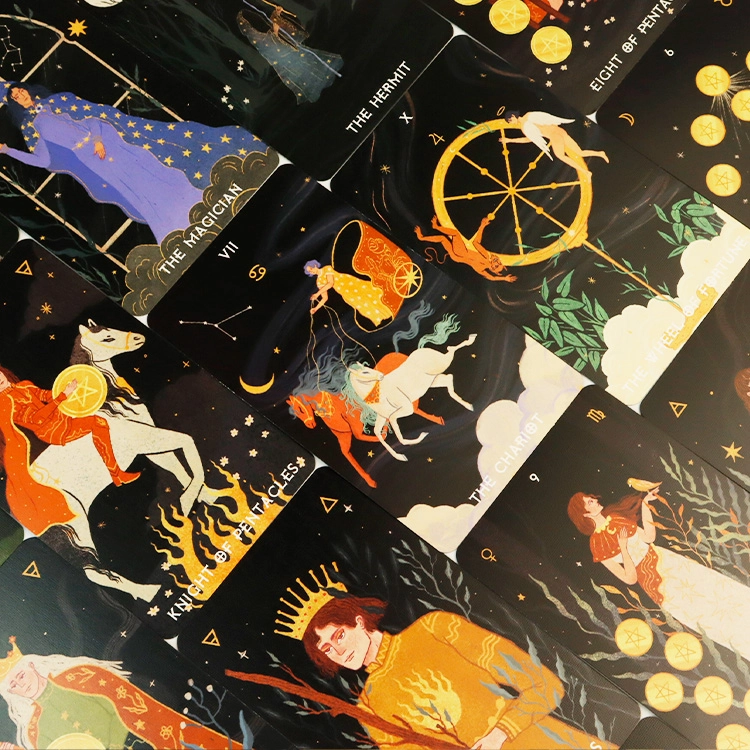
High Quality Tarot Cards with Sleeve Box Packaging | Premium Custom Tarot Deck Set for Enhanced Presentation & Protection

OEM Card Game Manufacturer - Wholesale Custom Printing for Tarot, Poker & Board Game Cards
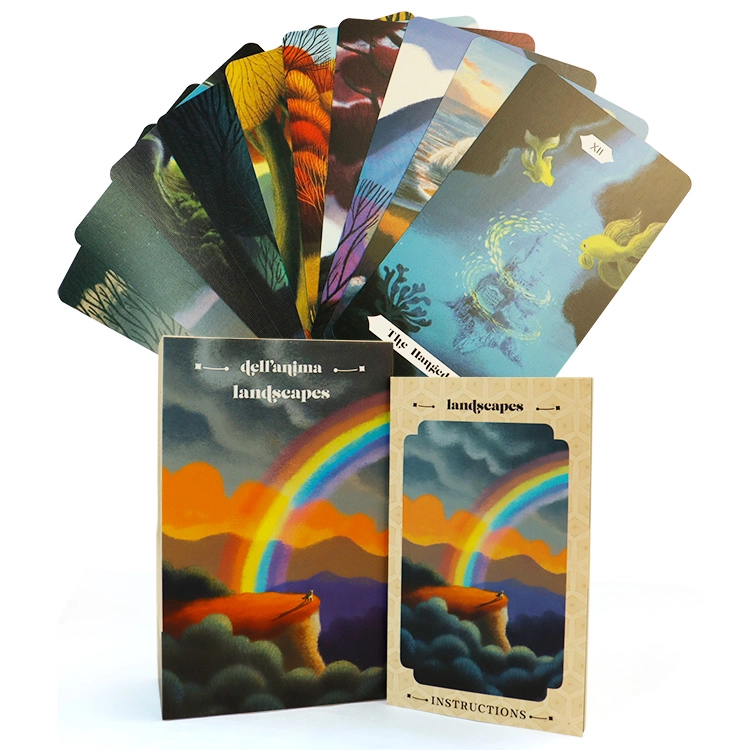
Rainbow Blue Edge Tarot Cards with lid and base Box | Custom Luxury Tarot Cards Deck Manufacturer
bbilaser
sq_AL