
The latest trends for question cards in us 2026 | Yuhua Ultimate Insights
- Introduction: Why question cards matter in the US market
- Trend 1 — Gamification and educational adoption
- Trend 2 — Hybrid physical-digital experiences (QR, AR, NFC)
- Trend 3 — Personalization and mass customization
- Trend 4 — Sustainability and certified materials
- Trend 5 — Accessibility and inclusive design
- Trend 6 — The rise of therapy and wellbeing decks
- Trend 7 — Retail and subscription models for evergreen engagement
- Trend 8 — High Quality finishes and tactile differentiation
- Trend 9 — Compliance and content provenance
- Production & capabilities — Why manufacturing matters for 2026
- Design considerations for effective question cards
- Quality, testing, and delivery expectations
- Cost drivers and budgeting for 2026 orders
- Competitive comparison: Traditional vs 2026 question cards
- How to select a manufacturer for US 2026 projects
- Practical roadmap for launching custom question card products
- Metrics and analytics for hybrid decks
- Case use examples — where question cards succeed in the US
- Conclusion: What US buyers should prepare for in 2026
- Sources
- Frequently Asked Questions
Introduction: Why question cards matter in the US market
Question cards — compact decks designed to prompt conversation, assessment, learning, or play — have evolved far beyond party icebreakers. In the US, demand now spans education, corporate training, therapy, social apps, and tabletop gaming. This article explains the main trends through 2026, and how manufacturers and buyers can act on them. We also present practical comparisons and production considerations for businesses seeking custom question cards.
Trend 1 — Gamification and educational adoption
Education and training buyers increasingly choose question cards to make learning active and social. Teachers, corporate trainers, and instructional designers favor decks that break a lesson into rapid prompts, retrieval practice, or scenario-based questions. The rise of active learning approaches in K–12 and corporate L&D has pushed question cards into classroom activity kits, employee onboarding packs, and assessment tools.
Trend 2 — Hybrid physical-digital experiences (QR, AR, NFC)
Physical question cards are integrating with digital layers. QR codes that link to video explanations, augmented reality (AR) overlays that show additional content, and NFC tags for instant app pairing are now common custom options. These hybrid formats retain the tactile advantages of cards while enabling up-to-date content, multimedia, and analytics — especially for marketers and educators who need usage tracking.
Trend 3 — Personalization and mass customization
Brands and educators want tailored question sets for target audiences. Advances in automated printing and variable data printing enable providers to customize decks by name, proficiency level, language, or campaign. High-volume, cost-effective customization (for example variable questions per deck) is now feasible for subscription boxes and classroom sets thanks to modern digital workflows.
Trend 4 — Sustainability and certified materials
Sustainability is a purchasing factor for many US organizations. Buyers prefer FSC® certified papers, recycled cores, and eco-friendly inks. Certification and transparent supply chains are becoming procurement requirements for schools, corporate CSR programs, and retailers. Manufacturers highlighting FSC certification and low-waste production stand out.
Trend 5 — Accessibility and inclusive design
Accessibility is no longer optional. Larger type, high-contrast color choices, tactile indicators, and multilingual decks make question cards usable in diverse classrooms and social settings. Designers are adopting plain-language prompts and clearly structured decks to accommodate neurodiverse groups and non-native English speakers.
Trend 6 — The rise of therapy and wellbeing decks
Mental health professionals, coaches, and wellness brands use question cards to facilitate reflection, CBT-style prompts, and guided conversations. These decks often follow evidence-informed frameworks and are packaged for clinicians or consumer self-help. Clear sourcing, expert validation, and ethical guidance in card text increase credibility.
Trend 7 — Retail and subscription models for evergreen engagement
Question cards have grown as retail items and subscription offerings. Monthly or seasonal decks — for families, date-night boxes, or team-building kits — keep customers engaged and create predictable revenue. Retail success often depends on attractive packaging, perceived replay value, and the ability to update or expand card sets.
Trend 8 — High Quality finishes and tactile differentiation
Touch and durability matter for repeat-use decks. High Quality finishes such as soft-touch coating, linen textures, rounded corners, and foil highlights are increasingly requested. Specialty coatings improve shuffle feel and longevity, valuable for classroom and commercial use.
Trend 9 — Compliance and content provenance
Institutions buying question cards (schools, hospitals, corporations) need clear content provenance and compliance with privacy guidelines when cards link to digital content. Buyers expect manufacturers to provide documentable quality control (e.g., ISO 9001 processes) and low defect rates for large orders.
Production & capabilities — Why manufacturing matters for 2026
For brands and educators, the feasibility of complex customizations depends on a manufacturer’s scale and certifications. Guangdong Yuhua Playing Cards Co., Ltd., founded in 2014, operates a 6,000㎡ intelligent facility with advanced automated card lines capable of 1,000,000+ units per month. Yuhua’s core strengths — FSC® certified materials, ISO 9001 quality control, a defect rate under 0.5%, and over 20 patents — support fast, high-quality, large-volume custom question card production for US clients.
Design considerations for effective question cards
Good card design balances readability, flow, and durability. Recommended elements include concise prompts (one idea per card), clear category color-coding, numbered sets for progressive difficulty, and QR/NFC placement that doesn’t obscure text. For educational decks, align questions to learning objectives and include answer guides or facilitator notes.
Quality, testing, and delivery expectations
Buyers should confirm sample quality, run small pilot orders, and request QC documentation. For high-volume deployments, expect lead times that reflect customization complexity — digital variable printing shortens lead times compared to full offset runs. Reliable suppliers provide project timelines, preflight proofs, and post-production quality reports.
Cost drivers and budgeting for 2026 orders
Primary cost drivers include material grade (FSC vs. standard paper), finishing (coatings, foils), digital features (QR/AR/NFC), packaging complexity, and order quantity. Bulk orders reduce unit cost, while heavy personalization and low-volume SKUs increase per-unit pricing. Work with suppliers who can show clear cost breakdowns and scalable proof-of-concept runs.
Competitive comparison: Traditional vs 2026 question cards
| Feature | Traditional Question Cards | 2026 Trend-Forward Question Cards |
|---|---|---|
| Interactivity | Text-only prompts | QR/AR/NFC-enabled multimedia |
| Customization | One-size decks, batch printing | Variable data, name & level personalization |
| Materials | Standard coated card stock | FSC® certified, recycled cores, specialty coatings |
| Accessibility | Limited (small fonts, single language) | Large type, multilingual, tactile cues |
| Use cases | Party/icebreakers | Education, therapy, training, retail subscriptions |
How to select a manufacturer for US 2026 projects
Prioritize partners who can demonstrate: certified sustainable materials (FSC®), ISO 9001 quality systems, consistent low defect rates, sample capability with hybrid features (QR/AR/NFC), and experience with bilingual or accessibility-focused printing. Verify production scale if you plan phased rollouts — manufacturers like Guangdong Yuhua offer high-volume capacity and patented production processes that lower lead time and improve consistency.
Practical roadmap for launching custom question card products
Step 1: Define objectives (education outcomes, play mechanics, therapy goals). Step 2: Draft content and map to deck structure (categories, difficulty). Step 3: Prototype with physical samples and digital features. Step 4: Pilot with target users for UX feedback. Step 5: Scale production with QC checkpoints and marketing-ready packaging.
Metrics and analytics for hybrid decks
When cards link to digital assets, measure scan rates (QR), session duration, user progression, and retention. These metrics inform content updates and help demonstrate impact to buyers like schools or corporate clients. Work with vendors that can provide basic analytics or integrate with existing LMS systems for education customers.
Case use examples — where question cards succeed in the US
Examples include: classroom retrieval practice decks for vocabulary, HR onboarding kits with scenario prompts, therapy decks for CBT exercises, and retail subscription boxes with monthly conversation starters. Each use case benefits from a different emphasis — durability and repeat-use for classrooms, confidentiality and evidence-base for therapy, and attractive packaging for retail.
Conclusion: What US buyers should prepare for in 2026
Question cards in 2026 will be far more versatile than simple conversation starters. Buyers should expect hybrid physical-digital products, stronger emphasis on sustainability and accessibility, and widespread demand for personalization. Partnering with experienced manufacturers that have certified materials, scalable production, and quality systems (e.g., FSC®, ISO 9001, low defect rates) will reduce risk and accelerate time-to-market. Guangdong Yuhua’s production capabilities exemplify the type of supplier needed to meet these next-generation requirements.
Sources
- Guangdong Yuhua Playing Cards Co., Ltd. company profile and production data (company-provided specifications, 2014–2024)
- Forest Stewardship Council (FSC) — certification standards and market expectations for sustainable paper (FSC International)
- ISO — ISO 9001 quality management system guidance (International Organization for Standardization)
- Industry analyses on tabletop and card game trends — major market research firms' reports (e.g., Grand View Research, Statista) and public white papers on gamification in education
- Reports and articles on AR/QR adoption in retail and education (industry press and technology analyst summaries)
Frequently Asked Questions
Q: What are question cards and who buys them?A: Question cards are printed decks with prompts used for conversation, learning, assessment, therapy, or play. Buyers include educators, corporate trainers, therapists, retailers, and consumer brands.
Q: How much does a custom question card deck cost?A: Costs vary by quantity, materials (FSC vs. standard stock), finishing, and added digital features like QR/AR/NFC. Bulk offset printing reduces per-unit cost; variable data or short runs cost more. Request a detailed quote from suppliers with your specs.
Q: Can question cards include digital features like AR or NFC?A: Yes. QR codes, AR markers, and NFC tags can be integrated. Work with manufacturers experienced in preflight testing to ensure scanning reliability and robust digital asset hosting.
Q: What turnaround time should I expect for a customized deck?A: Turnaround depends on complexity. Simple custom decks can take 3–6 weeks; decks with heavy personalization, digital features, or specialty packaging may need 8–12 weeks. High-volume orders can be scheduled for continuous production with reputable suppliers.
Q: How do I ensure my question cards meet accessibility standards?A: Specify large font sizes, high-contrast palettes, simple language, and tactile cues. Ask manufacturers for accessibility proofing and test prototypes with representative users.
Q: Are sustainable materials available for custom decks?A: Yes. Many manufacturers use FSC® certified paper, recycled cores, and eco-friendly inks. Verify certification claims and request material certificates.
Q: What quality controls should I ask for?A: Request ISO 9001-aligned quality procedures, sample approvals, defect rate targets, and post-production inspection reports. Suppliers should provide clear QC documentation.
Q: How can I measure the impact of hybrid question cards?A: Track QR/NFC scan rates, session time, completion rates, and user feedback. For education, measure learning gains against learning objectives; for marketing, track conversion and engagement metrics.
Eco-Friendly Materials for Sustainable Tarot Cards
Top 10 traditional tarot cards for sale Manufacturers and Supplier Brands
Best Custom Playing Cards for Magicians and Cardists
Lead Times, Order Sizes & Pricing for Professional Playing Cards
About cooperation process
Do you accept international orders?
Yes, we accept orders from around the world! Shipping costs and delivery times may vary, so please contact us for specific details related to your location.
How do you ensure the quality of your cards?
We implement strict quality control measures at every stage of production. Our team conducts thorough inspections to ensure each card meets our high standards before shipping.
About customized services
What is the minimum order quantity?
We do not have a strict minimum order quantity. Since we are a custom offset printing company, we recommend a minimum order of 500 sets, as the material costs are the same, but the printing setup costs are higher.
However, if your order quantity is less than 300 sets, our sales team will usually work with customers to help customers find the most competitive options.
About logistics
Can you handle shipping and fulfillment?
Yes! We offer comprehensive fulfillment services, including storage, packing, and shipping. You can rely on us to ensure your cards reach their destination safely and on time.
About price and payment
How can I get a quote?
Getting a quote is easy! Simply fill out our contact form or call us directly with your project details, and we’ll get back to you with a tailored quote promptly.
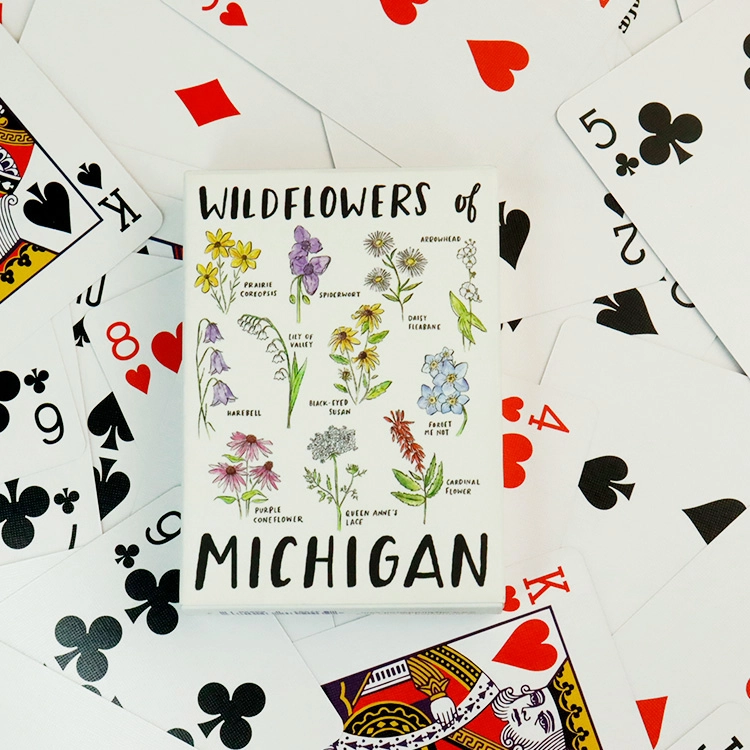
High Quality Eco-Friendly Durable Personalized Design Wildflowers Playing Cards with Custom Design Logo and Box
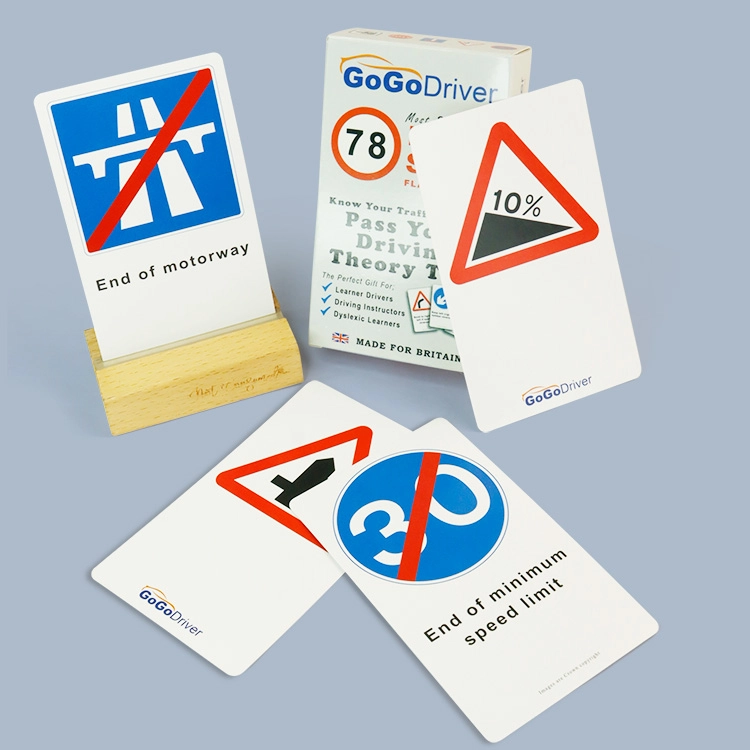
OEM Custom Driving Theory Cards | Personalized Traffic Rules & Test Prep Flashcards in Multiple Languages for Wholesale
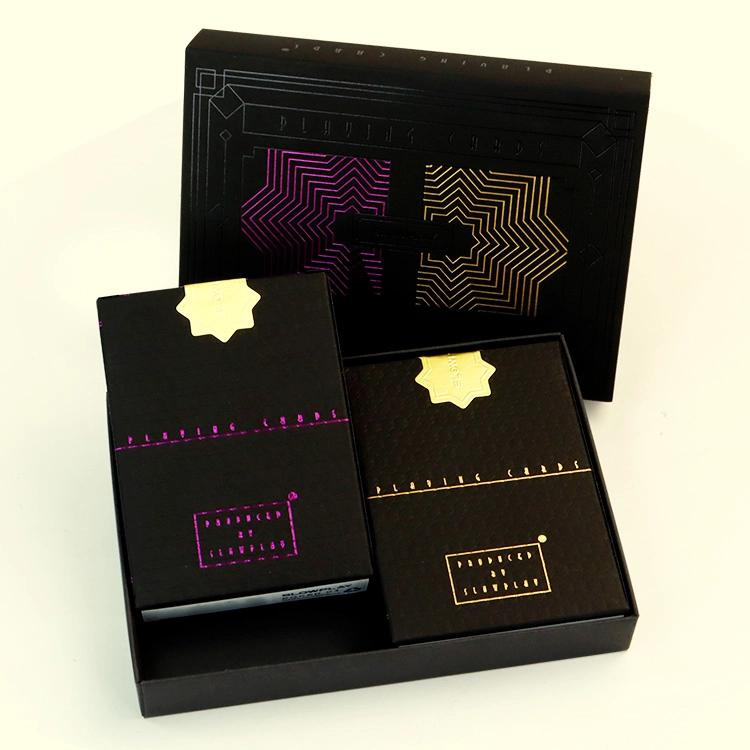
Custom Printing Luxury Two Sets Plastic Poker Playing Cards with Customized Packing
bbilaser
sq_AL