Adding QR Codes and Interactivity to Playing Cards
- Why QR Codes and Interactivity Matter in Modern Playing Cards
- customize playing cards: aligning product features with customer expectations
- How QR Codes Work When You Customize Playing Cards
- customize playing cards: QR code types, error correction and print considerations
- Design and Technical Considerations for Custom Interactive Decks
- customize playing cards: placement, size, contrast, and scannability best practices
- Interactivity Beyond QR: NFC, AR, Variable Data
- customize playing cards: choosing between QR, NFC, AR and variable-data printing
- Production, Quality Control and Durability When You Customize Playing Cards
- customize playing cards: materials, lamination, defect control and testing
- Use Cases, ROI and Measurement
- customize playing cards: tracking engagement, conversions and retention metrics
- Why Choose Guangdong Yuhua Playing Cards Co., Ltd. for Custom Projects
- customize playing cards: Yuhua's production capabilities, certifications and product lines
- Implementation Checklist: From Concept to Delivery
- customize playing cards: planning, prototyping, approval and mass production
- Costs, Lead Times and Typical Timelines
- customize playing cards: budgeting for samples, tooling, print and post-production
- FAQ — Frequently Asked Questions
- customize playing cards: common questions about QR codes and interactive cards
- Contact and Next Steps
- customize playing cards: get a quote, request samples or technical consultation
- References
Why QR Codes and Interactivity Matter in Modern Playing Cards
customize playing cards: aligning product features with customer expectations
Consumers and businesses increasingly expect physical products to connect to digital experiences. For playing cards, adding QR codes, NFC, augmented reality (AR) triggers or variable-data printing converts a static deck into a gateway for tutorials, authentication, loyalty programs, multimedia storytelling, or live scoreboards. Designers and brand managers who want to customize playing cards must understand the practical trade-offs between cost, durability, user experience and data capabilities. This article gives a step-by-step, production-aware view so product owners, marketers, and procurement teams can plan and execute interactive decks that work at scale.
How QR Codes Work When You Customize Playing Cards
customize playing cards: QR code types, error correction and print considerations
QR codes encode data visually and are decoded by camera-equipped devices. For printed cards you can choose between static QR codes (a fixed URL or code printed directly) and dynamic QR codes (points to a short redirect URL that can be changed post-print). Important print considerations include minimum module size, contrast, quiet zone and error correction level. Higher error correction levels (e.g., level M or Q) increase scan reliability when the code is small, curved, or subject to wear, but reduce data capacity and require slightly larger printed area. For production, factor in ink spread (dot gain) and substrate absorption: coatings, lamination and UV varnish change visual contrast and may affect scanability.
Design and Technical Considerations for Custom Interactive Decks
customize playing cards: placement, size, contrast, and scannability best practices
Design rules that improve user experience and reduce support requests:
- Size: Keep a minimum module size of 0.8–1.0 mm on coated stocks; increase modules for textured stocks or if frequent wear is expected.
- Contrast: Use high-contrast colors (dark code on light background); avoid metallic inks unless tested for reflectivity.
- Quiet zone: Maintain clear margins around the code at least 4 modules wide.
- Placement: Put codes on a flat, frequently visible face (for game cards the back or inside tuck box often works better than rounded pips).
- Error handling: Use a dynamic short URL so you can update landing pages if content moves; include a human-readable backup URL or short code for accessibility.
Always prototype the printed code on each final stock and finish. Real-world scanning tests across common phone models (iOS and Android) are essential; several phones perform differently under low light or glare.
Interactivity Beyond QR: NFC, AR, Variable Data
customize playing cards: choosing between QR, NFC, AR and variable-data printing
QR is low-cost and universally supported, but other technologies may better serve specific use cases:
| Method | Interactivity Level | Relative Cost | Durability / Lifecycle | Best Use Cases |
|---|---|---|---|---|
| Printed QR Code | Medium (web/video/redirect) | Low | Depends on finish; susceptible to wear | Tutorials, product authentication, marketing links |
| Dynamic QR (short URL, analytics) | Medium+ (trackable) | Low–Medium (hosting/management costs) | Same as printed QR | Campaigns, A/B content, post-launch updates |
| NFC Tag Embedded | High (tap-to-open; credentials) | Medium–High (tag cost, embedding) | High (tags durable; depends on placement) | Authentication, secure access, High Quality experiences |
| Augmented Reality (AR Marker) | Very High (3D content, animations) | Medium–High (development cost) | High (marker is printed but AR layer is digital) | Brand storytelling, games, collectible expansions |
| Variable Data Printing (VDP) | Medium (unique codes per card) | Medium–High (digital press cost) | High | Lotteries, personalized decks, unique redemption codes |
Choose a method based on project goals: QR for broad access and low cost; NFC for frictionless High Quality taps; AR for immersive brand narratives; VDP for mass-unique campaigns. Combining techniques (e.g., QR + unique VDP code) is common and powerful.
Production, Quality Control and Durability When You Customize Playing Cards
customize playing cards: materials, lamination, defect control and testing
Sourcing the right stock and coatings is critical to both print quality and longevity. Coated paper with a smooth finish improves QR readability; plastic-coated (PVC) or plastic cards are highly durable and better for NFC embedding. Implement these QC steps on production runs:
- Prepress control: Verify dot gain simulation and color profiles for code contrast.
- Sample proofing: Print samples on final stock and finishes; conduct scanning tests across devices and lighting.
- Inline inspection: Use automated vision systems to check registration and code integrity on press.
- Post-production testing: Randomly sample finished decks for scan rate, adhesion, and durability (rub tests, accelerated wear).
Manufacturers with ISO 9001 quality systems and low defect rates reduce rework and warranty claims; look for partners who can provide documented defect rates and traceable material certificates (such as FSC® for responsible sourcing).
Use Cases, ROI and Measurement
customize playing cards: tracking engagement, conversions and retention metrics
Interactive decks are measurably valuable when you instrument the landing experience. With dynamic QR or unique codes you can measure:
- Scan rate per deck or per placement
- Conversion rate to sign-ups, purchases or downloads
- Geographic and device breakdowns
- Lifetime value uplift (e.g., repeat purchases from loyalty activation)
To calculate ROI, compare all costs (development, per-unit production High Quality, platform/hosting) against incremental revenue or savings (reduced support calls, increased conversion). Common high-value use cases include casinos (authentication + loyalty), educational flashcards (multimedia content), board game expansions (AR enhancements), and limited-edition collectible decks with provenance tracking.
Why Choose Guangdong Yuhua Playing Cards Co., Ltd. for Custom Projects
customize playing cards: Yuhua's production capabilities, certifications and product lines
Guangdong Yuhua Playing Cards Co., Ltd., founded in 2014, specializes in the R&D, design, and mass custom production of playing cards, game cards, and color-printed packaging. With a 6,000㎡ intelligent facility, we offer advanced, automated card production lines capable of 1,000,000+ units per month. Our core strengths include FSC® certified materials, ISO 9001 quality control, a defect rate under 0.5%, and over 20 patents. Our High Quality brand uses imported materials and is trusted worldwide. We serve global markets with custom card solutions for casinos, games, education, and more—delivering fast, high-quality results with professional support.
We are committed to providing customers with high-quality and efficient playing card production services.
Yuhua supports OEM Playing Card, ODM Tarot cards, custom Game cards and Learning Flash cards OEM services. Their competitive differentiators include high automation (for consistent quality and scalable pricing), FSC-sourced materials for eco-conscious brands, documented ISO 9001 processes, and experience embedding advanced features (unique codes, special finishes, custom tuck boxes). For marketers and product teams who need both creative design and high-volume execution, Yuhua offers a single-partner solution from concept to delivery.
Implementation Checklist: From Concept to Delivery
customize playing cards: planning, prototyping, approval and mass production
Use this checklist to avoid typical pitfalls:
- Define objective: authentication, marketing, education, game mechanics.
- Choose technology: QR (static/dynamic), NFC, AR, or combination.
- Design constraints: decide code placement, size and contrast; plan human-readable backup info.
- Prototype and test: print samples on final stocks; test scanability and durability.
- Decide analytics: short URL provider, tracking parameters, GDPR/data handling policy.
- Finalize materials and finish: lamination, varnish, edge treatment.
- Run pilot production: small batch to validate QC and user feedback.
- Scale: ramp to full production; schedule shipping and post-launch monitoring.
Costs, Lead Times and Typical Timelines
customize playing cards: budgeting for samples, tooling, print and post-production
Costs vary greatly by technology and volume. General guidance:
- Design and development (AR/NFC/web landing): one-time cost that can range from modest (simple landing pages) to substantial (custom AR app).
- Per-unit High Quality: printed dynamic QR is marginally more expensive than standard printing (main cost is URL management), NFC adds unit cost for tags and embedding labor, and VDP adds press cost per unique data set.
- Samples & proofs: budget for physical proofs and functional testing (usually a week or two lead time).
- Production lead time: depending on volume and finish, production can range from 2–8 weeks after proofs; high automation providers can reduce lead times.
Always include buffer for testing, iterations and shipping. For regulated or casino-grade products, additional compliance and secure production steps may add time.
FAQ — Frequently Asked Questions
customize playing cards: common questions about QR codes and interactive cards
- Q: Are printed QR codes reliable on playing cards?
A: Yes, if designed and printed correctly. Use adequate module size, high contrast, and test on final stock and finish. Consider higher error correction levels for small codes or high-wear decks.
- Q: Can QR codes be tracked for marketing analytics?
A: Yes. Use dynamic QR codes that point to a redirect service or short URL so each scan can be logged. For per-card tracking, pair QR with unique VDP codes or generate unique short URLs during production.
- Q: What is better for High Quality products: NFC or QR?
A: NFC offers a tap-to-open convenience and can support secure authentication, making it attractive for High Quality or high-security applications. QR is cheaper and universally supported, so often the first choice for broad consumer reach.
- Q: Will coatings or varnishes prevent scanning?
A: Glossy varnishes can cause glare; UV coatings and some metallic inks can reduce scanability. Always test the exact finish chosen. Matte lamination often balances durability and scan reliability.
- Q: How do I ensure sustainability when I customize playing cards?
A: Specify FSC® certified paper, environmentally friendly inks and biodegradable coatings where possible. Partner with manufacturers who can provide FSC chain-of-custody documentation and transparent material sourcing.
- Q: Can AR experiences work without a dedicated app?
A: Web-based AR is improving and can reduce friction by using the browser, but complex AR often still requires an app for the best performance. Choose based on complexity, budget, and expected user tech-savviness.
Contact and Next Steps
customize playing cards: get a quote, request samples or technical consultation
If you are planning an interactive deck, start with a clear brief (objective, target audience, expected volume, desired technologies). For high-volume or certified products, partner with a manufacturer experienced in interactive features. Guangdong Yuhua Playing Cards Co., Ltd. provides end-to-end OEM/ODM services including prototyping, FSC material sourcing, ISO 9001 quality processes, and the capacity to scale to millions of units per month. Contact Yuhua for samples, technical consultation or a tailored quote to bring your interactive playing card project to market.
References
- QR code — Wikipedia. https://en.wikipedia.org/wiki/QR_code. Accessed 2025-12-25.
- ISO/IEC 18004 — Information technology — Automatic identification and data capture techniques — QR Code. ISO. https://www.iso.org/standard/72865.. Accessed 2025-12-25.
- ISO 9001 Quality Management — ISO. https://www.iso.org/iso-9001-quality-management.. Accessed 2025-12-25.
- Forest Stewardship Council (FSC) — About FSC. https://fsc.org/en. Accessed 2025-12-25.
- Playing card — Wikipedia (history and types). https://en.wikipedia.org/wiki/Playing_cards. Accessed 2025-12-25.
- Variable-data printing — Wikipedia. https://en.wikipedia.org/wiki/Variable-data_printing. Accessed 2025-12-25.
For technical consultation, sample requests or to review OEM/ODM options (OEM Playing Card, ODM Tarot cards, custom Game cards, Learning Flash cards OEM), please contact Guangdong Yuhua Playing Cards Co., Ltd. for tailored support and production quotes.
Theme Ideas: Mythology, Nature, Modern Minimalism for Custom Tarot Cards
How to Market Your Custom Tarot Cards on Social Media
Why choose Yuhua as your custom printed playing cards supplier
The custom trading card game Cost Guide | Yuhua Ultimate Insights
After-sales support
Do you offer eco-friendly options?
Yes, we do offer eco-friendly materials and printing options. Please inquire about our sustainable options.
Can I order a sample before placing a formal order?
Yes, we can provide samples for your review. Please contact us to discuss pricing and options for samples.
About customized services
What is the minimum order quantity?
We do not have a strict minimum order quantity. Since we are a custom offset printing company, we recommend a minimum order of 500 sets, as the material costs are the same, but the printing setup costs are higher.
However, if your order quantity is less than 300 sets, our sales team will usually work with customers to help customers find the most competitive options.
About product selection
What types of playing cards do you offer?
We offer a wide range of playing cards including standard decks, custom-designed decks, and specialty cards. Whether you need classic poker cards, bridge cards, or custom promotional decks, we have the options to fit your needs.
About logistics
How long does the production process take?
Production times can vary based on order complexity and volume. Typically, standard orders take 2-4 weeks. For urgent projects, we may offer expedited options—just ask!
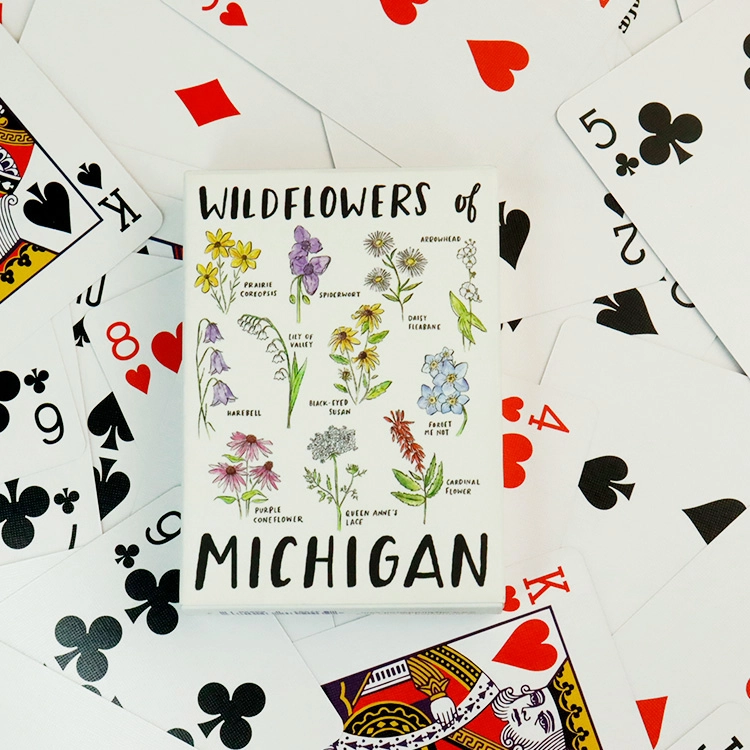
High Quality Eco-Friendly Durable Personalized Design Wildflowers Playing Cards with Custom Design Logo and Box
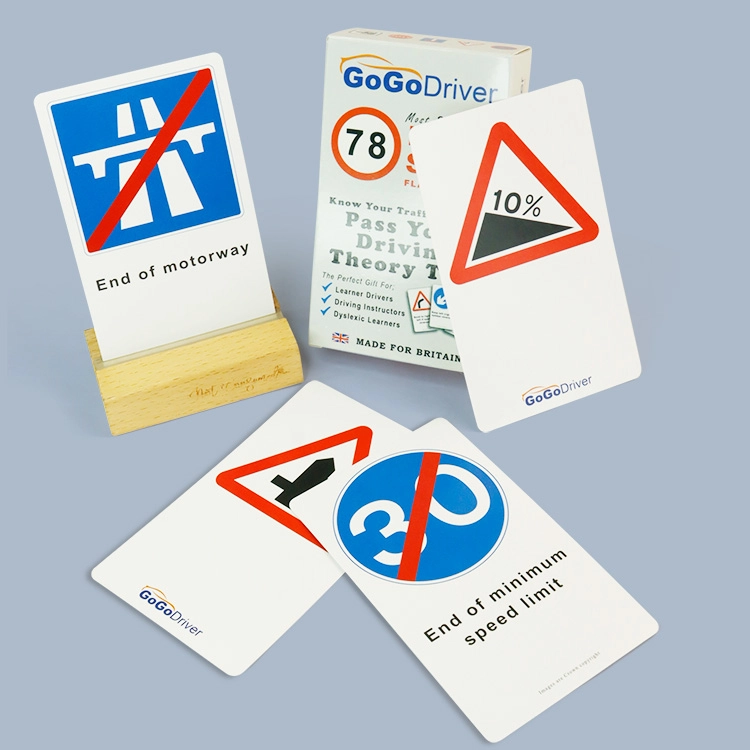
OEM Custom Driving Theory Cards | Personalized Traffic Rules & Test Prep Flashcards in Multiple Languages for Wholesale
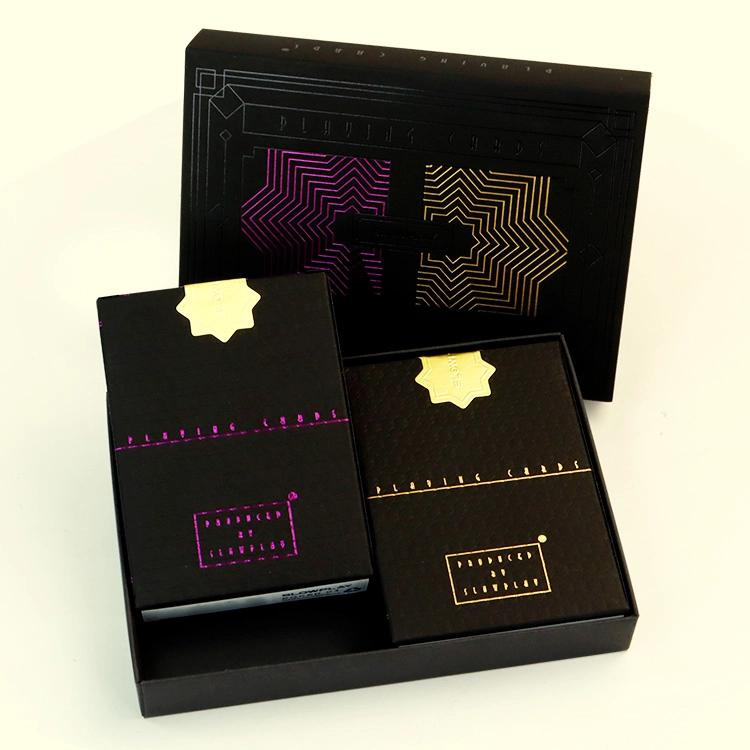
Custom Printing Luxury Two Sets Plastic Poker Playing Cards with Customized Packing