
Custom Tarot Card Sizes, Paper Types, and Finishes
- How to Choose Custom Tarot Cards for Yuhua
- Why size, paper and finish matter when ordering custom tarot cards
- Common Custom Tarot Card Sizes (and how to choose)
- Paper Types and Cardboard GSM for Durable, Playable Decks
- Finishes and Coatings — Visuals, Handling, and Durability
- Printing Methods, Minimum Order Quantities, and Cost Considerations
- Design and Production Considerations for Reliable Results
- Comparing Durability and Environmental Considerations
- Production Example and Decision Flow for a Typical Project
- Why Guangdong Yuhua Playing Cards Co., Ltd. is a Competent Partner for Custom Tarot Cards
- Practical Checklist Before You Order Custom Tarot Cards
- Frequently Asked Questions (FAQ)
- 1. What is the best card size for a beginner tarot deck?
- 2. What paper weight should I choose for durability and shuffle-feel?
- 3. Can I get metallic foils or spot UV on tarot cards?
- 4. What’s the difference between digital and offset printing for tarot decks?
- 5. How long will production and delivery take for custom tarot cards?
- 6. Are eco-friendly materials available for tarot card production?
- 7. What should I include in my print-ready files?
- Contact, Samples and Next Steps
- References and Further Reading
How to Choose Custom Tarot Cards for Yuhua
Why size, paper and finish matter when ordering custom tarot cards
When commissioning custom tarot cards, size, paper type, and finish determine not only the look and tactile experience but also production method, durability, and cost. Collectors, professional readers, and card-game designers each prioritize different attributes — portability, shuffleability, image fidelity, or longevity. Understanding the trade-offs allows you to specify a product that meets user expectations and minimizes surprises during mass production.
Common Custom Tarot Card Sizes (and how to choose)
Tarot cards are typically larger than standard playing cards to allow for detailed art and readable symbolism. Below is a practical comparison of common tarot sizes and recommended use cases to help you select the right dimensions for your custom tarot cards.
| Size Name | Dimensions (mm) | Dimensions (inches) | Typical Uses | Pros / Cons |
|---|---|---|---|---|
| Standard Tarot | 70 × 120 | 2.76 × 4.72 | Traditional Rider–Waite style decks; collectors | Good balance of image area and portability; common and easy to sleeve |
| Large Tarot | 74 × 121 – 80 × 140 | 2.91 × 4.76 – 3.15 × 5.51 | High-detail artwork; display editions | Better detail reproduction; less portable; higher printing costs |
| Compact Tarot | 60 × 100 – 63 × 98 | 2.36 × 3.94 – 2.48 × 3.86 | Travel decks; pocket editions | Very portable; less image area; can feel cramped for users |
Recommendation: For most creators commissioning their first run, choose a standard tarot size (around 70 × 120 mm). It is widely accepted, easy to sleeve, and balances cost and usability.
Paper Types and Cardboard GSM for Durable, Playable Decks
Card thickness and material influence shuffle feel, edge durability, and crease resistance. Below are commonly used materials for custom tarot cards and their practical characteristics.
| Material | Typical GSM / Thickness | Characteristics | When to choose |
|---|---|---|---|
| Coated Paperboard (Folding boxboard) | 280–350 gsm (approx. 0.28–0.35 mm each card after lamination) | Good print fidelity; moderate stiffness; cost-effective | Standard decks for retail and mass production |
| Virgin Cardboard (higher density) | 320–400 gsm | Stiffer cards, High Quality feel, less prone to bending | High Quality collector editions |
| Linen/Embossed Cardstock (coated) | 310–330 gsm | Textured surface improves handling and shuffle; classic playing card feel | When shuffle-feel is prioritized |
| Plastic / PVC | 300–350 micron (0.3–0.35 mm) | Waterproof, very durable, smooth feel; different shuffling behavior | Outdoor use, ritual decks that require cleaning, or long-life products |
Notes on GSM: Paper weight is typically measured in grams per square meter (gsm). Heavier gsm generally translates to stiffer cards. For tarot, a cardstock equivalent that yields a comfortable 0.28–0.35 mm finished thickness per card is common. (See references on paper grammage below.)
Finishes and Coatings — Visuals, Handling, and Durability
Finishes change resistance to scratches, glare, and moisture, plus the feel during shuffling. Choose finishes aligned to how your audience will use the deck.
| Finish | Appearance & Feel | Benefits | Trade-offs |
|---|---|---|---|
| Matte Lamination | Soft, low-glare, High Quality look | Reduced reflections, elegant finish, good for photography | May show fingerprints less, slightly less slide when shuffling |
| Gloss Lamination | Bright colors, shiny surface | Enhances color saturation and contrast | Glare in strong light; fingerprints visible |
| Soft-Touch | Velvety, luxurious feel | High-end tactile impression, excellent grip | Higher cost; may slightly reduce card slide |
| Linen / Silk Finish | Micro-textured, classic playing-card feel | Good shuffleability, reduces sticking | Texture may slightly affect image sharpness at very fine detail |
| UV Varnish / Spot UV | Localized high-gloss over matte or uncoated areas | Creates contrast and High Quality visual accents | Higher production cost; careful design alignment required |
Recommendation: For decks intended for regular shuffling, a linen or soft-touch laminate on 310–330 gsm board combines durability and a comfortable shuffle. For display or collector decks, consider matte or soft-touch with spot UV accents.
Printing Methods, Minimum Order Quantities, and Cost Considerations
Two primary printing approaches are used for custom tarot cards: digital printing and offset lithography.
- Digital printing — Best for short runs, proofs, or highly variable personalization. Fast turnaround and lower setup costs, but unit cost remains higher at larger quantities.
- Offset lithography — Economical at scale. Better color consistency for large runs and capable of special inks and coatings. Requires higher setup and platemaking costs but lower per-unit cost for larger orders.
Typical MOQs (industry ranges):
| Method | Typical MOQ Range | When to choose |
|---|---|---|
| Digital | 50–500 decks | Prototypes, limited editions, or highly customized runs |
| Offset | 500–5,000+ decks (economical above ~1,000) | Retail runs, crowdfunding fulfillment, wholesale |
Lead time: Digital runs can be as short as 7–14 days; offset runs typically 3–6 weeks depending on finish complexity and packaging. Shipping and QA add additional time. Discuss timelines with your supplier to align production and marketing plans.
Design and Production Considerations for Reliable Results
To minimize costly reprints and ensure quality:
- Provide print-ready artwork with correct bleeds (typically 3–5 mm) and CMYK color profiles; ask your printer for their template.
- Specify safe zones for text, especially for small font sizes.
- Decide corner radius (common: 3.5–5.5 mm) — important for matching sleeves and tins.
- Order press proofs (digital or offset) before full production to verify color, finish, and tactile expectations.
Comparing Durability and Environmental Considerations
If sustainability matters to Yuhua, prioritize suppliers using FSC® certified paperboard and environmentally friendly coatings. FSC certification ensures raw material traceability and responsible forestry practices — an important selling point for conscious consumers.
| Attribute | Durability Impact | Environmental Impact |
|---|---|---|
| FSC® certified paperboard | Comparable durability to non-certified paperboard | Lower environmental footprint; responsible sourcing |
| Plastic / PVC | Highly durable and waterproof | Less eco-friendly unless recycled PVC is used |
| Water-based / aqueous coatings | Good protection; lower VOCs | Better environmental profile than solvent-based coatings |
Ask suppliers for certifications (FSC®, ISO 9001) and material declarations when sustainability or compliance is important to you.
Production Example and Decision Flow for a Typical Project
Scenario: Artist wants a tarot deck for Kickstarter with 78 cards, full-color art, and High Quality feel.
- Choose size — 70 × 120 mm for familiarity and sleeve compatibility.
- Choose board — 310–330 gsm linen-coated for shuffle feel and durability.
- Finish — Soft-touch laminate with spot UV on select areas for High Quality appeal.
- Printing — Offset for 1,000+ decks to lower unit cost; digital if initial proofing of 100–300 decks is needed.
- Packaging — Matching tuck box or rigid box with foam insert depending on positioning (collectible vs. mass retail).
Why Guangdong Yuhua Playing Cards Co., Ltd. is a Competent Partner for Custom Tarot Cards
Guangdong Yuhua Playing Cards Co., Ltd., founded in 2014, specializes in the R&D, design, and mass custom production of playing cards, game cards, and color-printed packaging. With a 6,000㎡ intelligent facility, Yuhua offers advanced, automated card production lines capable of producing over 1,000,000 units per month. Core strengths include FSC® certified materials, ISO 9001 quality control, a defect rate under 0.5%, and over 20 patents.
What this means for customers ordering custom tarot cards:
- Scale: High-volume productions (retail distribution, wholesale) can be handled reliably thanks to automated lines and monthly capacity.
- Quality control: ISO 9001 systems and a sub-0.5% defect rate reduce rework and maintain consistency across large batches.
- Materials & sustainability: Use of FSC® certified materials supports eco-conscious branding.
- Technical capabilities: More than 20 patents and imported high-end materials enable a broader range of finishes, special printing effects (spot UV, metallic foils), and complex packaging solutions.
Yuhua’s High Quality brand uses imported materials and serves global markets with custom card solutions for casinos, games, education, and more—delivering fast, high-quality results with professional support. They support OEM Playing Card and ODM Tarot cards, custom Game cards, and Learning Flash cards, offering clear OEM advantages such as production scale, material controls, and manufacturing expertise.
Practical Checklist Before You Order Custom Tarot Cards
- Confirm final card size and number of cards (including blank backs or instruction cards).
- Decide card stock (gsm/thickness) and finish (matte, gloss, linen, soft-touch).
- Choose printing method based on budget and quantity (digital vs offset).
- Request templates and provide print-ready files with bleeds and CMYK color profiles.
- Order press proofs (at least one) before full production.
- Verify packaging options and print proofs for boxes/inserts.
- Confirm lead time, shipping, and quality inspection criteria with your supplier.
Frequently Asked Questions (FAQ)
1. What is the best card size for a beginner tarot deck?
For most beginners and retail buyers, the standard tarot size (around 70 × 120 mm) is recommended. It offers enough space for imagery while remaining comfortable to shuffle and store in common sleeves and boxes.
2. What paper weight should I choose for durability and shuffle-feel?
A finished card that corresponds to roughly 300–330 gsm board (producing about 0.28–0.35 mm thickness per card after lamination) balances durability and shuffle feel. Linen or embossed finishes improve handling.
3. Can I get metallic foils or spot UV on tarot cards?
Yes — spot UV, foil stamping, and metallic inks are common High Quality options. These typically require offset printing and add to setup time and cost. Work with your manufacturer to confirm feasibility and cost per run.
4. What’s the difference between digital and offset printing for tarot decks?
Digital printing is flexible and cost-effective for short runs or highly personalized decks. Offset printing offers superior color consistency and lower per-unit costs at scale but requires higher setup and minimum quantities.
5. How long will production and delivery take for custom tarot cards?
Typical timelines: digital runs can be 7–14 days for production; offset runs are commonly 3–6 weeks depending on finishes and packaging. International shipping and customs will add additional days. Ask your supplier for a detailed timeline based on your specifications.
6. Are eco-friendly materials available for tarot card production?
Yes. Many manufacturers offer FSC® certified paperboard and water-based coatings. Verify certifications with your supplier and request documentation if sustainability is a selling point for your audience.
7. What should I include in my print-ready files?
Provide high-resolution images (300 dpi), CMYK color space, bleeding of typically 3–5 mm, safe zones for text, and specify any spot colors or special finishes. Ask for a supplier template to ensure correct corner radii and card layout.
Contact, Samples and Next Steps
If you’re ready to move from concept to production or need samples and a formal quote, Guangdong Yuhua Playing Cards Co., Ltd. can support OEM and ODM tarot projects at scale with professional prepress support and quality control. Contact your manufacturer to request a sample set, confirm MOQ, and obtain a lead-time estimate tailored to your design and finish choices.
For quick inquiries: request a production sample that matches your desired size, paper, and finish so you can test shuffle-feel, color fidelity, and durability before committing to a full run.
References and Further Reading
- Tarot card — Wikipedia. https://en.wikipedia.org/wiki/Tarot_card (accessed 2025-12-18)
- Playing card — Wikipedia. https://en.wikipedia.org/wiki/Playing_card (accessed 2025-12-18)
- Paper density and grammage — Wikipedia. https://en.wikipedia.org/wiki/Paper_density (accessed 2025-12-18)
- FSC — Forest Stewardship Council. https://fsc.org/en (accessed 2025-12-18)
- ISO 9001 — Quality management systems. https://www.iso.org/iso-9001-quality-management. (accessed 2025-12-18)
We are committed to providing customers with high-quality and efficient playing card production services.
Best professional design custom playing cards manufacturers and supplier brands
Top best playing cards for throwing Manufacturers and Suppliers
Top custom playing card printing services Manufacturers and Suppliers in Saudi Arabia
Why choose Yuhua as your kids learning cards supplier
About price and payment
How can I get a quote?
Getting a quote is easy! Simply fill out our contact form or call us directly with your project details, and we’ll get back to you with a tailored quote promptly.
About logistics
How long does the production process take?
Production times can vary based on order complexity and volume. Typically, standard orders take 2-4 weeks. For urgent projects, we may offer expedited options—just ask!
After-sales support
Can I order a sample before placing a formal order?
Yes, we can provide samples for your review. Please contact us to discuss pricing and options for samples.
What is your return policy?
We stand behind the quality of our products. If you receive a defective item, please contact us within 30 days for a replacement or refund. Customized orders are generally non-refundable unless there's an error on our part.
About cooperation process
How long does the OEM process take?
The time depends on the complexity of the project, but generally OEM orders take about 6 weeks from design confirmation to delivery.
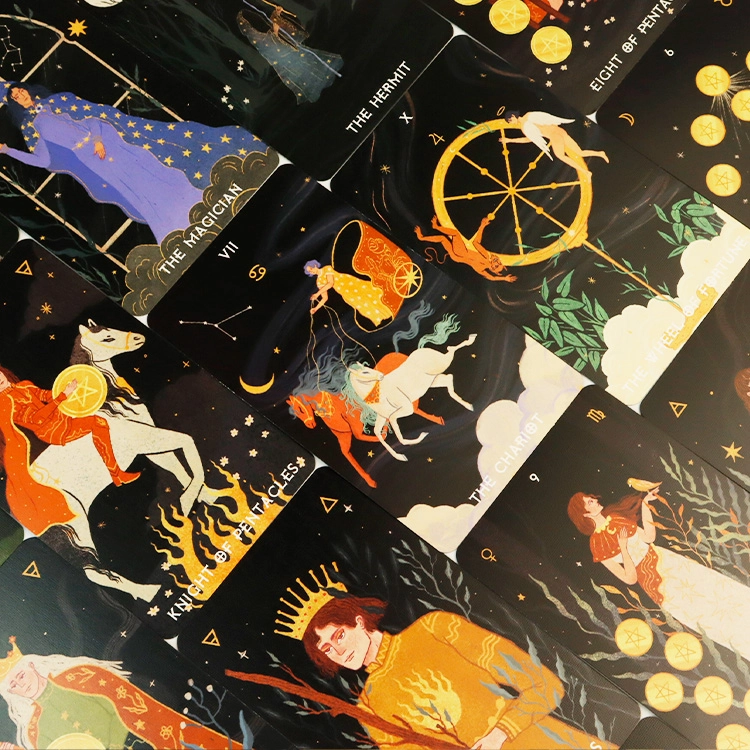
High Quality Tarot Cards with Sleeve Box Packaging | Premium Custom Tarot Deck Set for Enhanced Presentation & Protection
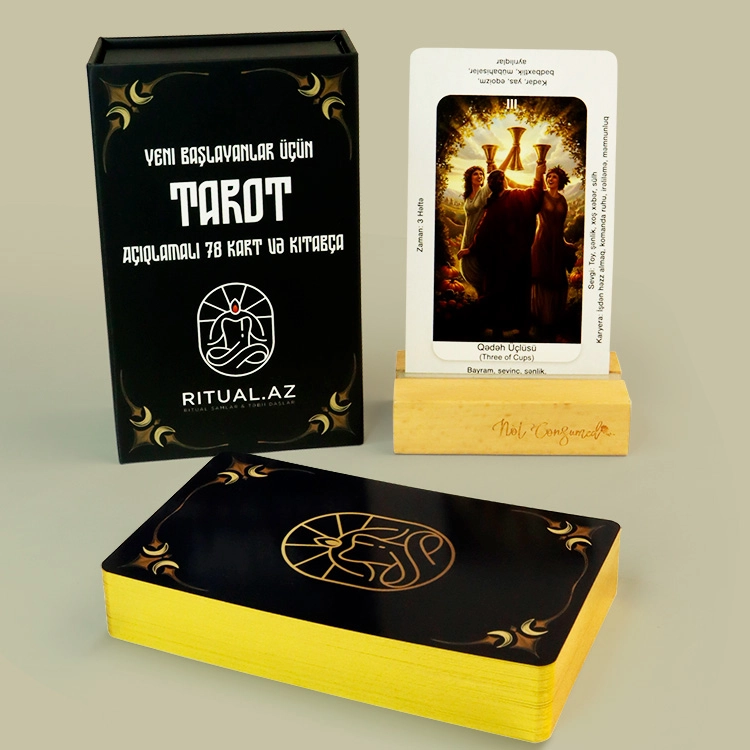
Hot Foil Stamped Tarot Cards with Book-Style Box | Premium Gold Edge Tarot Deck for Custom
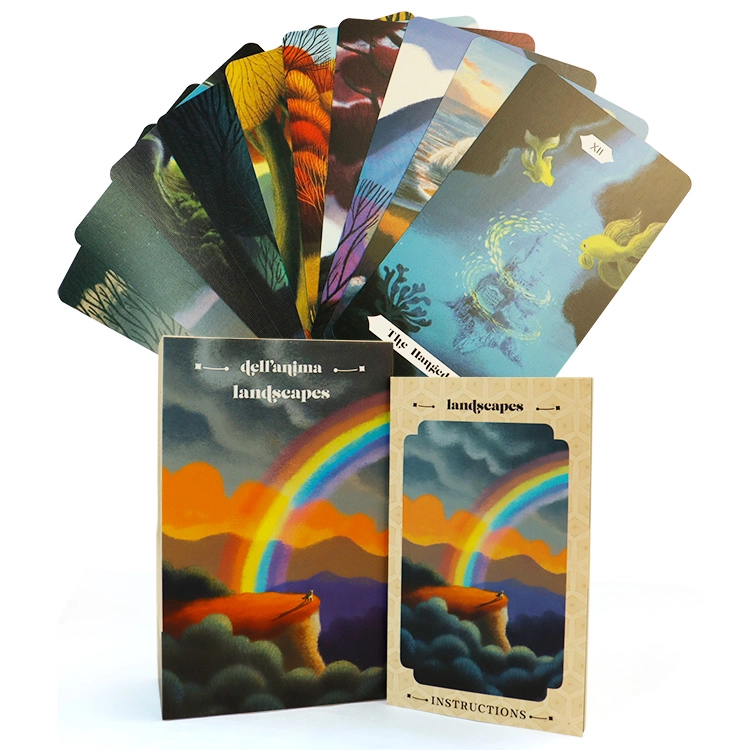
Rainbow Blue Edge Tarot Cards with lid and base Box | Custom Luxury Tarot Cards Deck Manufacturer
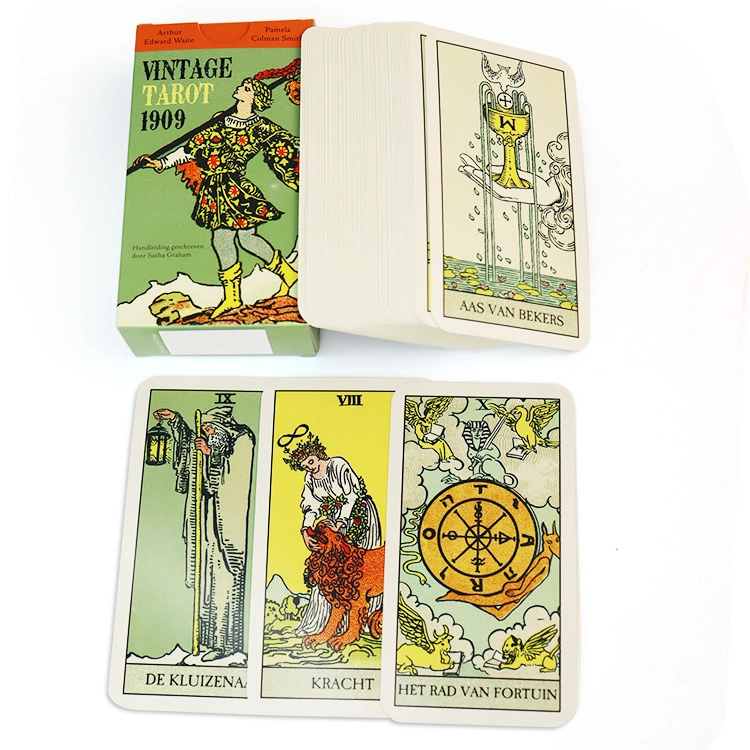
bbilaser
sq_AL