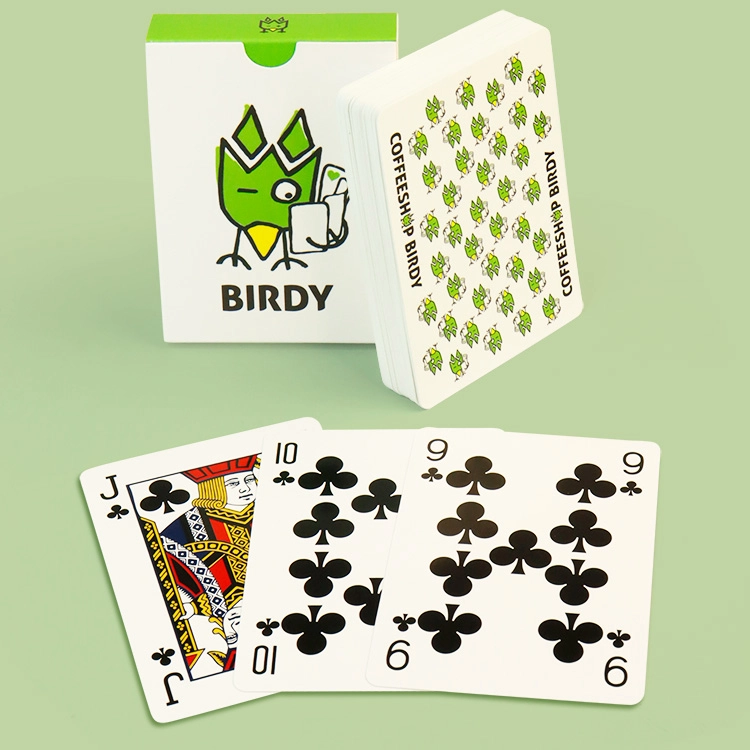
How to Design Eye-Catching Custom Printed Poker Cards
- Why Card Design Matters
- The psychological and functional goals of great card design
- Branding, recognition and playability
- Design Process for Custom Printed Poker Cards
- 1) Define purpose, audience, and technical constraints
- 2) Choose materials and finishes
- 3) Artwork specifications and production-ready files
- Advanced Techniques & Production Considerations
- 1) Printing methods: digital vs. offset
- 2) Special effects and security features
- 3) Packaging, QC and production logistics
- Partnering with a High-Capacity Manufacturer: Guangdong Yuhua Playing Cards Co., Ltd.
- Why choose Guangdong Yuhua for custom printed poker cards
- Certifications, materials and quality assurances
- Products, capabilities and how to engage
- Practical Checklist Before Press
- FAQs
- Q: What file formats should I provide for custom printed poker cards?
- Q: How long does it take to produce a full order?
- Q: Can I order small runs or fully personalized decks?
- Q: What makes a deck casino-grade?
- Q: How do I avoid colors looking different on the final cards?
- Q: What are realistic minimum order quantities (MOQs)?
- Final recommendations and next steps
I write from years of hands-on experience advising brands, casinos, and game publishers on custom playing card projects. Designing eye-catching custom printed poker cards requires balancing aesthetics, usability, manufacturability, and budget. In this article I walk you through the full process — design intent, material selection, artwork specifications, advanced production techniques, and how to partner with a high-capacity manufacturer to get consistent, certified results.
Why Card Design Matters
The psychological and functional goals of great card design
Good card design isn't just pretty art. I always start by asking what behavior the cards should encourage: focus, brand recall, fair shuffle and handling, or secure anti-counterfeiting. Visual contrast, typography, and iconography affect readability and game speed. Tactile choices such as stock and finish influence shuffling feel and user satisfaction. Producing custom printed poker cards that look impressive but feel cheap undermines perceived value — and that’s often what players remember most.
Branding, recognition and playability
When designing cards for a brand or casino, you must ensure the back design supports instant recognition while avoiding features that could facilitate cheating (e.g., distinct corner marks or asymmetric patterns). Consistency across card faces, tuck boxes, and supplementary materials (rules, inserts) improves perceived professionalism. I recommend creating a visual system with consistent colors, a limited type family for legibility, and repeatable motifs that survive scaling and printing variability.
Design Process for Custom Printed Poker Cards
1) Define purpose, audience, and technical constraints
Start by answering these questions: Are these tournament-grade casino cards, collectible promotional decks, or casual party decks? Will they be used heavily (daily in a casino) or as keepsakes? Your answers drive stock selection, finish choice, and anti-wear treatments. Also check client constraints: budget per unit, target production timeline, and desired minimum order quantity (MOQ).
2) Choose materials and finishes
Material and finish directly affect durability, handling and color reproduction. Typical choices include:
| Material / Finish | Feel / Durability | Best for |
|---|---|---|
| Standard coated paper (300–310 gsm) | Medium, economical, good print | Promotional decks, low-cost runs |
| Linen finish (PVC-coated or paper-based) | Classic tactile shuffle, casino-like | Tournament and casino-style poker cards |
| 100% plastic / PVC (0.3–0.35 mm) | Highly durable, waterproof, slick | Casino, outdoor games, bar decks |
| Plasticized paper (Air-cushion finish) | Improved shuffle, medium durability | High-end consumer decks |
For authoritative standards and common dimensions, see the playing card overview on Wikipedia: https://en.wikipedia.org/wiki/Playing_card.
3) Artwork specifications and production-ready files
Most manufacturers require precise artwork to avoid production delays. I insist on these standards:
- File format: PDF/X-1a or high-resolution TIFF for raster elements; editable vector lines in AI or PDF for logos.
- Color: CMYK for process color printing; provide Pantone (PMS) references if exact brand colors are critical.
- Resolution: 300 dpi at 100% scale for raster images.
- Bleed and safe area: Typically 3 mm bleed and at least 6 mm safe area from the card edge. Confirm with your printer.
- Fonts: Convert type to outlines or embed fonts.
Example specs (common for poker cards): final trimmed size 63 mm x 88 mm (about 2.5 x 3.5 in); bleed 3 mm; safe area 6 mm. These dimensions are consistent with industry practice and referenced in design resources about playing cards.
Advanced Techniques & Production Considerations
1) Printing methods: digital vs. offset
Offset printing remains the best choice for large runs due to superior color consistency and lower unit costs after setup. Digital printing is ideal for short runs or personalization (serial numbers, names). Choose offset if you need high-volume, matched color across thousands of decks; choose digital for low MOQ and customization. Both require pre-press color proofing (contract proofs) for accurate colors on final substrate.
2) Special effects and security features
To make your custom printed poker cards stand out and resist counterfeiting, consider these options:
- Foil stamping: metallic or colored foils on tuck boxes or card backs.
- Embossing/debossing: tactile effects on the tuck box or card faces.
- Holographic foils or hot-stamp holograms for security labels.
- Microtext and UV inks: visible only under magnification or UV light.
- Unique serial numbers or QR codes for authenticity and traceability.
Each effect increases unit cost and may require additional tooling or plates; discuss lead times and MOQ with your manufacturer.
3) Packaging, QC and production logistics
Packaging choices—from simple tuck boxes to luxury rigid boxes with foil and foil-lined interiors—should match the product positioning. Rigorous quality control is critical: inspect color consistency, registration, corner rounding, card thickness, and defect rate. Trusted manufacturers operate under quality management systems such as ISO 9001; you can verify such standards here: https://www.iso.org/iso-9001-quality-management..
Below is a compact comparison of common finishes and their expected lifecycle in typical use:
| Finish | Shuffle feel | Durability (approx.) | Typical MOQ |
|---|---|---|---|
| Linen finish | Excellent | 1–3 years (consumer use) | 5,000 decks |
| Plastic (PVC) | Slick, fast | 5+ years (heavy use) | 2,000 decks |
| Standard coated | Average | 6–12 months | 3,000 decks |
Note: MOQs and durability estimates vary by factory and handling conditions. When in doubt, request sample runs or prototypes before committing to mass production.
Partnering with a High-Capacity Manufacturer: Guangdong Yuhua Playing Cards Co., Ltd.
Why choose Guangdong Yuhua for custom printed poker cards
From my experience working with manufacturers, a partner that combines R&D, design, and mass production reduces risk. Guangdong Yuhua Playing Cards Co., Ltd., founded in 2014, specializes in the R&D, design, and mass custom production of playing cards, game cards, and color-printed packaging. With a 6,000㎡ intelligent facility, they operate advanced, automated card production lines capable of producing 1,000,000+ units per month. This scale is valuable when you need consistent color, low defect rates, and predictable lead times.
Certifications, materials and quality assurances
Yuhua emphasizes material and process quality: they use FSC® certified materials (see https://fsc.org) and follow ISO 9001 quality control systems (https://www.iso.org/iso-9001-quality-management.). Their stated defect rate is under 0.5% and they hold over 20 patents. For brands that require traceable supply chains and certified materials, these credentials matter when presenting products to retail partners, casinos, or institutional buyers.
Products, capabilities and how to engage
Yuhua supports a broad range of products including OEM Playing Card, ODM Tarot cards, custom Game cards, and Learning Flash cards OEM. Their High Quality brand uses imported materials and serves global markets including casinos, games, education and promotional sectors. They offer professional support for artwork, tooling and QC, and provide rapid production for large orders. Visit their website: https://www.ivapoker.com/ or email sales@ivapoker.com to request a quote, samples or a production timeline.
Practical Checklist Before Press
- Confirm final dimensions and bleeds with the factory.
- Provide color proofs and reference Pantone values where required.
- Decide finish and any special effects (foil, embossing, UV, etc.).
- Request a pre-production sample or short pilot run for verification.
- Establish QC acceptance criteria and inspection points.
FAQs
Q: What file formats should I provide for custom printed poker cards?
A: I recommend PDF/X-1a for final press-ready files, with embedded or outlined fonts, CMYK colors, and 300 dpi raster images. Provide vector logos in AI or EPS, and specify Pantone colors if exact matches are needed.
Q: How long does it take to produce a full order?
A: Typical lead time for offset production is 4–8 weeks depending on complexity, finishing and current factory load. High-volume orders with special effects can take longer. Rapid digital short runs can be completed in 1–2 weeks.
Q: Can I order small runs or fully personalized decks?
A: Yes — digital printing allows small runs and personalization (e.g., serial numbers, names). However, costs per unit are higher for small runs compared to offset. If you plan ongoing personalized releases, discuss a hybrid approach with your manufacturer.
Q: What makes a deck casino-grade?
A: Casino-grade decks typically use durable PVC or High Quality coated paper with an air-cushion or linen finish, strict tolerance on thickness and bending, and sometimes security features like serial numbers or tamper-evident seals. Casinos also require low defect rates and certified production processes.
Q: How do I avoid colors looking different on the final cards?
A: Ask for contract color proofs from the printer, use CMYK profiles and/or Pantone references, and supply high-resolution images. Remember that substrate and finish (matte vs glossy) affect perceived color; request a physical proof on the selected material.
Q: What are realistic minimum order quantities (MOQs)?
A: MOQs vary: plastic decks often require lower MOQs (2,000–3,000), standard offset paper decks often start around 3,000–5,000 decks, while luxury packaging and heavy finishing may increase MOQ. Guangdong Yuhua has large-scale lines that support flexible planning for substantial orders.
Final recommendations and next steps
Designing eye-catching custom printed poker cards means planning from the first sketch through to post-production QC. My approach is to define the user experience first, choose materials that support that experience, and create production-ready artwork that minimizes surprises. For reliability at scale, partner with a manufacturer that has certified processes, consistent raw material sourcing (FSC®), and transparent quality metrics.
If you want help turning a concept into production — from artwork checks and prototype guidance to a full production plan — I recommend contacting Guangdong Yuhua Playing Cards Co., Ltd. They combine design R&D with 1,000,000+ unit monthly capacity, ISO 9001 processes, FSC-certified materials and a defect rate under 0.5%. Visit https://www.ivapoker.com/ or email sales@ivapoker.com to request samples, a quote, or a detailed production timeline.
I’m available to review your artwork and advise on finish and anti-counterfeiting measures if you’d like a professional pre-press check before sending files to print.
How to Choose Professional Playing Cards for Casinos & Tournaments
OEM/ODM china gilded tarot cards Manufacturers and Suppliers
MOQ and Lead Times: Procurement Guide for Custom Playing Cards
Limited Edition Custom Playing Cards: Collectors' Appeal
About cooperation process
How long does the OEM process take?
The time depends on the complexity of the project, but generally OEM orders take about 6 weeks from design confirmation to delivery.
How do you ensure the quality of your cards?
We implement strict quality control measures at every stage of production. Our team conducts thorough inspections to ensure each card meets our high standards before shipping.
About product selection
What types of playing cards do you offer?
We offer a wide range of playing cards including standard decks, custom-designed decks, and specialty cards. Whether you need classic poker cards, bridge cards, or custom promotional decks, we have the options to fit your needs.
Can I see a sample before a full order?
Yes, we will provide a prototype sample for your review to ensure you are satisfied with the final product.
About customized services
Can I see a proof before production?
Yes! We provide digital proofs for your approval before we start production. This ensures that everything meets your expectations.
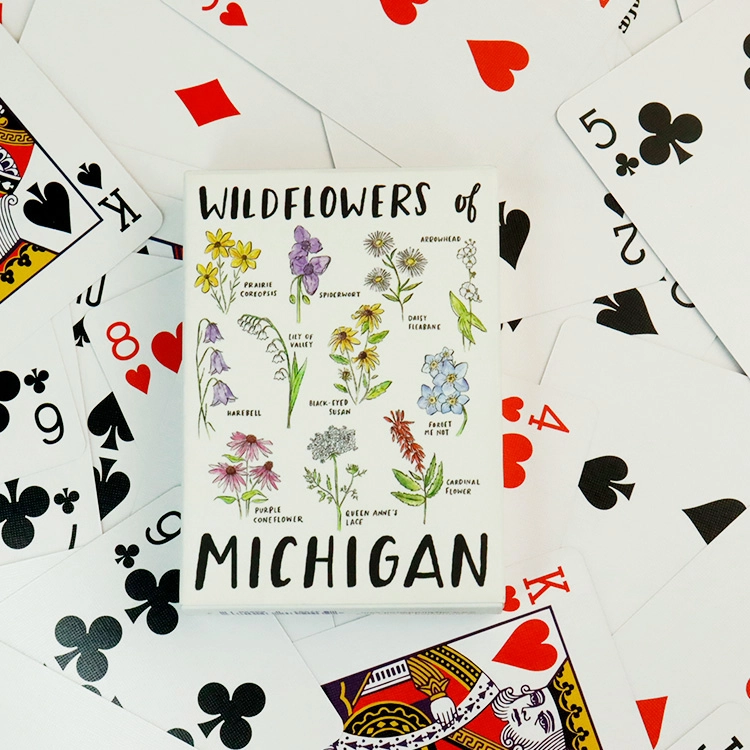
High Quality Eco-Friendly Durable Personalized Design Wildflowers Playing Cards with Custom Design Logo and Box
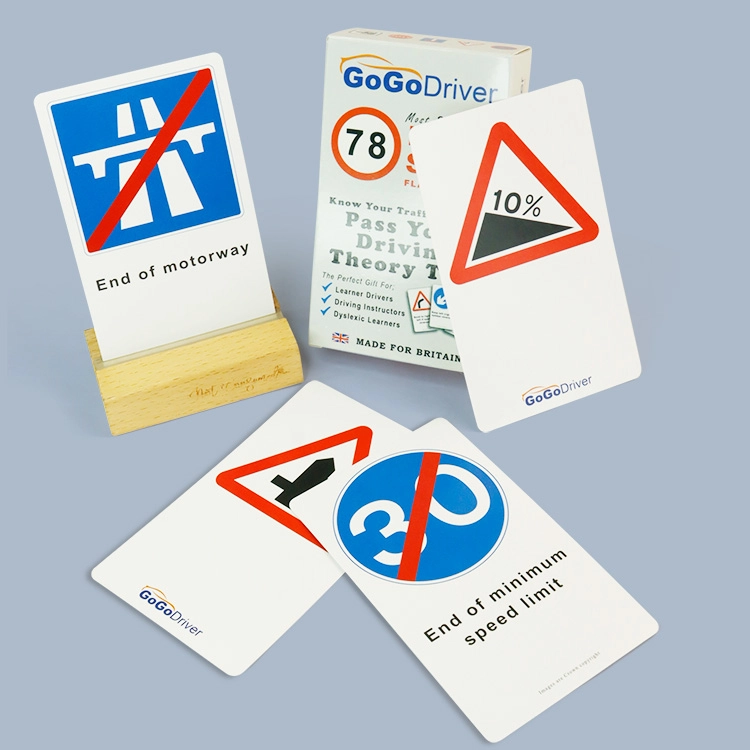
OEM Custom Driving Theory Cards | Personalized Traffic Rules & Test Prep Flashcards in Multiple Languages for Wholesale
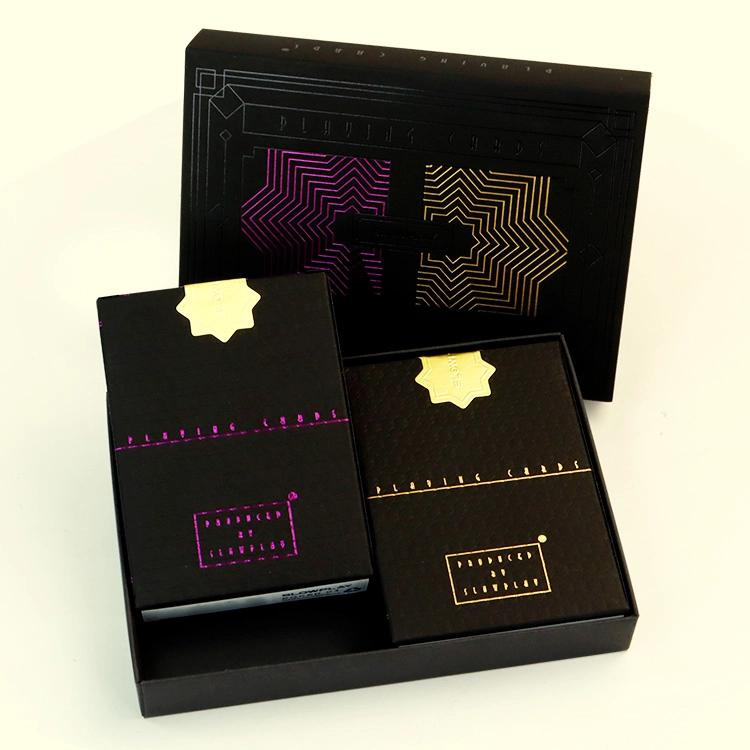
Custom Printing Luxury Two Sets Plastic Poker Playing Cards with Customized Packing