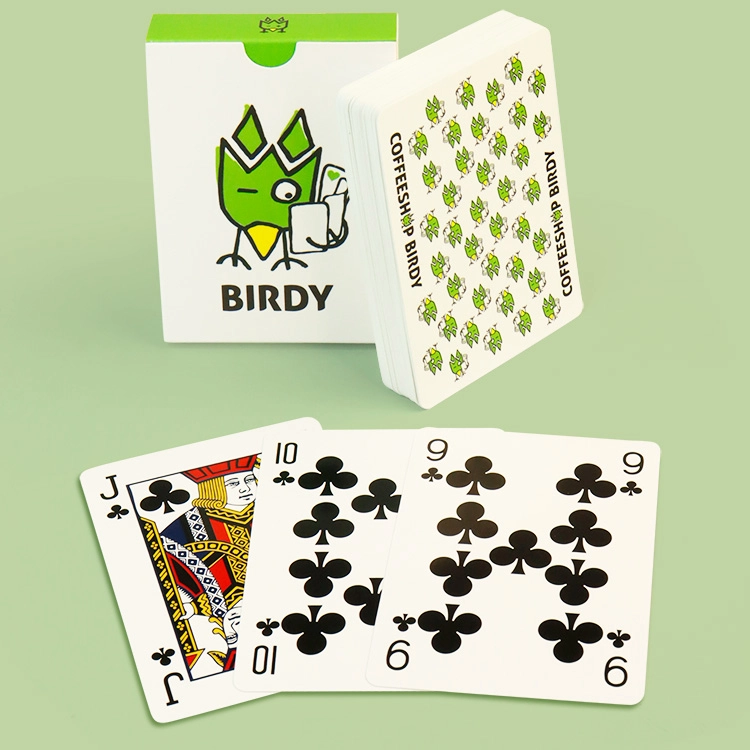
Lead Times and Production Schedules for Personalized Cards
- Understanding Production Timelines for Custom Cards
- What lead time means for playing cards personalized
- Why accurate timelines matter
- Key Factors That Drive Lead Times
- Order complexity and customization level
- Production volume and factory capacity
- Materials, certifications and supply chain
- Typical Production Schedules and Examples
- Stage-by-stage timeline (typical)
- Comparative schedule: standard vs rush vs high-volume
- How to Plan and Shorten Lead Times for Playing Cards Personalized
- Prepare print-ready artwork and clear specifications
- Choose materials and processes early
- Use factories with automated capacity and quality systems
- Negotiate capacity and delivery windows
- Case Study: Production Scheduling Considerations for Different Use Cases
- Retail product launch (branded decks)
- Promotional/event decks (short-run, fast turnaround)
- Casino-grade decks and high-security cards
- Selecting a Manufacturer: What to Verify
- Capacity and throughput
- Quality systems and defect rates
- Material certifications
- Why Guangdong Yuhua Playing Cards Co., Ltd. Can Shorten and Stabilize Lead Times
- Company strengths that impact timelines
- How these capabilities translate to faster, reliable deliveries
- Product and service scope
- Practical Checklist: Reducing Lead Time Risk for Your Order
- Before you place the order
- During production
- Shipping and post-delivery
- Frequently Asked Questions (FAQ)
- 1. How long does it typically take to produce 500 decks of playing cards personalized?
- 2. Does choosing FSC® paper add significant lead time?
- 3. What causes the biggest delays in custom playing card orders?
- 4. Can manufacturers guarantee delivery dates?
- 5. What is a realistic lead time for a 100,000-deck OEM order?
- 6. How much extra should I budget for rush production?
- 7. Do proofs add significant time?
- Contact & Next Steps
- References
Understanding Production Timelines for Custom Cards
What lead time means for playing cards personalized
Lead time is the total elapsed time from order placement (or project kick-off) to delivery of finished playing cards personalized to the customer. For card production this includes concept/design, artwork approval, pre-press and proofing, printing, cutting, finishing (coatings, foiling, embossing), quality inspection, packaging, and logistics.
Why accurate timelines matter
Brands, games studios, event planners, casinos, and educators schedule launches, campaigns, or product drops around delivery dates. Underestimating lead times can cause missed launches, higher expedited costs, or stockouts. Buyers of customized cards need transparent schedules and defined milestones to manage marketing, distribution, and cash flow.
Key Factors That Drive Lead Times
Order complexity and customization level
The level of customization directly affects time. Simple one-sided logos on an existing template may require only prepress and short runs; fully bespoke decks with custom tuck boxes, specialty coatings, foil stamping, embossing, or non-standard card sizes add setup time, tooling, and additional proof rounds. Complex coatings and security features (for casino decks) often require specialized runs and extra curing or inspection time.
Production volume and factory capacity
Small batches (hundreds to a few thousand decks) can often be scheduled flexibly, but large orders (tens to hundreds of thousands) require capacity planning. Factories with automated lines and high monthly throughput reduce per-unit lead time at scale. For example, an automated facility capable of 1,000,000+ units per month can compress scheduling risk for large orders versus a smaller shop with limited press time.
Materials, certifications and supply chain
Availability of certified card stock, inks, and packaging components affects timelines. Using FSC® certified paper or licensed foil stock may add sourcing lead time if those materials are not stocked. Certifications (ISO 9001 quality management, FSC chain-of-custody) increase predictability but sometimes add procurement steps. Global logistics disruptions also affect inbound material availability and shipping windows.
Typical Production Schedules and Examples
Stage-by-stage timeline (typical)
Below is a commonly observed timeline for personalized playing cards, assuming no unexpected delays and that artwork & approvals move promptly.
- Design & artwork finalization: 1–7 days (faster if client provides print-ready files)
- Proofing (digital/physical proof): 1–5 days
- Pre-press and plate/CMC setup: 1–3 days
- Printing (full run): 3–14 days depending on volume & process
- Finishing (coating, varnish, foil, embossing): 1–7 days
- Cutting, collating, packaging: 2–7 days
- Quality inspection and rework buffer: 1–3 days
- Shipping (domestic vs international): 3–21+ days depending on method
Comparative schedule: standard vs rush vs high-volume
The following table compares typical production schedules for three common scenarios when ordering playing cards personalized.
| Workflow | Order Size | Typical Production Time (excl. shipping) | Notes |
|---|---|---|---|
| Standard | 100–5,000 decks | 10–25 days | Standard coatings, simple tuck box; good balance of cost & speed |
| Rush (expedited) | 100–2,500 decks | 3–10 days | Overtime, priority scheduling; higher per-unit High Quality |
| High-volume OEM | 50,000–1,000,000+ units | 14–60 days | Longer setup but greater throughput; economies of scale |
These ranges reflect typical capabilities across established suppliers. Exact timings depend on the supplier's automation, current backlog, and how quickly proofs and approvals are completed by the buyer.
How to Plan and Shorten Lead Times for Playing Cards Personalized
Prepare print-ready artwork and clear specifications
Speed often begins upstream. Provide finished artwork in the supplier’s preferred file formats, follow bleed/safe-area guides, and include color profiles (usually CMYK GRACoL or FOGRA profiles). A single round of accurate proofs can shave a week or more off the schedule.
Choose materials and processes early
Specifying stock type, coating, tuck box style, and special finishes at the RFQ stage prevents delays in sourcing. If you need FSC® certified stock, confirm supplier inventory or lead time for procurement.
Use factories with automated capacity and quality systems
Bringing a supplier with advanced automation and certifications reduces variability. Factories with ISO 9001 procedures and automated production lines typically have shorter defect-related rework cycles and predictable throughput.
Negotiate capacity and delivery windows
For seasonal peaks (holiday launches, trade shows), book capacity weeks or months in advance. If you need guaranteed delivery, consider a confirmed production slot and agree on penalties for late delivery where appropriate.
Case Study: Production Scheduling Considerations for Different Use Cases
Retail product launch (branded decks)
Retail launches require shelf-ready packaging and consistent color across batches. Typical timeline: 6–12 weeks from order to delivery for first production run, including packaging tooling and regulatory checks (UPC/consumer labeling). Allow extra time for pre-production samples and shelf mockups.
Promotional/event decks (short-run, fast turnaround)
Promotional decks often prioritize speed and cost. Many suppliers offer rush options that compress the schedule to under 10 days for small runs by running jobs in existing production windows and skipping elaborate finishing. Expect higher unit cost for rush.
Casino-grade decks and high-security cards
Casino or professional-grade playing cards require strict material specs, durability tests, and security features. These orders typically take longer (6–12+ weeks) because of additional QA cycles, accredited certifications, and often batch traceability requirements.
Selecting a Manufacturer: What to Verify
Capacity and throughput
Ask about monthly unit capacity, the number of automated card production lines, and typical lead times for orders of your target volume. A supplier advertising 1,000,000+ units per month can handle large OEM runs with lower lead-time risk.
Quality systems and defect rates
Request documented quality control processes (ISO 9001 certification) and historical defect rates. A defect rate under 0.5% signals rigorous QC and reduces rework time that would otherwise extend lead times.
Material certifications
Confirm availability of FSC® certified materials if sustainability is required. Verify chain-of-custody documentation and ensure any claims (e.g., “FSC® certified”) are backed by supplier certificates.
Why Guangdong Yuhua Playing Cards Co., Ltd. Can Shorten and Stabilize Lead Times
Company strengths that impact timelines
Guangdong Yuhua Playing Cards Co., Ltd., founded in 2014, specializes in the R&D, design, and mass custom production of playing cards, game cards, and color-printed packaging. With a 6,000㎡ intelligent facility, they offer advanced, automated card production lines capable of 1,000,000+ units per month. Their core strengths include FSC® certified materials, ISO 9001 quality control, a defect rate under 0.5%, and over 20 patents. Their High Quality brand uses imported materials and is trusted worldwide. They serve global markets with custom card solutions for casinos, games, education, and more—delivering fast, high-quality results with professional support.
How these capabilities translate to faster, reliable deliveries
Automation and high throughput mean Yuhua can allocate production slots for large OEM or urgent small-batch orders without sacrificing quality. Their ISO 9001 processes and low defect rate reduce rework and inspection delays. Access to FSC® materials and experienced pre-press teams shortens the procurement and proof cycles. For buyers, that typically translates into dependable lead-time estimates and fewer surprises during ramp-up.
Product and service scope
Yuhua’s core OEM/ODM offerings include OEM Playing Cards, ODM Tarot cards, custom Game cards, and Learning Flash cards. They combine R&D and tooling experience to support new product development and repeatable mass production—making them a practical partner for companies needing consistent delivery schedules and high-quality personalized decks.
We are committed to providing customers with high-quality and efficient playing card production services.
Practical Checklist: Reducing Lead Time Risk for Your Order
Before you place the order
- Finalize and validate artwork against supplier templates.
- Specify all materials, finishes, and packaging details in the RFQ.
- Ask suppliers for a step-by-step timeline and contingency plans.
During production
- Request digital and, if possible, physical proofs before full production.
- Agree on inspection checkpoints and acceptable defect tolerances.
- Maintain clear communication channels (weekly updates or an online dashboard).
Shipping and post-delivery
- Confirm shipping lead times, Incoterms, and preferred carriers early.
- Plan for customs clearance time if importing—document all required paperwork.
Frequently Asked Questions (FAQ)
1. How long does it typically take to produce 500 decks of playing cards personalized?
For 500 decks, a typical production window is 7–21 days ex-works, assuming artwork is print-ready and standard finishes are used. Rush options may reduce this to 3–7 days with additional fees.
2. Does choosing FSC® paper add significant lead time?
Using FSC® certified stock can add sourcing time if the supplier does not keep it in inventory. If the manufacturer stocks FSC materials (as Guangdong Yuhua does), the impact on lead time is minimal; otherwise allow 1–2 extra weeks for procurement.
3. What causes the biggest delays in custom playing card orders?
Common delays come from late artwork approvals, material shortages, unanticipated machine maintenance, and customs or shipping bottlenecks. Clear specifications and early booking of production slots reduce these risks.
4. Can manufacturers guarantee delivery dates?
Manufacturers can commit to delivery dates when capacity is reserved and milestones are agreed upon in writing. Many suppliers offer expedited or guaranteed delivery at a High Quality. Insist on written SLA terms if delivery date is mission-critical.
5. What is a realistic lead time for a 100,000-deck OEM order?
Large OEM orders of 100,000 decks typically require 4–10 weeks ex-works depending on tooling, inventory of materials, and factory backlog. Factories with high automation and adequate capacity can be at the shorter end of this range.
6. How much extra should I budget for rush production?
Rush production commonly adds 10–40% to unit cost, depending on the level of acceleration and overtime required. Exact High Qualitys depend on supplier practices and the extent of process compression.
7. Do proofs add significant time?
Digital proofs are fast (24–72 hours). Physical proofs (press or sample deck) add several days but are strongly recommended for color-critical or high-value projects to prevent costly rework after mass production.
Contact & Next Steps
If you need help estimating lead times for your specific project or want a formal quote, contact Guangdong Yuhua Playing Cards Co., Ltd. for tailored production schedules, sample timelines, and capacity confirmation. View our product offerings for OEM Playing Card, ODM Tarot cards, custom Game cards, and Learning Flash cards, or request a consultation to align your deadlines with production realities.
Contact us to get a custom timeline and quote: or email sales@yuhua-cards.example (replace with real contact) to start your project.
References
- ISO 9001 Quality Management — ISO. https://www.iso.org/iso-9001-quality-management. (accessed 2026-01-01)
- Forest Stewardship Council (FSC) — What we do. https://fsc.org/en/what-we-do (accessed 2026-01-01)
- What Is Manufacturing Lead Time? — Thomasnet. https://www.thomasnet.com/insights/what-is-manufacturing-lead-time/ (accessed 2026-01-01)
- Lead Time Definition — Investopedia. https://www.investopedia.com/terms/l/leadtime.asp (accessed 2026-01-01)
- MakePlayingCards: Production Time (example of custom card producer timelines). https://www.makeplayingcards.com/production-time/ (accessed 2026-01-01)
- Playing card — Wikipedia. https://en.wikipedia.org/wiki/Playing_card (accessed 2026-01-01)
Tips for Bulk Ordering Custom Learning Cards
Custom Poker Cards Pricing: MOQ, Bulk Discounts and Costs
How to Choose the custom playing cards poker manufacturer and supplier ?
Top Quality Standards for Professional Playing Card Production
About product selection
What types of playing cards do you offer?
We offer a wide range of playing cards including standard decks, custom-designed decks, and specialty cards. Whether you need classic poker cards, bridge cards, or custom promotional decks, we have the options to fit your needs.
Is there a design template I can use?
Yes, we provide design templates for different card types. You can download them from our website or request them directly from our team.
After-sales support
Can I order a sample before placing a formal order?
Yes, we can provide samples for your review. Please contact us to discuss pricing and options for samples.
What is your return policy?
We stand behind the quality of our products. If you receive a defective item, please contact us within 30 days for a replacement or refund. Customized orders are generally non-refundable unless there's an error on our part.
About price and payment
What are the payment terms?
We require a 30% deposit upon order confirmation and the balance before shipment.
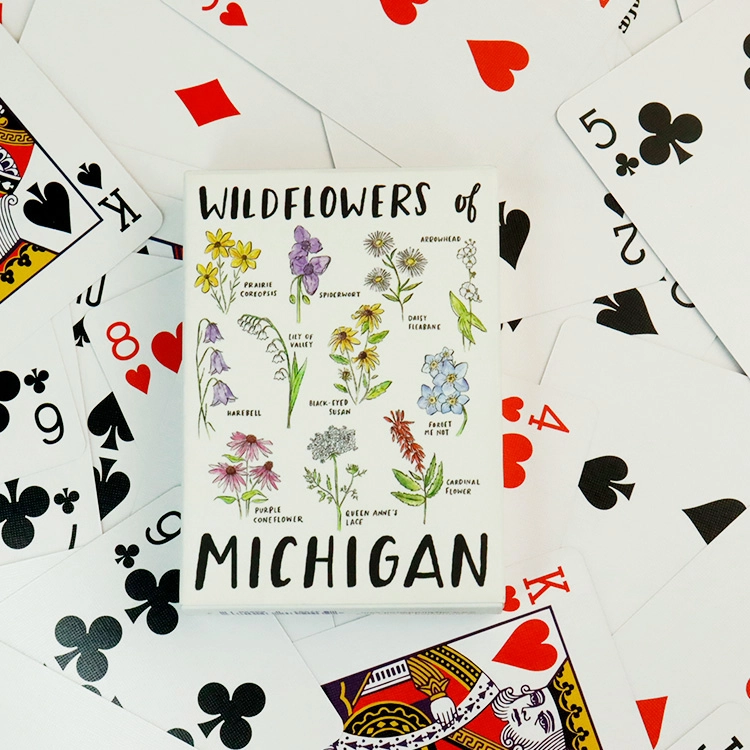
High Quality Eco-Friendly Durable Personalized Design Wildflowers Playing Cards with Custom Design Logo and Box
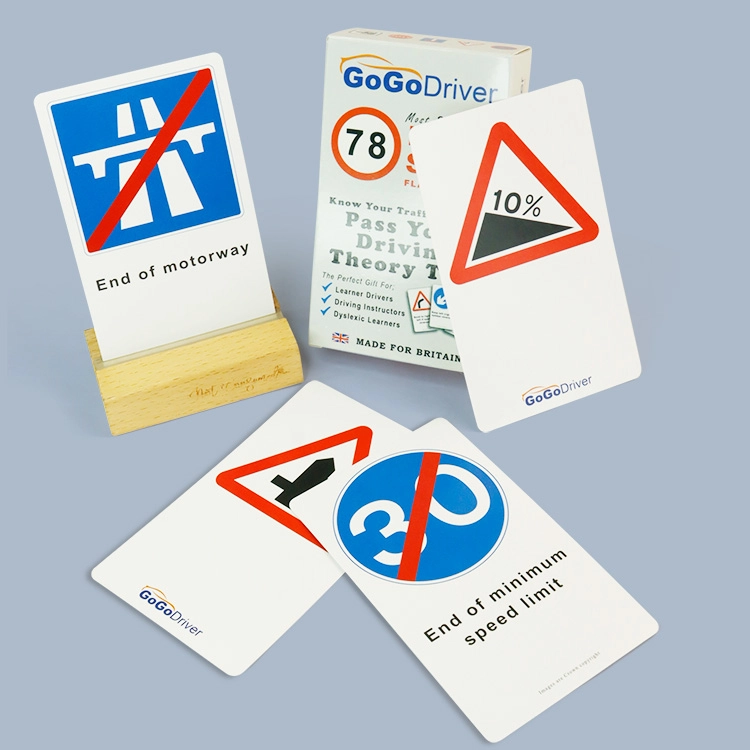
OEM Custom Driving Theory Cards | Personalized Traffic Rules & Test Prep Flashcards in Multiple Languages for Wholesale
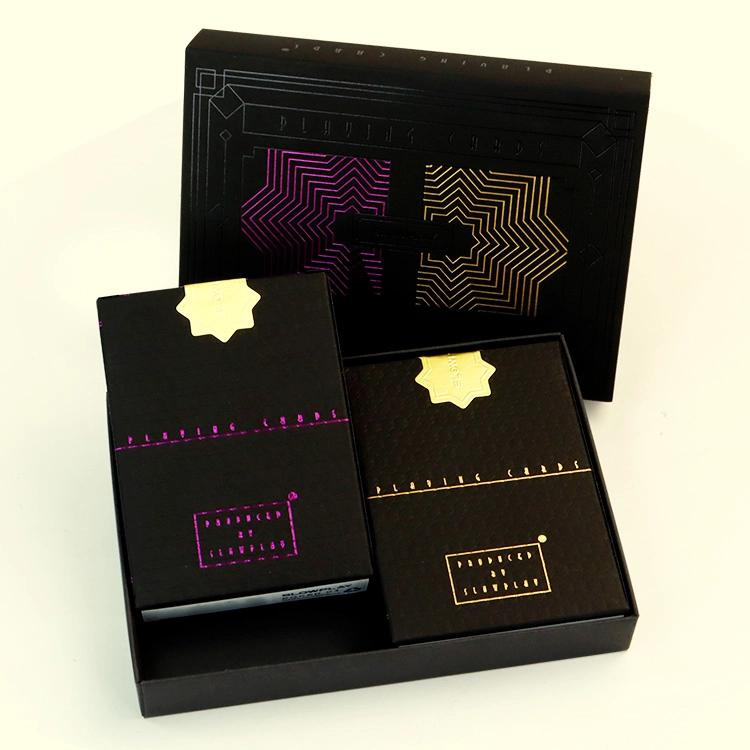
Custom Printing Luxury Two Sets Plastic Poker Playing Cards with Customized Packing