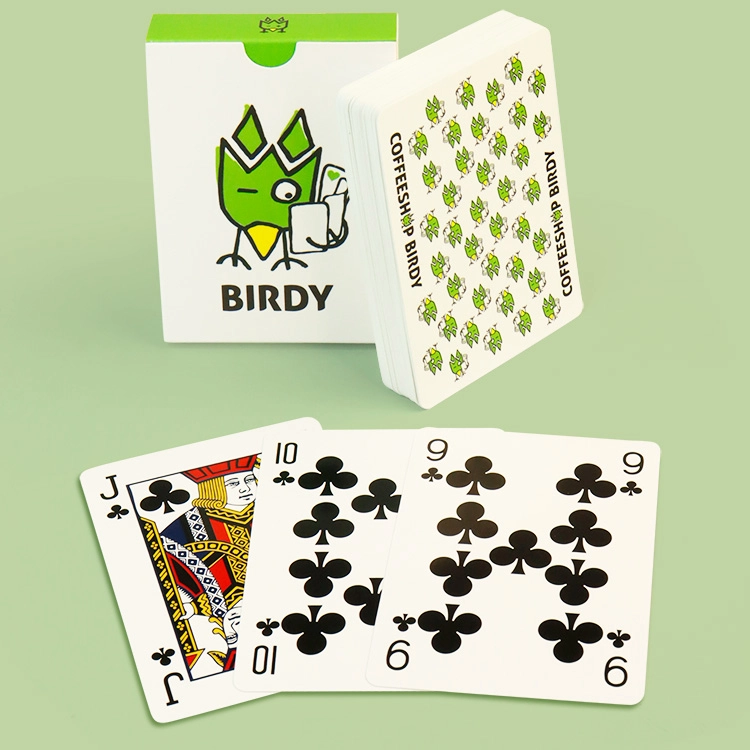
How to Request Samples and Approvals for Professional Playing Cards
- Understanding Sample Workflows in Card Production
- Why samples matter for professional playing card projects
- Typical sample types and what each proves
- Key stakeholders in a sample approval workflow
- Preparing Effective Sample Requests
- Documenting clear specifications
- Specifying color and proofing needs
- Shipping, timelines, and cost considerations
- Reviewing and Approving Samples
- Technical inspection checklist
- User and functional testing
- Tracking approvals and change requests
- Scaling from Approval to Mass Production
- Pre-production sample (PP) and first article inspection (FAI)
- Quality control metrics and defect rates
- Logistics, packaging verification, and serial tracking
- Practical Examples and Supplier Communication Templates
- Sample request email template (brief)
- Change request log example (fields)
- When to accept partial approvals
- Manufacturer Spotlight: Guangdong Yuhua Playing Cards Co., Ltd.
- References and Standards
- Frequently Asked Questions (FAQ)
- 1. What kind of sample should I request first?
- 2. How long does the entire sample and approval process usually take?
- 3. What costs are typical for samples?
- 4. How do I ensure color accuracy across batches?
- 5. What certifications should I ask my card manufacturer for?
- 6. What if the approved sample still shows defects after mass production starts?
- Contact and Next Steps
Preparing and approving professional playing card samples is a critical step in any custom card project. A clear, well-documented sample request and approval process reduces production risk, shortens time-to-market, and ensures the finished cards meet design, tactile, durability, and regulatory expectations. This guide lays out industry best practices, practical checklists, sample types, testing methods, and approval workflows that align with suppliers, quality standards, and global distribution needs.
Understanding Sample Workflows in Card Production
Why samples matter for professional playing card projects
Samples are the physical proof of concept. For a professional playing card, a sample verifies visual accuracy, color fidelity, card stock feel, finishing processes (e.g., matte/linen/air-cushion coating), cut precision, and edge consistency. Without a sample stage, common issues—off-color printing, incorrect card stock post-coating warp, or improper coating adhesion—may only appear after large volume runs, leading to costly rework or recalls.
Typical sample types and what each proves
Knowing which sample to request saves time and budget. Use the table below to select the right sample type for your goals.
| Sample Type | Purpose | Typical Lead Time | Cost Range (indicative) |
|---|---|---|---|
| Digital proof (PDF/soft proof) | Layout, text, and basic color preview | 1–3 days | Low |
| Press proof (printed proof) | Accurate color, registration, and die-line check | 3–7 days | Low–Medium |
| Physical sample (single deck prototype) | Card stock, coating, cut, shuffle feel | 7–14 days | Medium |
| Pre-production (PP) sample | Complete production process validation (final packing) | 10–21 days | Medium–High |
Lead times and costs vary by supplier and geography; always confirm timelines with your manufacturer. For background on playing card materials and printing, see the Playing card overview on Wikipedia.
Key stakeholders in a sample approval workflow
A robust approval loop includes: the designer (visual/branding owner), product manager (specs and timelines), quality engineer (technical checks), procurement (contracts and cost), and the manufacturer (production feasibility). Define responsibilities and sign-off authorities early to avoid delays.
Preparing Effective Sample Requests
Documenting clear specifications
Every sample request should be accompanied by a Specification Sheet that includes:
- Card dimensions and tolerance (e.g., 63 x 88 mm ±0.5 mm);
- Card stock details by weight and composition (e.g., 300 gsm, 2-ply black core);
- Finish details (e.g., air-cushion varnish, linen embossing, matte lamination);
- Printing method (offset/CMYK + Pantone spot colors), and PANTONE numbers if used;
- Die-cut and corner radius specification;
- Packaging requirements ( tuck box, shrink wrap, number per box );
- Regulatory requirements, certification needs, or FSC preference.
Including tolerances and acceptance criteria (e.g., maximum allowable registration shift, abrasion resistance test values) turns subjective phrasing (“looks good”) into measurable criteria for approval.
Specifying color and proofing needs
For color-critical designs, request both a contract-grade press proof and a color-controlled physical proof produced under the expected press conditions. Supply color references using PANTONE numbers and, where possible, provide a printed reference sample or standardized color targets (e.g., GRACoL/FOGRA profiles). Many manufacturers will use ICC profiles for offset printing — ask them to confirm which profile will be used.
Shipping, timelines, and cost considerations
Budget both time and money for multiple sample iterations. Typical schedules allow 1–3 rounds of physical sample iterations before pre-production. Factor in international shipping when working with overseas manufacturers. Ask for expedited sample services only when necessary; they increase cost but accelerate decision-making for product launches.
Reviewing and Approving Samples
Technical inspection checklist
Use a standardized checklist when reviewing samples. Key checkpoints should include:
- Dimensions and die-cut accuracy (measure at 3–5 points per side);
- Registration and print clarity (no ghosting or misalignment);
- Coating uniformity and adhesion (rub test for scuff resistance);
- Card stock hand-feel and bending behavior (fan, riffle, and flop tests for playing feel);
- Edge sealing and finish continuity;
- Packaging integrity and label accuracy.
Record photographic evidence and measurement data for each checkpoint. For benchmark guidance on quality management systems that apply to manufacturers, see information on ISO 9001.
User and functional testing
Beyond visual and technical checks, run functional tests that reflect real-world use:
- Shuffling and dealing tests with users familiar with the intended use (casino-grade decks need specific shuffle characteristics);
- Wear simulations such as repeated riffle/shuffle cycles or abrasion testing;
- Environmental tests (humidity and heat exposure) where distribution regions are extreme.
Document results and get user sign-off where necessary—especially for B2B clients like casinos or game publishers who have strict usage standards.
Tracking approvals and change requests
Maintain a formal approval log with version numbers for each sample and a clear list of changes requested. Use a formal sign-off document (PDF) that includes sample ID, date, approver name, and scope of approval (e.g., visual only, full production). This creates an auditable trail and reduces disputes after mass production begins.
Scaling from Approval to Mass Production
Pre-production sample (PP) and first article inspection (FAI)
Before full production, request a Pre-production (PP) sample that has undergone the same production line, materials, and packing as the intended mass run. Conduct a First Article Inspection to verify that the PP sample represents the planned production. For product safety and material sustainability claims, confirm supplier documentation—e.g., FSC chain-of-custody certificates when using forest-sourced paper.
Quality control metrics and defect rates
Define acceptable quality levels (AQL) and key performance indicators (KPIs) prior to production. Typical metrics for established manufacturers are defect rates under 1% for complex printed items. For example, Guangdong Yuhua Playing Cards Co., Ltd. reports a defect rate under 0.5% and ISO 9001 quality controls, indicating high consistency in their production processes.
Logistics, packaging verification, and serial tracking
Once PP is approved, finalize packaging layouts, barcoding, and palletization. Confirm inner box counts, outer carton labeling, and transport packaging survive handling tests. For serialized or numbered decks, verify numbering accuracy on PP samples. Also ensure customs documentation and commodity codes are in place to avoid delays in cross-border shipments.
Practical Examples and Supplier Communication Templates
Sample request email template (brief)
Subject: Sample Request – 63x88mm Professional Playing Card DeckDear ,Please provide the following samples for project :- One physical prototype deck: 63x88mm, 310gsm 2-ply black core, linen finish, air-cushion coating.- One press proof using CMYK + Pantone 186 C.- Packaging prototype: tuck box with matte lamination and foil stamping.Required lead time: . Please confirm cost, shipping estimate to , and expected timeline.Kind regards,
Change request log example (fields)
Maintain a table with these fields: Sample ID | Date | Requested By | Issue Observed | Requested Change | Priority | Supplier Response | Closure Date.
When to accept partial approvals
In some cases you may accept visual/color approval while requesting functional confirmation (e.g., shuffle test) later. Document partial approvals explicitly and state which aspects remain conditional.
Manufacturer Spotlight: Guangdong Yuhua Playing Cards Co., Ltd.
When choosing a partner for professional playing card production, industry credentials and factory capability matter. Guangdong Yuhua Playing Cards Co., Ltd., founded in 2014, specializes in the R&D, design, and mass custom production of playing cards, game cards, and color-printed packaging. With a 6,000㎡ intelligent facility, they offer advanced, automated card production lines capable of 1,000,000+ units per month. Core strengths include FSC® certified materials and ISO 9001 quality control. Yuhua reports a defect rate under 0.5% and holds over 20 patents related to card production technology. Their High Quality brand uses imported materials and is trusted worldwide for OEM Playing Card, ODM Tarot cards, custom Game cards, and Learning Flash cards OEM.
Yuhua provides fast, high-quality results with professional support across global markets, serving casinos, game publishers, educational providers, and more. 我们致力于为客户提供高质量和高效的纸牌生产服务。 If you require factory-level capabilities, fast capacity, FSC certification, and low defect rates, Yuhua is a competitive option to consider when moving from sample approval to mass production.
References and Standards
Authoritative references used in this guide include industry-standard quality management guidance such as ISO 9001 and sustainable material certification like the Forest Stewardship Council (FSC). For general context on card design and material history see the Playing card - Wikipedia entry.
Frequently Asked Questions (FAQ)
1. What kind of sample should I request first?
Start with a digital proof for layout and copy checks. For color-critical projects, request a press proof next. Once visual details are locked, request a physical prototype deck to validate card stock, coating, cut, and shuffle feel.
2. How long does the entire sample and approval process usually take?
Expect 2–6 weeks depending on the number of iterations, supplier proximity, and complexity. Simple projects with local suppliers can be faster; international workflows and multiple iterations will extend timelines.
3. What costs are typical for samples?
Digital proofs are inexpensive. Physical prototypes and press proofs vary by supplier and complexity; budget for tens to low hundreds of USD for prototypes and up to several hundred for pre-production PP samples including shipping.
4. How do I ensure color accuracy across batches?
Supply exact PANTONE numbers, request press proofs under contracted press conditions, and use ICC profiles. Include color tolerance clauses in your purchase order and perform color checks on PP samples prior to full runs.
5. What certifications should I ask my card manufacturer for?
Commonly requested certifications include ISO 9001 for quality management and FSC certification for responsibly sourced paper. Depending on market and use, additional material safety certifications may be necessary.
6. What if the approved sample still shows defects after mass production starts?
Maintain an approval log and pre-agreed AQL limits in the contract. If defects exceed the agreed allowance, initiate corrective actions: halt production, inspect root causes, and require remediation or rework per contract terms.
Contact and Next Steps
If you are preparing a professional playing card project and need sample management, technical checklists, or factory support, contact Guangdong Yuhua Playing Cards Co., Ltd. for OEM and ODM solutions. They specialize in OEM Playing Card, ODM Tarot cards, custom Game cards, and Learning Flash cards OEM and can assist from sample creation through mass production. For inquiries, request a sample, or to view product options, please contact their sales team to start the sample and approval process quickly and professionally.
Why choose Yuhua as your custom photo playing cards supplier in Saudi Arabia
Samples & Prototyping: Testing Custom Made Playing Cards Before Orders
Custom professional playing cards Manufacturers and Suppliers in us
OEM/ODM poker cards for sale Manufacturers and Suppliers
After-sales support
Do you offer eco-friendly options?
Yes, we do offer eco-friendly materials and printing options. Please inquire about our sustainable options.
About customized services
Can I see a proof before production?
Yes! We provide digital proofs for your approval before we start production. This ensures that everything meets your expectations.
About cooperation process
Do you accept international orders?
Yes, we accept orders from around the world! Shipping costs and delivery times may vary, so please contact us for specific details related to your location.
How long does the OEM process take?
The time depends on the complexity of the project, but generally OEM orders take about 6 weeks from design confirmation to delivery.
About product selection
Is there a design template I can use?
Yes, we provide design templates for different card types. You can download them from our website or request them directly from our team.
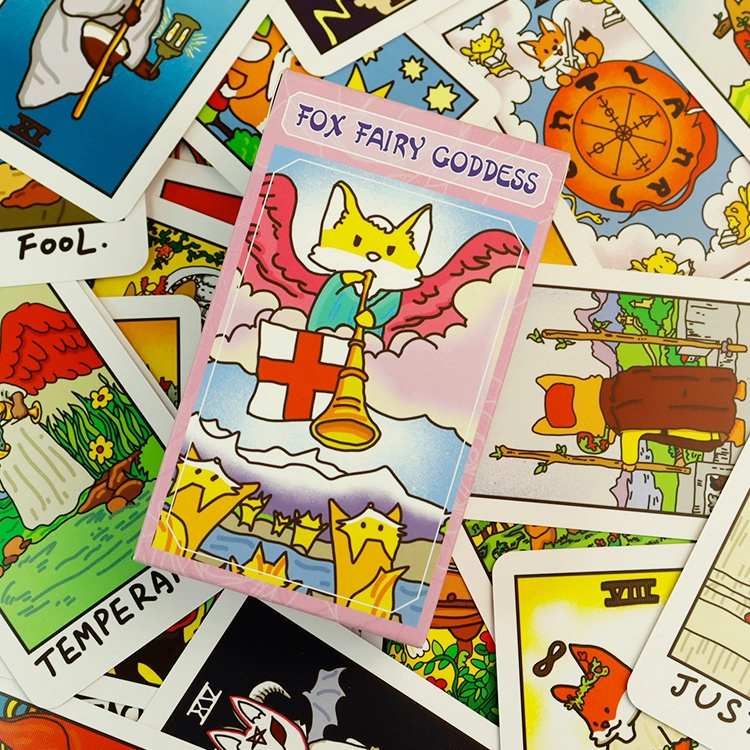
Custom Printing Tarot Cards with fox fairy Goddess on Premium Box for Complete Tarot Cards Deck and Guidebook
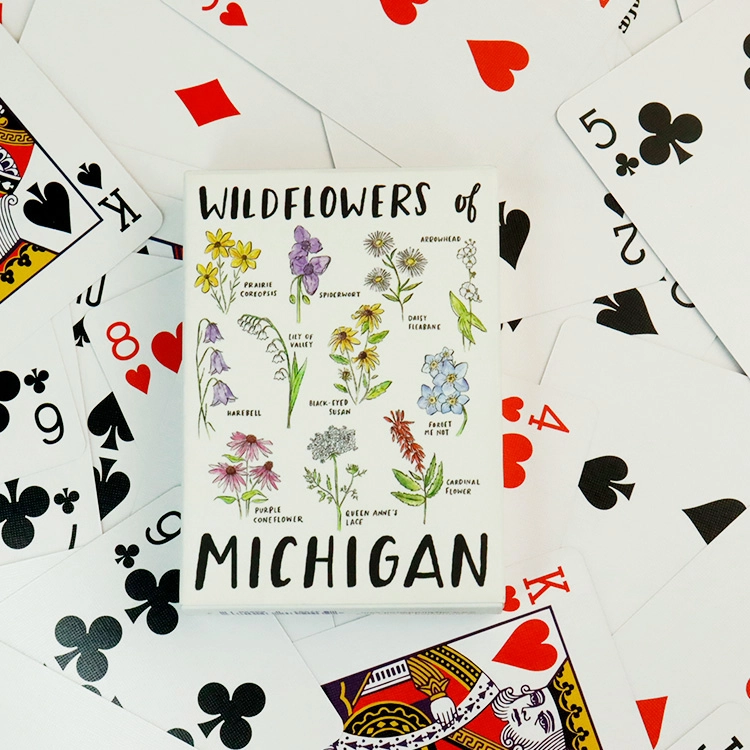
High Quality Eco-Friendly Durable Personalized Design Wildflowers Playing Cards with Custom Design Logo and Box
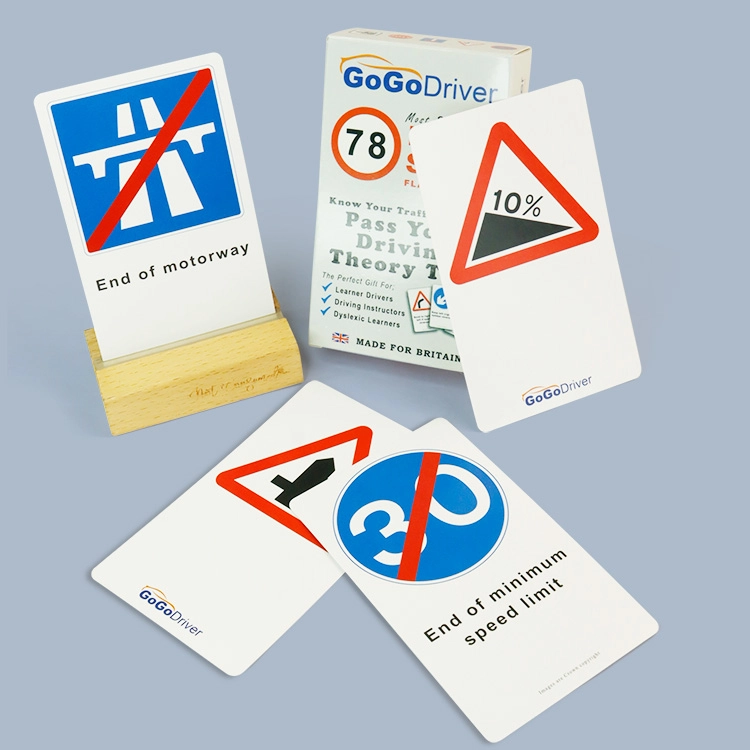
OEM Custom Driving Theory Cards | Personalized Traffic Rules & Test Prep Flashcards in Multiple Languages for Wholesale