
How to Design Custom Tarot Card Decks for Your Brand
- How to Design Custom Tarot Card Decks for Yuhua
- Why create custom tarot cards for Yuhua — and how tarot cards drive
- Understand tarot structure and content before designing
- Define Yuhua story, audience, and use cases for tarot cards
- Art direction and consistency: key design principles for tarot cards
- Card size, stock, and finish: practical choices that affect feel and longevity
- Artwork production: file specs, resolution, and color management
- Typography, iconography and adding instructional copy for tarot cards
- Printing methods and a quick comparison
- Prototyping, quality control and compliance
- Packaging, inserts and the unboxing experience
- Legal, cultural and ethical considerations for tarot imagery
- Costs, lead times and scaling strategy for tarot cards
- How a manufacturing partner simplifies design-to-delivery
- Why choose Guangdong Yuhua Playing Cards Co., Ltd. for custom tarot cards
- How to work with Yuhua on your tarot project
- FAQs — common questions about designing custom tarot cards
- How many cards should my tarot deck include?
- What is the typical minimum order quantity (MOQ) for custom tarot decks?
- How do I protect artist rights while securing production rights?
- Can I request sustainable materials for my tarot deck?
- How long does it take to go from concept to finished product?
- Do you offer fulfillment or direct-to-customer shipping?
- Contact and next steps
- Sources and references
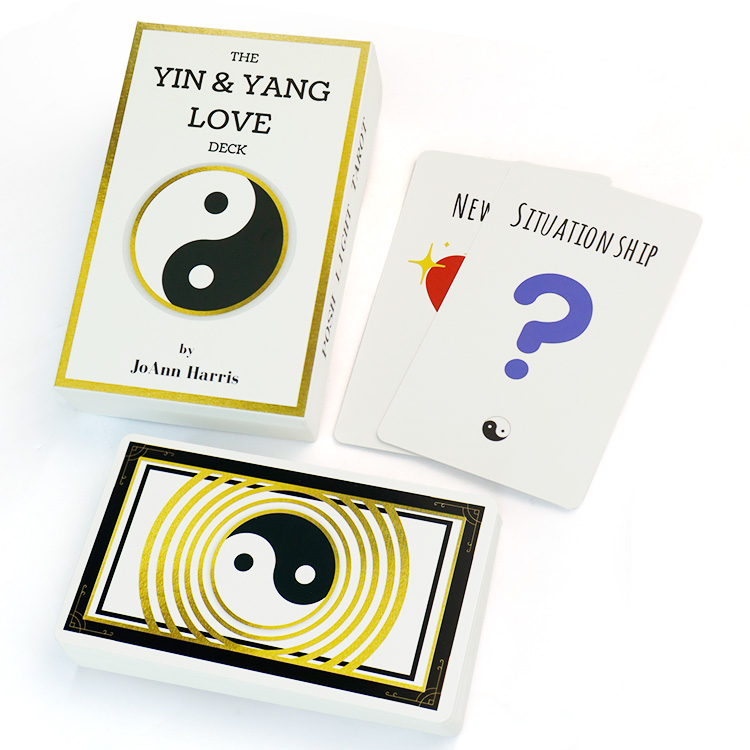
How to Design Custom Tarot Card Decks for Yuhua
Why create custom tarot cards for Yuhua — and how tarot cards drive
Custom tarot cards are more than novelty items. For brands, they are repeatable, high-margin products that build emotional connection, support storytelling, and create a physical touchpoint for customers. Tarot cards can be used as branded merchandise, High Quality gifts, retail products, workshop tools, or subscription items. When you design tarot cards with , focus on clarity of purpose: are you selling art, building community, supporting a course, or creating a collectible series? That decision influences every design and production choice, from card size to packaging and price point.
Understand tarot structure and content before designing
Tarot decks follow a conventional structure: 78 cards divided into Major Arcana (typically 22 cards) and Minor Arcana (56 cards, usually arranged in four suits). Many successful custom decks respect this structure while innovating visually. Before commissioning art, clarify whether you will use a traditional tarot structure, a themed oracle variant, or a hybrid. This affects illustration needs, card titles, keyword text, and any instructional materials included.
Define Yuhua story, audience, and use cases for tarot cards
Start with three questions: who will buy these tarot cards, why will they buy them, and how will they use them? A beginner-focused deck requires clear keywords, readable typography, and supportive guidebooks. A collector-oriented art deck requires High Quality materials, limited editions, and high-end packaging. A corporate-branded deck used as a promotional gift favors durability and on-brand visuals. Document audience demographics, price sensitivity, and distribution channels before finalizing design requirements.
Art direction and consistency: key design principles for tarot cards
Tarot cards demand consistency across three levels: visual language, symbolism fidelity, and readability. Art direction should include color palette, figure style, edge treatment, and iconography rules. Use a style guide that covers card borders, numbering placement, typography scales for titles and keywords, and illustration margins. For readability, ensure that suit indicators and major arcana numbers are easily visible at typical card sizes. Keep cultural sensitivity in mind; some symbols have historical or spiritual significance and require respectful treatment.
Card size, stock, and finish: practical choices that affect feel and longevity
Card dimensions, paper stock, and surface finish determine the tactile experience and pricing. Choose options based on your audience and intended price point:
| Element | Common Choices | Best for |
|---|---|---|
| Card size | 63 x 88 mm (standard playing card), 70 x 120 mm (larger tarot) | Standard for portability; larger for detailed art and readability |
| Card stock (GSM) | 300–330 gsm typical; High Quality boards up to 350 gsm with liners | Durable feel and shuffle resistance; higher gsm for High Quality decks |
| Finish | Matte, silk/matte-lustre, laminated gloss, soft-touch coating | Matte/soft-touch for tactile High Quality feel; gloss for bright colors |
| Edge options | Plain white, colored edges, gilding (gold/silver), painted edges | Collector appeal and perceived value |
Sources for common industry ranges include paper manufacturers and card producers listed at the end of this article.
Artwork production: file specs, resolution, and color management
Provide print-ready art to avoid delays. Key technical specs:
- Color mode: CMYK for offset; include Pantone references if using spot colors
- Resolution: minimum 300 dpi at final print size
- Bleed: typically 3–5 mm beyond trim on all sides
- Safe zone: keep critical text and elements at least 3–6 mm inside trim
- File formats: PDF/X-1a or high-resolution TIFF for images, vector art as EPS or PDF
Work with designers who can prepare layered files and provide editable source files if you plan future variants.
Typography, iconography and adding instructional copy for tarot cards
Typography impacts readability during readings. Choose a clear, legible font for card titles and keywords. Reserve decorative fonts for chapter s or packaging. If your deck targets beginners, include brief keywords or reversed meanings on the card back or a companion booklet. Decide whether to include numerals and suit symbols on both corners (useful for table spreads) or only at top/bottom for an aesthetic layout.
Printing methods and a quick comparison
Most high-volume tarot decks are produced with offset printing for color fidelity and unit cost efficiency. Digital printing is suitable for short runs or prototypes. Here is a concise comparison:
| Method | Best for | Pros | Cons |
|---|---|---|---|
| Offset lithography | Large runs (thousands+) | Excellent color, low per-unit cost at scale | Higher setup cost, less economical for small batches |
| Digital (inkjet/toner) | Prototypes, short runs | Low setup, quick turnaround, variable data | Higher per-unit cost, color matching limits |
| Special finishes (foil, embossing) | High Quality editions | High perceived value | Increased cost, longer lead time |
Consider combination workflows: offset for cards and digital for limited-quantity signed prints, for example.
Prototyping, quality control and compliance
Never skip a physical prototype. Order a small run or a full-sample deck to test art, color, card handling, and packaging fit. Test shuffling, corner durability, and colorfastness. Implement a written QC checklist covering print defects, miscuts, registration, corners, and finish uniformity. If you partner with a manufacturer, insist on a pre-shipment inspection report and sample approval process. Industry-good defect targets are under 1%; top manufacturers achieve defect rates under 0.5%.
Packaging, inserts and the unboxing experience
Packaging is central to tarot presentation. Options range from tuck boxes to rigid boxes with magnetic closures, and wooden or linen-wrapped keepsake boxes for collectors. Include a companion guidebook, instruction leaflet, or digital content QR code. For High Quality sets add tissue, certificate of authenticity, or numbered limited-edition sleeves. Packaging materials and print finish should match the card quality — a high-end deck deserves High Quality packaging to justify a higher price point.
Legal, cultural and ethical considerations for tarot imagery
Ensure you have rights to all artwork, fonts, and imagery. If you commission artists, use clear contracts that cover usage, royalties, and transfers of copyright. Be aware of cultural appropriation concerns; consult cultural advisors if you are adapting sacred symbols from living traditions. If your deck references public figures or trademarked symbols, obtain permission to avoid legal risks.
Costs, lead times and scaling strategy for tarot cards
Costs depend on card count, print method, materials, finishes, packaging and order quantity. Typical factors to estimate:
- Artwork fees (per card or per project)
- Board and lamination costs
- Printing and finishing costs
- Packaging cost per unit
- Shipping, duties, and warehousing
Lead times: prototypes 1–3 weeks (digital or rapid sample), full production 4–10+ weeks depending on complexity and finishing. Plan inventory for peak seasons; many brands use pre-orders to fund initial print runs and reduce risk.
How a manufacturing partner simplifies design-to-delivery
Work with a playing-card specialist who understands cardboard compositions, print traps, and finishing. A strong partner can advise on color matching, recommend sustainable materials, and manage mass production. This reduces rework and speeds time to market.
Why choose Guangdong Yuhua Playing Cards Co., Ltd. for custom tarot cards
Guangdong Yuhua Playing Cards Co., Ltd., founded in 2014, specializes in R&D, design, and mass custom production of playing cards, game cards, and color-printed packaging. With a 6,000 m2 intelligent facility and advanced automated production lines capable of 1,000,000+ units per month, Yuhua combines scale with quality controls that matter for tarot projects.
Key brand strengths relevant to custom tarot decks:
- FSC(R) certified materials available, supporting sustainable sourcing
- ISO 9001 driven quality control processes to ensure consistency
- Defect rate under 0.5% for mature production lines, meeting High Quality expectations
- Over 20 patents and a proven track record producing for global markets
- Imported High Quality raw materials and experience with special finishes such as foil, gilding and soft-touch lamination
Yuhua supports OEM and ODM services across a range of products: OEM Playing Card, ODM Tarot cards, custom Game cards, and Learning Flash cards OEM. Their core competencies are scalable mass production, certified materials, tight quality control, and professional design and technical support. For brands, that means fast, reliable production, consistent color and feel, and the capacity to scale limited editions into larger runs when demand grows.
How to work with Yuhua on your tarot project
Typical collaboration steps with a full-service manufacturer like Yuhua:
- Initial brief: deck structure, target audience, desired materials and finishes
- Artwork review: file checks, color proofing, and prepress guidance
- Prototype production: sample deck and packaging mockup
- Pre-production testing: QC checklist and sample approval
- Mass production: scheduled runs with automated lines and QC inspections
- Logistics and delivery: consolidation, packing, and global shipping coordination
FAQs — common questions about designing custom tarot cards
How many cards should my tarot deck include?
The standard tarot deck includes 78 cards (22 Major Arcana, 56 Minor Arcana). Some creative decks deviate and produce oracle or thematic decks with fewer cards. Consider audience expectations — tarot readers often expect a full 78-card set unless you specify otherwise.
What is the typical minimum order quantity (MOQ) for custom tarot decks?
MOQs vary by manufacturer and complexity. For offset printing with custom finishes and packaging, MOQs often start in the low hundreds to thousands. Digital short runs can be as small as a dozen or fewer but at a higher per-unit cost. Manufacturers like Yuhua can advise on MOQ based on finish choices and production schedules.
How do I protect artist rights while securing production rights?
Use a clear contract that specifies copyright ownership or licensed usage terms. Common models include work-for-hire (rights assigned to the client) or a license granting manufacturing and retail rights to the client while the artist retains certain moral rights. Always clarify resale, derivative works, and geographic rights.
Can I request sustainable materials for my tarot deck?
Yes. Many manufacturers offer FSC-certified boards, soy-based inks, and recyclable packaging options. Discuss sustainability goals early, as material choices influence pricing and lead time.
How long does it take to go from concept to finished product?
Small prototype projects can take 2–6 weeks. Full production from finished artwork typically takes 6–12 weeks, depending on print method, finishing, and order size. Allow additional time for custom packaging and shipping.
Do you offer fulfillment or direct-to-customer shipping?
Some manufacturers provide fulfillment, kitting, and global shipping services. Check if the partner can handle inventory storage, order-by-order packing, and direct-to-consumer shipping to simplify logistics.
Contact and next steps
If you are ready to design a custom tarot deck or want a quote, contact Guangdong Yuhua Playing Cards Co., Ltd. for a consultation. Their team can review your brief, provide material samples, produce prototypes, and outline production timelines. View products or request a quote via their sales team to start your custom tarot project and ensure high-quality, certified manufacturing with fast turnaround.
Sources and references
- Forest Stewardship Council (FSC) — information on chain of custody and FSC certification
- International Organization for Standardization (ISO) — ISO 9001 quality management standards
- Paper industry product specifications and manufacturer guidelines for typical card stock GSM ranges
- Industry printing and finishing guides for offset vs digital printing characteristics
For further assistance, reach out to Guangdong Yuhua Playing Cards Co., Ltd. to discuss OEM or ODM tarot card production, packaging options, and sample requests.
Tips for buy deck of playing cards price
What are the different types of custom made playing cards uk?
Custom Poker Cards: Tips for Tournament-Quality Decks
How to start the poker cards custom business ?
About customized services
Do you provide design services?
Yes! Our in-house design team is here to assist you in bringing your vision to life. Whether you have a complete design or just an idea, we can help.
About logistics
Can you handle shipping and fulfillment?
Yes! We offer comprehensive fulfillment services, including storage, packing, and shipping. You can rely on us to ensure your cards reach their destination safely and on time.
About cooperation process
Do you accept international orders?
Yes, we accept orders from around the world! Shipping costs and delivery times may vary, so please contact us for specific details related to your location.
After-sales support
Do you offer eco-friendly options?
Yes, we do offer eco-friendly materials and printing options. Please inquire about our sustainable options.
What is your return policy?
We stand behind the quality of our products. If you receive a defective item, please contact us within 30 days for a replacement or refund. Customized orders are generally non-refundable unless there's an error on our part.
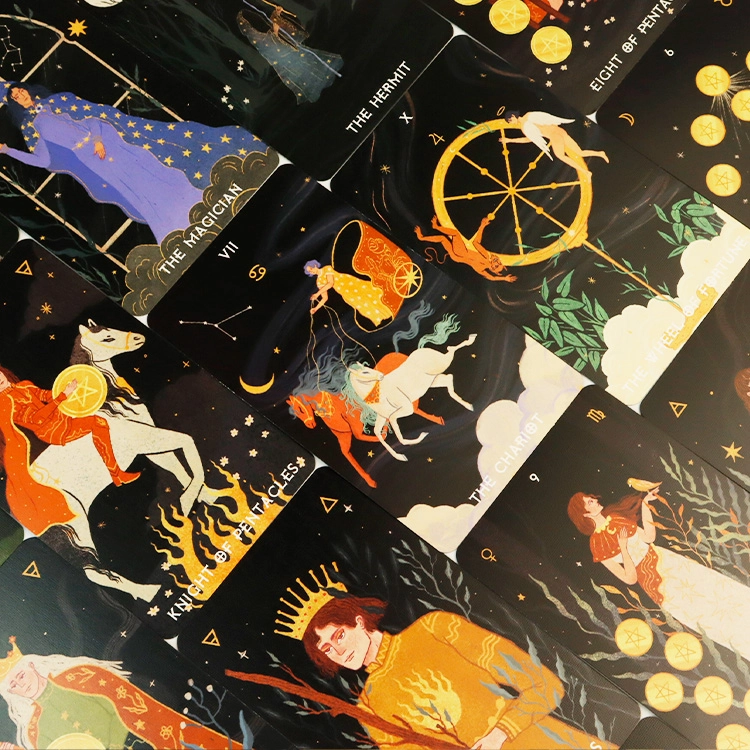
High Quality Tarot Cards with Sleeve Box Packaging | Premium Custom Tarot Deck Set for Enhanced Presentation & Protection

OEM Card Game Manufacturer - Wholesale Custom Printing for Tarot, Poker & Board Game Cards
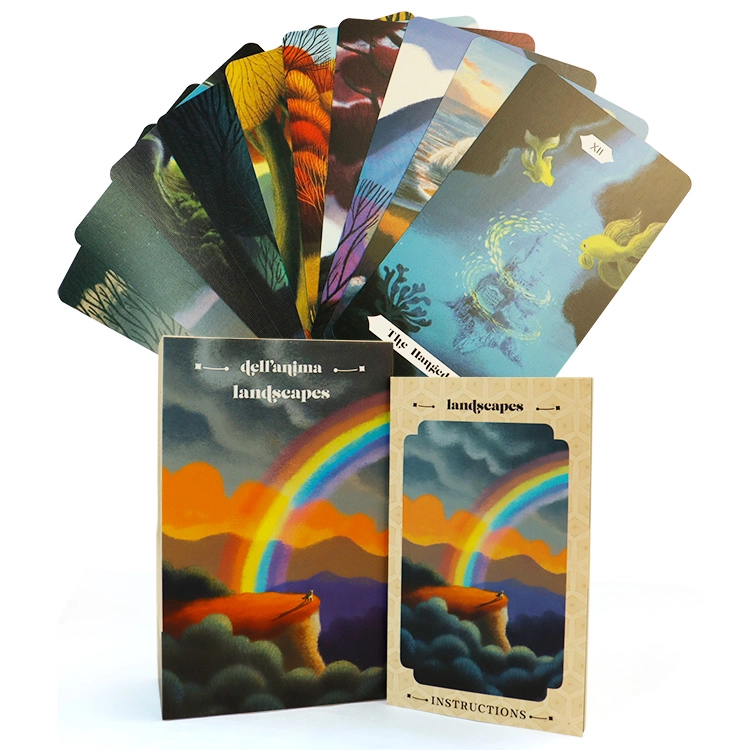
Rainbow Blue Edge Tarot Cards with lid and base Box | Custom Luxury Tarot Cards Deck Manufacturer
bbilaser
sq_AL