
Custom Made Playing Cards: The 2026 Ultimate Guide to Design, Materials, and Manufacturing
- What are the essential elements of custom made playing cards?
- Material Science: Comparing Paper Cores and PVC
- Finishes and Texture: Linen vs Smooth
- The 2026 Design Workflow: Integrating AI and Traditional Art
- Industry Leading Solution: High-Performance Manufacturing
- Printing Methods: Offset vs Digital
- Sustainability: The 2026 Standard
- Common Mistakes to Avoid in Card Production
- Future Trends: What to Expect in 2026 and Beyond
- References
The playing card industry is undergoing a massive transformation, blending centuries-old tradition with cutting-edge 2026 technology. With the global playing cards and board games market valued at approximately $19.9 billion in 2024 and projected to reach nearly $32 billion by 2030 (Grand View Research), the demand for high-quality, customized decks is at an all-time high. Whether you are a magician, a board game creator, or a brand looking for premium merchandise, understanding the technical nuances of cardstock core types and manufacturing is non-negotiable.
What are the essential elements of custom made playing cards?
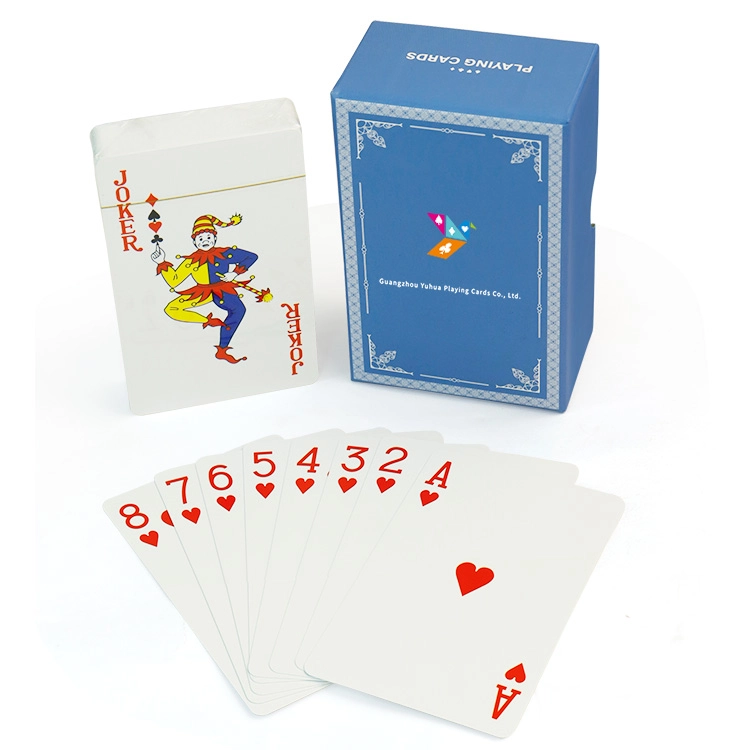
Custom playing cards are defined by four critical components: the internal paper core, surface texture (finish), standardized dimensions, and protective coating.
To create a professional-grade deck, you must meticulously select each of these elements based on your end-user's needs. A cardist requires different handling properties than a casual board game player. Understanding the interplay between materials and engineering is the first step toward a successful product launch.
- Core Materials: The internal layer (black, blue, or white core) determines the card's opacity and "snap"—the ability to regain shape after bending.
- Surface Texture: The tactile feel, such as linen finish vs smooth, which dictates how air flows between cards during shuffling.
- Dimensions: Standard poker size (2.5 x 3.5 inches) is the industry default, while bridge size (2.25 x 3.5 inches) is narrower for easier handling.
- Coating: A chemical varnish or lamination applied to seal the ink, protect against skin oils, and control the "slip" or friction of the deck.

Material Science: Comparing Paper Cores and PVC
The quality of a playing card is primarily determined by its core, which dictates opacity, flexibility, and durability.
Choosing the right stock is the single most important decision in the manufacturing process. Cheap promotional decks often use a single layer of paper, while professional casino decks rely on a multi-ply construction to prevent "peeking" through the back of the card when held up to a light source.
- Black Core: The professional gold standard (310gsm+). It contains a dense black graphite layer between two sheets of paper, guaranteeing 100% opacity for casino integrity.
- Blue/White Core: A cost-effective standard for retail board games (often 300gsm). It offers excellent snap but may show slight transparency under intense light.
- PVC/Plastic: The waterproof, tear-proof choice. 100% plastic cards are virtually indestructible, making them ideal for outdoor use or high-traffic poker rooms.
- Eco-Fiber 2026: Emerging plant-based stocks. As noted by industry reports, the sustainable packaging market is projected to exceed $423 billion by 2029, driving the adoption of FSC-certified, plastic-free alternatives.
Finishes and Texture: Linen vs Smooth
The finish of a card refers to the physical texture embossed into the paper, significantly affecting how the cards glide and handle.
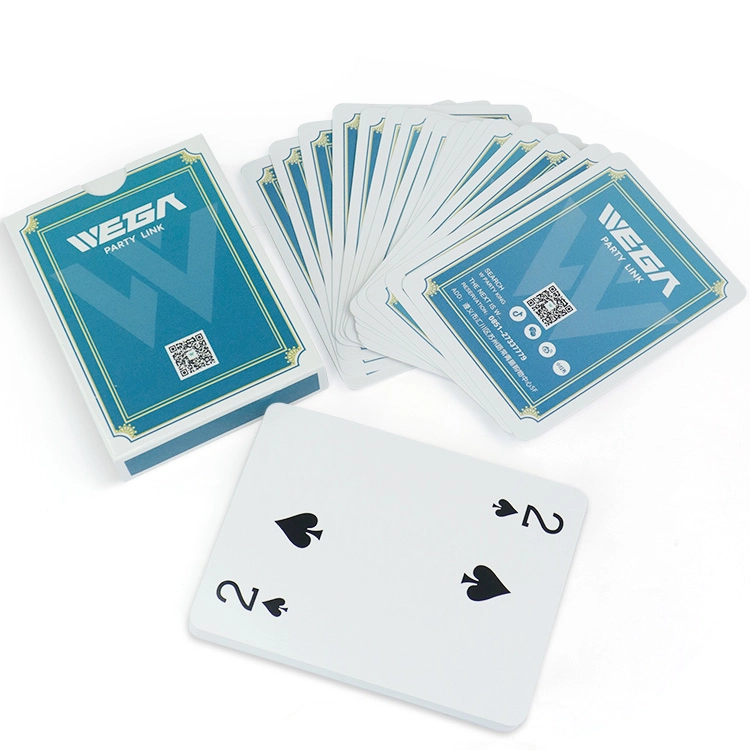
The debate of linen finish vs smooth is central to user experience. A visually stunning deck that clumps together when shuffled will fail commercially. The texture creates micro-pockets of air, acting as a cushion that reduces surface area contact between cards.
- Linen Finish: Features a cross-hatch, fabric-like texture. This is preferred by magicians and cardists because the air pockets allow for smooth fans and spreads.
- Smooth Finish: A flat, polished surface. It makes colors appear more vibrant and sharp, making it ideal for art-heavy decks or standard board games where intricate handling isn't required.
- Butter Finish: A newer hybrid texture gaining popularity in 2026, offering a soft, velvety touch with the glide of a linen stock.
The 2026 Design Workflow: Integrating AI and Traditional Art
Modern deck design combines generative AI for rapid prototyping with vector-based precision for final production files.
Creators are no longer limited by slow iteration cycles. By leveraging AI tools, designers can generate hundreds of suit variations or character concepts in minutes, then refine them using industry-standard software like Adobe Illustrator. However, the technical setup remains strict to ensure print readiness.
- AI Prototyping: Use generative tools to explore themes (e.g., "Cyberpunk 2026 court cards") before committing to manual illustration.
- Vector Refinement: Convert AI concepts into vector paths to ensure crisp lines at any size, preventing pixelation during offset vs digital printing for cards.
- Custom Tuck Box Templates: Download accurate dielines early. Design your packaging in 2D but visualize it with 3D mockups to check for alignment issues on the flaps.
- Augmented Reality (AR): Embed invisible QR codes or image triggers into the card art, allowing users to scan cards with a smartphone for interactive 3D animations.
Industry Leading Solution: High-Performance Manufacturing
Achieving casino-grade quality requires a manufacturing partner with advanced automated lines and strict quality control protocols.
For creators looking to scale, partnering with an experienced manufacturer is vital. Guangdong Yuhua Playing Cards Co., Ltd., for example, operates a 6,000㎡ intelligent facility capable of producing over 1,000,000 units per month. Their experience demonstrates that high-volume production does not have to sacrifice quality.
- Automated Quality Control: Yuhua utilizes intelligent optical systems to maintain a defect rate under 0.5%, ensuring every deck in a 50,000-unit run is identical.
- Precision Cutting: Automated die-cutting ensures perfectly centered borders, a critical requirement for magicians who rely on symmetry.
- Global Compliance: With ISO 9001 certification and over 20 patents, established manufacturers provide the documentation needed for global retail distribution.
Printing Methods: Offset vs Digital
Offset lithography is the standard for high-volume, color-critical runs, while digital printing offers speed and flexibility for small batches.
When deciding between offset vs digital printing for cards, the primary factors are quantity and budget. According to Smithers, the digital printing market is forecast to reach $48.5 billion by 2030, driven by the demand for hyper-customization and short turnaround times.
- Offset Printing: Uses physical metal plates to transfer ink. It offers superior color accuracy (Pantone matching) and becomes significantly cheaper per unit for orders over 1,000 decks.
- Digital Printing: Acts like a high-end office printer. It requires no setup plates, allowing for "Print-on-Demand" (POD) of single decks, though the per-unit cost is higher.
- Hybrid Solutions: Some 2026 campaigns use digital for limited-edition, serialized prototypes and offset for the main fulfillment run.
Sustainability: The 2026 Standard
Modern playing card production prioritizes biodegradable materials, soy-based inks, and plastic-free varnishes.
Sustainability is no longer a niche; it is a market requirement. With 72% of consumers stating that packaging design influences their purchasing decisions (UPrinting), using eco-friendly playing card materials is a powerful differentiator. Brands like Yuhua are leading this shift by offering FSC® certified materials, ensuring that the paper comes from responsibly managed forests.
- Water-Based Varnishes: Replaces toxic, solvent-based coatings without compromising slip or durability.
- Plastic-Free Packaging: eliminating shrink wrap in favor of paper seals or custom tuck boxes made from recycled stock.
- Soy Inks: deliver vibrant colors while being easier to de-ink during the recycling process compared to petroleum-based alternatives.
Common Mistakes to Avoid in Card Production
The most frequent errors in custom deck manufacturing involve incorrect file preparation and ignoring material grain direction.
Even the most beautiful artwork can result in a defective product if technical specifications are ignored. A professional finish relies on math and physics as much as it does on art.
- Ignoring Bleed Zones: Failing to extend artwork 3mm beyond the trim line results in ugly white edges if the cutting blade shifts even slightly.
- Wrong Grain Direction: If the paper grain runs perpendicular to the shuffle direction, the cards will warp and snap poorly.
- Text in the Gutter: placing critical text or icons too close to the fold lines of custom tuck box templates makes them unreadable.
- Over-Inking: Using "Rich Black" (100% C, M, Y, K) on thin text causes ink to bleed and look muddy; use 100% K (Black) for crisp text.
Future Trends: What to Expect in 2026 and Beyond
The future of playing cards lies in smart integration, where physical decks bridge the gap to digital experiences.
As we move through 2026, the static deck of cards is evolving into a connected device. We are seeing a convergence of collectible art and digital utility.
- NFC-Embedded Cards: High-end decks with Near Field Communication chips inside the tuck box to verify authenticity on the blockchain.
- Thermal Inks: Heat-sensitive coatings that reveal hidden messages or change suit colors when touched.
- Hyper-Personalization: AI-driven print queues allowing every single deck in a run to have unique back designs for distinct user identification.
References
Digital Printing Market Size, Trends, Share & Research Report 2030
- Playing Cards and Board Games Market Size & Outlook
- Digital Printing Market Size & Trends
- Sustainable Packaging Statistics 2025
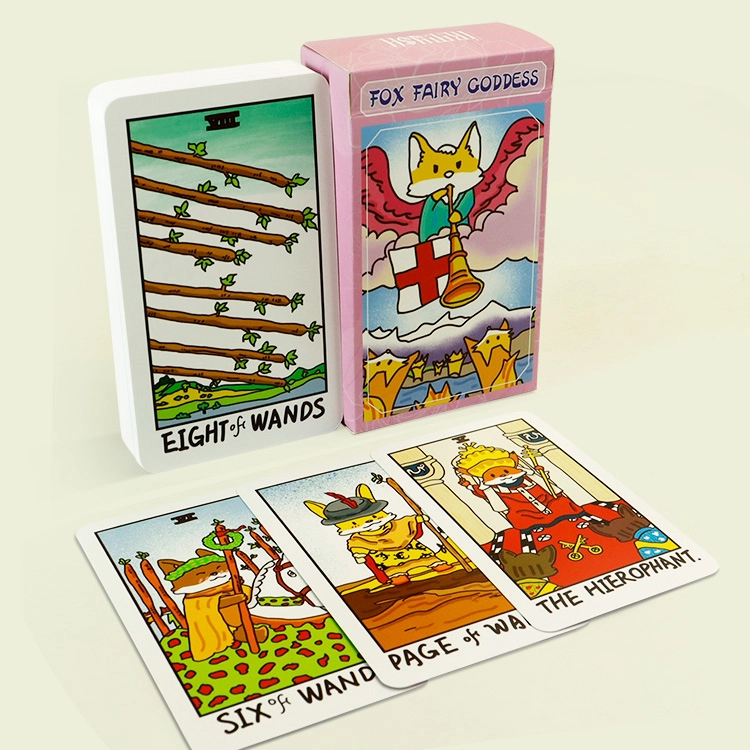
Custom Printing Tarot Cards with fox fairy Goddess on Premium Box for Complete Tarot Cards Deck and Guidebook
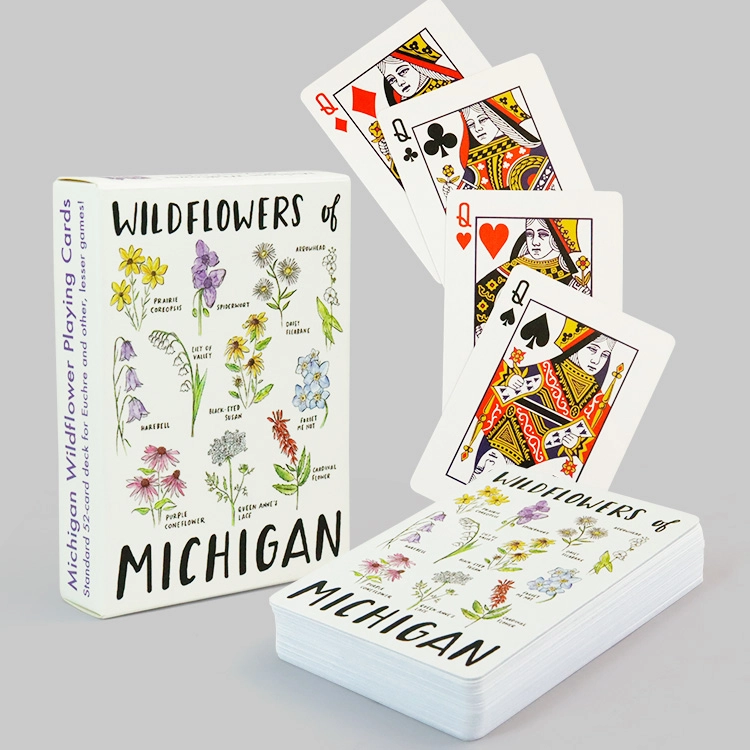
The Curated Wild: A Lifestyle Brand's Statement Piece – The Power of Custom Wildflower Playing Cards
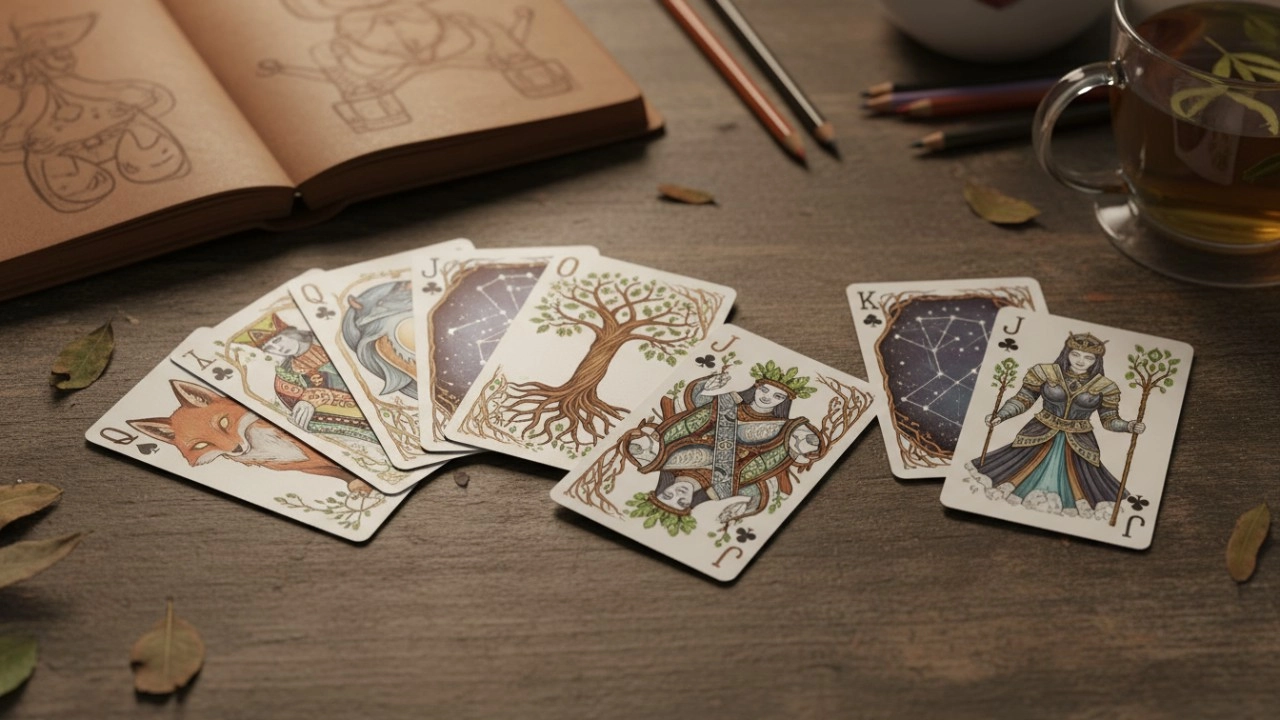
Custom Poker Card Printing: How to Choose a Professional Manufacturer for Your Brand
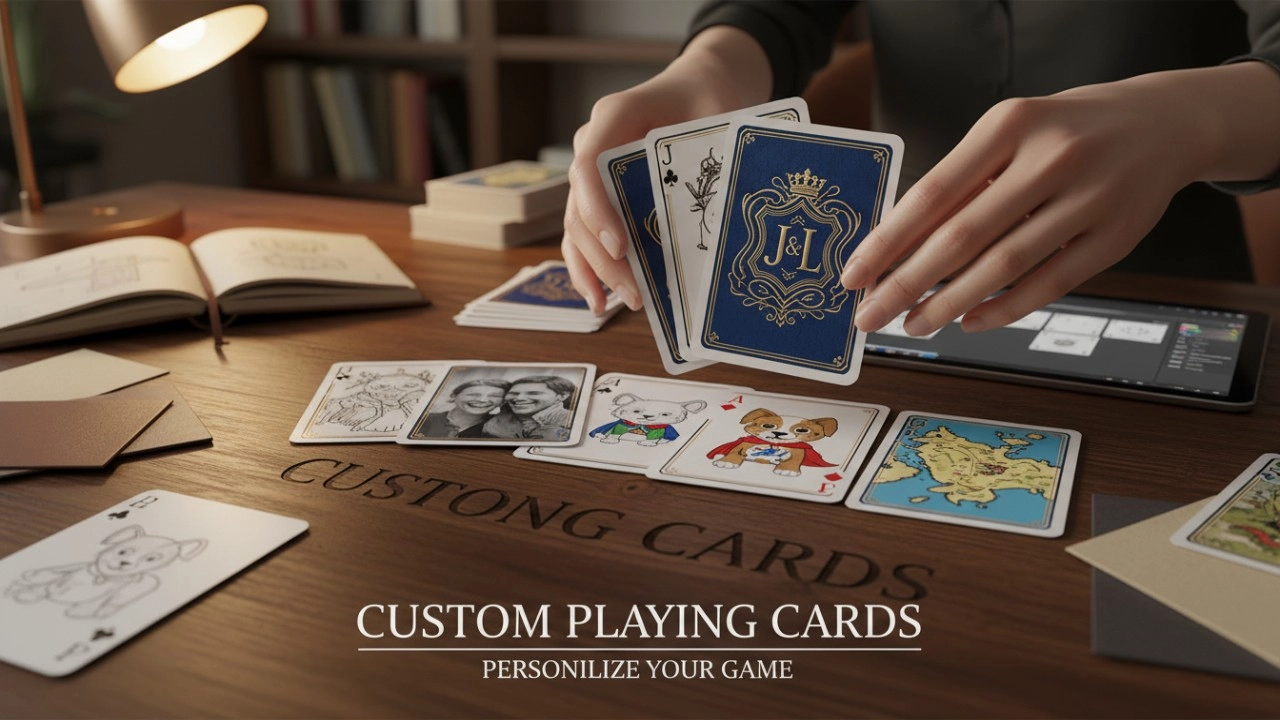
How to Create Your Own Custom Playing Cards: A Step-by-Step Design Tutorial (2026 Edition)

Beyond KEM: The 10 Best Professional Poker Card Brands You Didn't Know About (2026 Edition)
About cooperation process
Do you accept international orders?
Yes, we accept orders from around the world! Shipping costs and delivery times may vary, so please contact us for specific details related to your location.
About logistics
Can you handle shipping and fulfillment?
Yes! We offer comprehensive fulfillment services, including storage, packing, and shipping. You can rely on us to ensure your cards reach their destination safely and on time.
About customized services
Can I see a proof before production?
Yes! We provide digital proofs for your approval before we start production. This ensures that everything meets your expectations.
Do you offer samples?
Yes! We can provide samples of our card materials and finishes. Please contact us to request samples relevant to your project.
About price and payment
What are the payment terms?
We require a 30% deposit upon order confirmation and the balance before shipment.
WE’D LOVE TO  HEAR
HEAR
FROM YOU
Please send us your inquiry details; our team will contact you ASAP.
20+ years of experience in custom playing cards, game cards, tarot cards, flashcards, and board games, as well as paper and paperboard box manufacturing.