
The Scalable Learning & Engagement Library: How Series of Game Cards Revolutionize Corporate Training
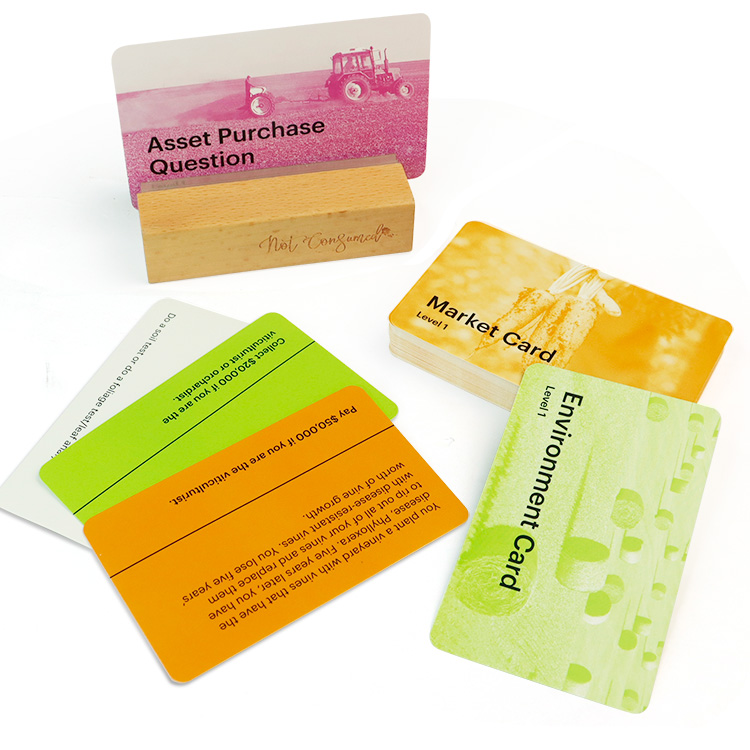
Corporate training faces a critical paradox: the need for scalable, consistent content versus the reality of costly, static, and quickly outdated programs. The traditional model—expensive one-off workshops and forgettable handbooks—fails to deliver lasting behavior change or adapt to evolving business needs. The solution lies in reimagining training not as an event, but as a dynamic, living system. Enter the Scalable Learning & Engagement Library, powered by modular series of game cards. These are not simple toys; they are sophisticated, thematic content assets (Leadership, Sales, Safety, Culture) designed as a core infrastructure. This approach turns compliance into quests, sales techniques into strategic duels, and leadership principles into collectible wisdom—creating a sustainable, engaging, and endlessly updatable ecosystem for organizational development.
- Chapter 1: The Broken Model: Why One-Off Training Fails the Modern Enterprise
- Chapter 2: Architecting Your Corporate "Knowledge Card Vault"
- Chapter 3: From Onboarding to the C-Suite: A Full Talent Lifecycle Solution
- Chapter 4: Measuring What Matters: The ROI of Gamified, Sustainable Learning
- Chapter 5: Building Your Library: A Strategic Implementation Blueprint
- Conclusion: The End of Training as a Cost Center, The Dawn of Learning as an Asset
Chapter 1: The Broken Model: Why One-Off Training Fails the Modern Enterprise
Diagnosing the unsustainable costs and diminishing returns of traditional corporate learning.
-
The "Fire-and-Forget" Cost Cycle
Single-session workshops and printed manuals represent sunk costs with zero residual value. Once delivered, the content is static. When processes change or new regulations emerge, the entire program must be rebuilt from scratch. A series of game cards, by contrast, is a permanent, updatable asset. New card packs (e.g., "Q4 Regulatory Update" or "Hybrid Team Dynamics") can be seamlessly added to the core library, protecting your initial investment and extending its relevance indefinitely. -
The Engagement Gap and the "Forgetting Curve"
Passive learning leads to rapid knowledge decay. Studies show learners forget up to 70% of new information within 24 hours without reinforcement. A series of game cards is built for active, social, and repeated use. The game mechanics—drawing, discussing, strategizing—create natural spaced repetition and peer-to-peer teaching, dramatically improving knowledge retention and transfer from the classroom to the job. -
The Impossibility of Personalized Scale
In large organizations, a one-size-fits-all workshop cannot address the varied experience levels of a new hire versus a seasoned manager. A modular series of game cards solves this. Foundational "Core Rule" cards establish basics for everyone, while advanced "Strategy" and "Scenario" card packs allow high-potentials and leaders to dive deeper, enabling truly personalized development paths within a unified system. -
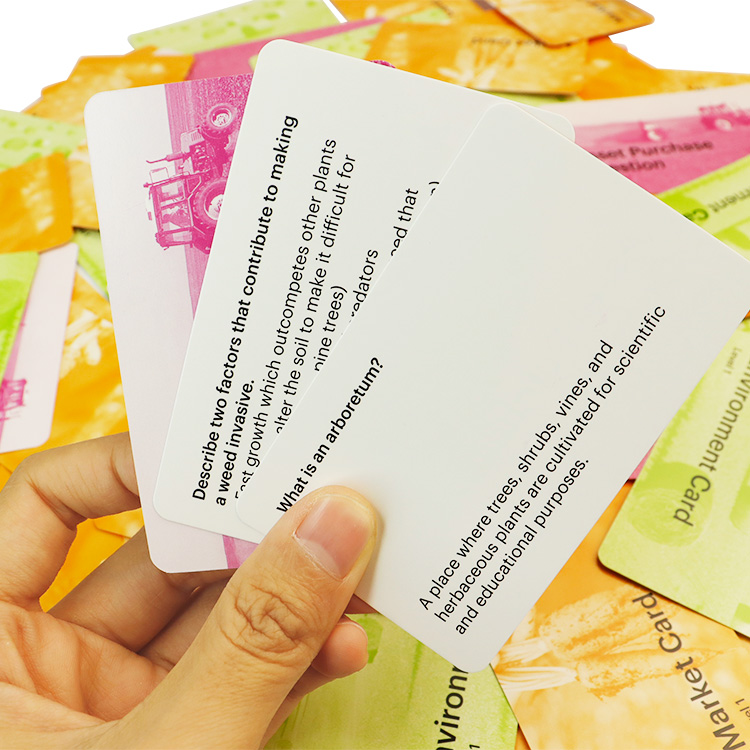
Chapter 2: Architecting Your Corporate "Knowledge Card Vault"
Design principles for building a modular, future-proof training library with series of game cards.
-
Thematic Series as Learning Domains
The library is organized into distinct, thematic series of game cards, each a dedicated content pillar:-
Leadership Series: Cards featuring decision-making dilemmas, coaching frameworks, and change management archetypes.
-
Sales & Negotiation Series: Cards with customer objection scenarios, value proposition builders, and competitive tactics.
-
Safety & Compliance Series: Cards depicting hazard identification, protocol quizzes, and incident response drills.
-
Culture & Values Series: Cards illustrating company values in action, ethical gray areas, and collaboration principles.
Each series is a standalone tool but designed to interoperate, allowing for cross-disciplinary learning (e.g., using a leadership card to resolve a sales scenario).
-
-
Core Mechanics: The "Game Engine" for Learning
The power lies in the consistent, reusable game mechanics applied across all series:-
Prompt & Reflect: Cards pose challenges, questions, or dilemmas.
-
Discuss & Debate: Small groups negotiate interpretations and solutions.
-
Apply & Strategize: Learners connect card concepts to real-world projects.
-
Collect & Progress: Completing decks or mastering levels provides visible achievement, fueling motivation.
This standardized "engine" means facilitators need to learn the system once, then can deploy it endlessly across any topic.
-
-
The Update and Expansion Framework
Sustainability is engineered in. The system is designed for "expansion packs":-
Annual Compliance Refresh Packs: Update regulations without overhauling the entire safety series.
-
Leadership Case Study Packs: Add new, company-specific leadership challenges based on recent corporate history.
-
Industry Trend Packs: Introduce content on emerging topics like AI ethics or ESG.
This turns your training department from a constant content creator into a savvy curator and updater of a living library. -
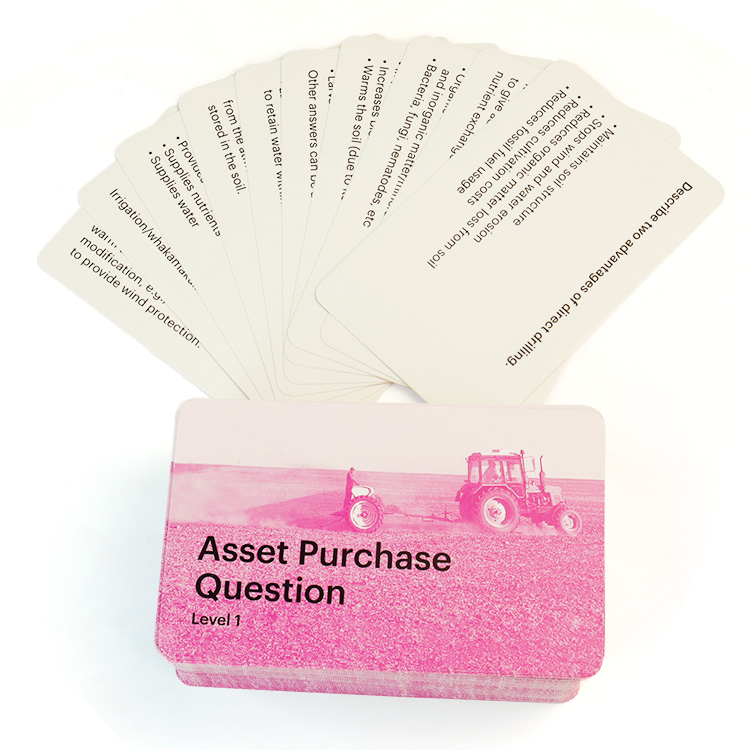
-
Chapter 3: From Onboarding to the C-Suite: A Full Talent Lifecycle Solution
Deploying the library across the entire employee journey.
-
Phase 1: The New Hire "Boot Camp"
Replace overwhelming information dumps with an engaging onboarding quest. New recruits receive a starter deck from the Culture & Values Series and the Core Compliance Series. Through guided gameplay, they learn vital information while building relationships with their cohort, transforming orientation from a lecture into an immersive initiation. -
Phase 2: The High-Potential "Leader's Journey"
For emerging leaders, the Leadership Series becomes a core development tool. In monthly "Guild Meetings," cohorts use scenario cards to practice difficult conversations. They earn "artifact" cards for completing real-world leadership challenges, creating a tangible, gamified record of their growth that is far more meaningful than a checkbox on a training transcript. -
Phase 3: The Enterprise-Wide "Culture Campaign"
To drive a strategic shift (e.g., innovation, customer-centricity), launch a targeted card series. Every team, from frontline to finance, engages in weekly "mission sessions" using the cards. This creates a shared language and aligned understanding at scale, making abstract cultural goals concrete and actionable for all. -
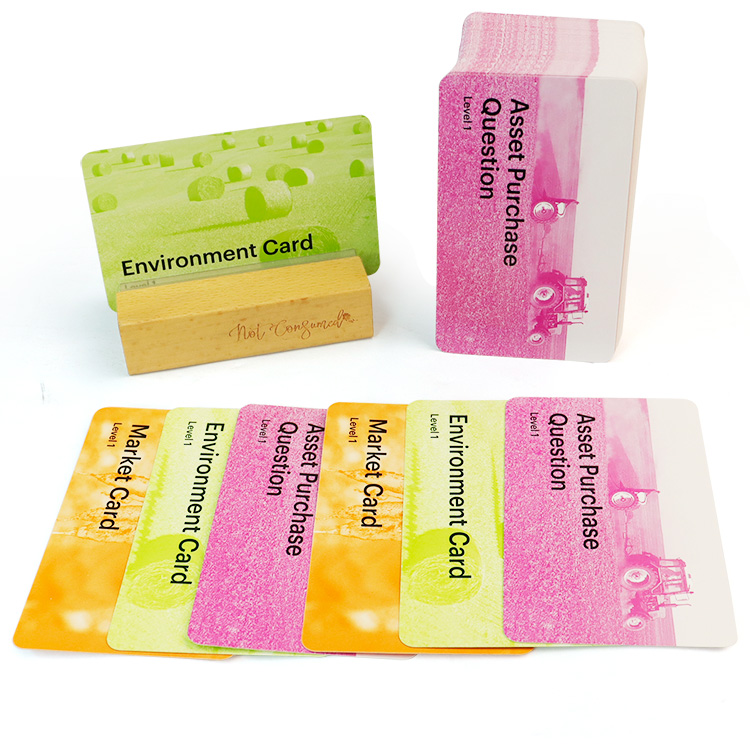
Chapter 4: Measuring What Matters: The ROI of Gamified, Sustainable Learning
Moving beyond smile sheets to track real behavior change and business impact.
-
Tracking Engagement & Usage Analytics
Digital complements to physical series of game cards (e.g., companion apps for session logging) can provide powerful data: Which card series is used most? Which scenarios spark the longest debates? How often are decks being played? This usage data reveals what content is truly resonant and where teams are actively engaging with learning. -
Assessing Behavioral Change through Observable Actions
The proof is in application. Measurement shifts from "Did you like the training?" to:-
Pre/Post-Game Assessments: Knowledge checks built into card games.
-
Manager Observations: Checklists based on card-driven behaviors (e.g., "Used the 'Three-Question Coaching' technique from the leadership deck").
-
Project Integration: Tracking the use of card-based frameworks (like a negotiation strategy card) in actual client pitches or project plans.
-
-
Calculating Long-Term Value vs. Per-Head Cost
The financial model transforms. Instead of a recurring cost per employee per workshop, you have a one-time investment in a scalable asset. The ROI calculation compares the total cost of designing and maintaining the series of game cards library against the cumulative cost of running equivalent traditional workshops for thousands of employees over 3-5 years, factoring in the increased engagement and retention rates. The library model consistently demonstrates superior long-term value. -
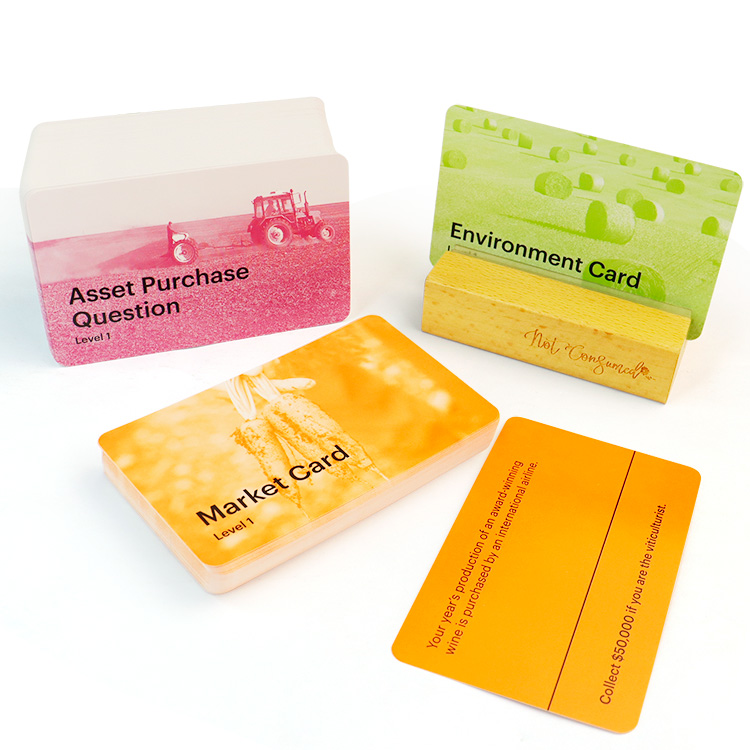
Chapter 5: Building Your Library: A Strategic Implementation Blueprint
A step-by-step guide for L&D leaders to launch their scalable learning ecosystem.
-
Step 1: Pilot with a Pain Point
Identify one high-impact, contained training need (e.g., safety onboarding for a new plant). Develop or procure a targeted series of game cards, run a pilot, and collect robust data on engagement, knowledge gain, and facilitator feedback. -
Step 2: Develop Your Core "Foundation Series"
Based on pilot learnings, build out 2-3 core series that address your organization's perennial needs (e.g., Core Leadership, Foundational Sales, Essential Compliance). This becomes the bedrock of your library. -
Step 3: Train the Facilitator Network
Empower a network of internal facilitators—managers, high-potentials, subject matter experts—by training them on the game mechanics. This decentralizes training delivery, scales impact, and embeds learning directly into teams. -
Step 4: Launch, Iterate, and Expand
Officially launch the library. Establish a governance model for curating new content, releasing expansion packs, and retiring outdated cards. Promote "player stories" and internal champions to drive organic adoption. -
Conclusion: The End of Training as a Cost Center, The Dawn of Learning as an Asset
The future of corporate capability building is not in more eloquent lectures or slicker e-learning modules. It is in creating living systems that people want to use—systems that are social, strategic, and inherently rewarding. A Scalable Learning & Engagement Library built on modular series of game cards achieves this. It transforms learning from a sporadic, forgettable expense into a continuous, appreciating cultural asset.
This is the strategic shift: from purchasing training to investing in a learning infrastructure. It empowers your organization to adapt faster, engage employees more deeply, and turn every team meeting into a potential micro-learning moment. In the race for talent and adaptability, the organizations that win will be those that make learning not a mandatory chapter, but an ongoing, captivating game where everyone can level up.
Your library is waiting to be built. The first card is waiting to be drawn.

The Curated Wild: A Lifestyle Brand's Statement Piece – The Power of Custom Wildflower Playing Cards

Custom Poker Card Printing: How to Choose a Professional Manufacturer for Your Brand
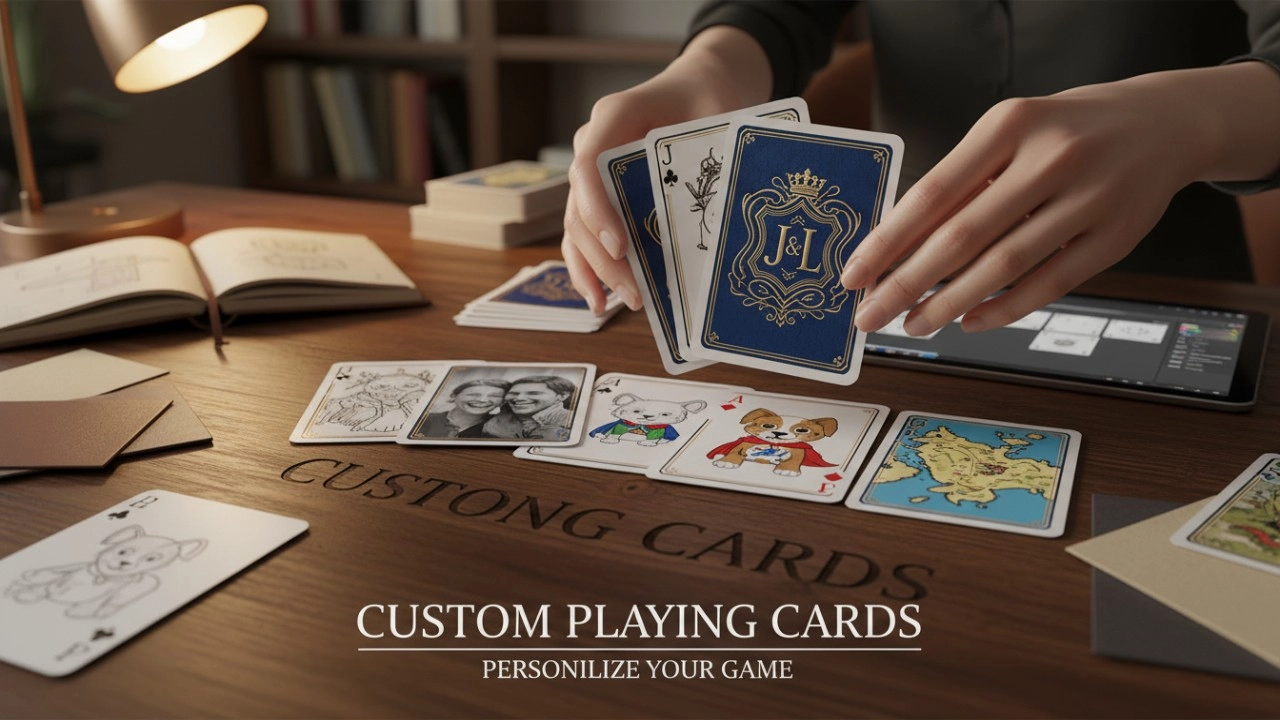
How to Create Your Own Custom Playing Cards: A Step-by-Step Design Tutorial (2026 Edition)
Beyond KEM: The 10 Best Professional Poker Card Brands You Didn't Know About (2026 Edition)

Custom Design Playing Cards: The Ultimate 2026 Guide to Manufacturing and Artistry
About cooperation process
How do you ensure the quality of your cards?
We implement strict quality control measures at every stage of production. Our team conducts thorough inspections to ensure each card meets our high standards before shipping.
About logistics
Can you handle shipping and fulfillment?
Yes! We offer comprehensive fulfillment services, including storage, packing, and shipping. You can rely on us to ensure your cards reach their destination safely and on time.
How long does the production process take?
Production times can vary based on order complexity and volume. Typically, standard orders take 2-4 weeks. For urgent projects, we may offer expedited options—just ask!
About customized services
What is the minimum order quantity for Private Label projects?
Our minimum order quantity usually starts at 500 pairs. However, we can handle smaller orders depending on the specific project requirements.
About price and payment
What payment methods do you accept?
We accept various payment methods, including credit cards, PayPal, and bank transfers. Please reach out for more details on payment options.
WE’D LOVE TO  HEAR
HEAR
FROM YOU
Please send us your inquiry details; our team will contact you ASAP.
20+ years of experience in custom playing cards, game cards, tarot cards, flashcards, and board games, as well as paper and paperboard box manufacturing.