
How to ensure color consistency across large custom game card print runs? | Yuhua Expert Guide
- How to Ensure Color Consistency Across Large Custom Game Card Print Runs?
- 1. What Are the Most Reliable Color Management Techniques for Custom Playing Cards?
- 2. How Does the Choice of Printing Technology Affect Color Consistency?
- 3. How Important Is Paper and Coating Material in Maintaining Color Consistency?
- 4. What Role Does Quality Control Play in Large Print Runs?
- 5. How Can Communication with Your Printer Enhance Color Consistency?
How to Ensure Color Consistency Across Large Custom Game Card Print Runs?
Ensuring color consistency across large print runs of custom game cards is a critical factor in maintaining brand integrity, player experience, and product value. Variations in color can occur due to differences in materials, inks, printing equipment, and environmental conditions. Below are key strategies and expert insights drawn from latest industry data and standards to help gaming companies and custom card manufacturers achieve uniform color output.
1. What Are the Most Reliable Color Management Techniques for Custom Playing Cards?
Color management refers to the process of controlling color from design through printing to final production. The International Color Consortium (ICC) profiles are essential tools for standardizing colors between devices. According to the Printing Industries of America, using calibrated monitors and standardized ICC profiles helps maintain accuracy. Implementing a robust color management workflow, including soft proofing and hardware calibration, minimizes color shifts.
2. How Does the Choice of Printing Technology Affect Color Consistency?
The most common printing methods for custom game cards are offset lithography and digital printing. Offset printing is favored for very large runs due to its stable and repeatable color output, with Pantone Matching System (PMS) inks providing spot colors that maintain consistency within a ΔE of under 2 (a level of difference imperceptible to the human eye). Digital printing offers greater flexibility but can show more variation. Interfacing with your printer to select the best technology upfront is critical.
3. How Important Is Paper and Coating Material in Maintaining Color Consistency?
Substrate significantly impacts final color appearance. High-quality, consistent stock such as 300 gsm smooth card stock reduces ink absorption variation. Coatings like UV or aqueous coatings protect ink and stabilize color reflections. The Paper & Board Association reports that coated stocks improve color vibrancy and uniformity, essential for High Quality game cards.
4. What Role Does Quality Control Play in Large Print Runs?
Implementing stringent quality control measures during printing can catch color deviations early. This includes continuous visual checks, spectrophotometer readings that measure color values against the standard, and maintaining press logs. ISO 12647-2 standards establish control limits for offset printing color consistency, helping define acceptable tolerances for color variation.
5. How Can Communication with Your Printer Enhance Color Consistency?
Open dialogue and clear specifications for color requirements, including Pantone or CMYK references, ensure alignment between the client and printer. Providing physical color proofs and using contract proofs reduces misunderstandings. Modern printers increasingly offer inline color management tools and remote proofing options, making collaboration more efficient.
In summary, achieving color consistency in large custom game card print runs is a combination of meticulous color management, appropriate material choices, effective quality control, and strong communication between clients and printers. Adhering to industry standards such as ICC profiles and ISO 12647-2 can significantly reduce costly color discrepancies in your print products.
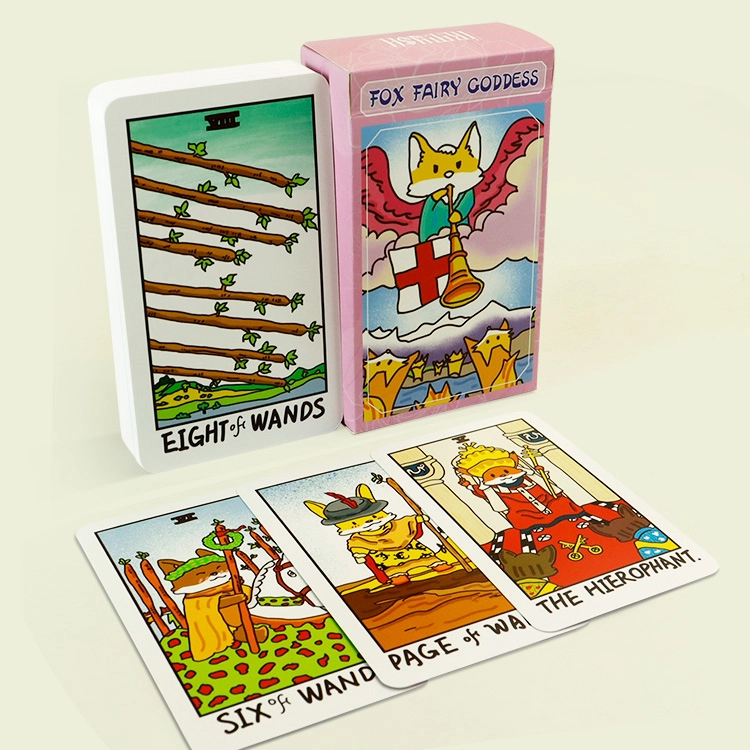
Custom Printing Tarot Cards with fox fairy Goddess on Premium Box for Complete Tarot Cards Deck and Guidebook
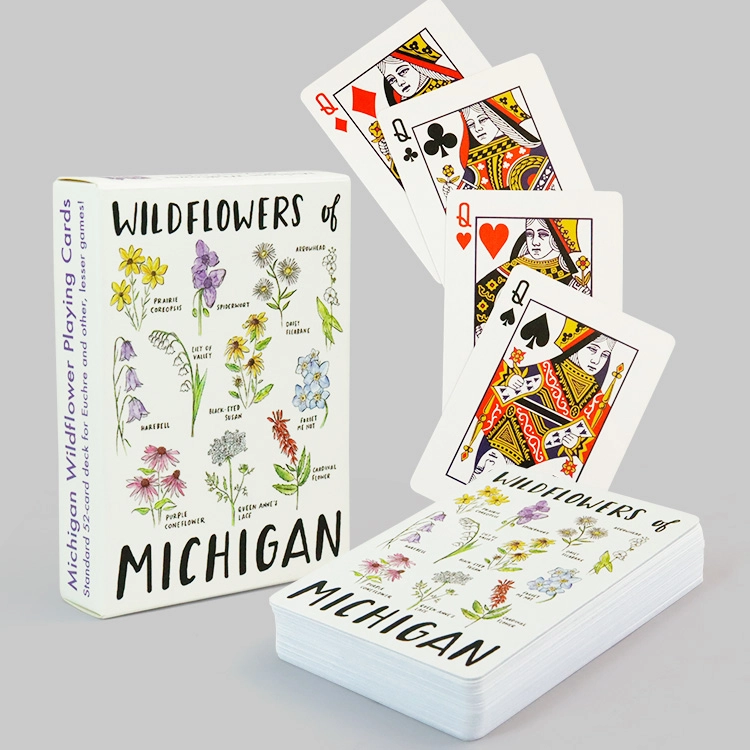
The Curated Wild: A Lifestyle Brand's Statement Piece – The Power of Custom Wildflower Playing Cards
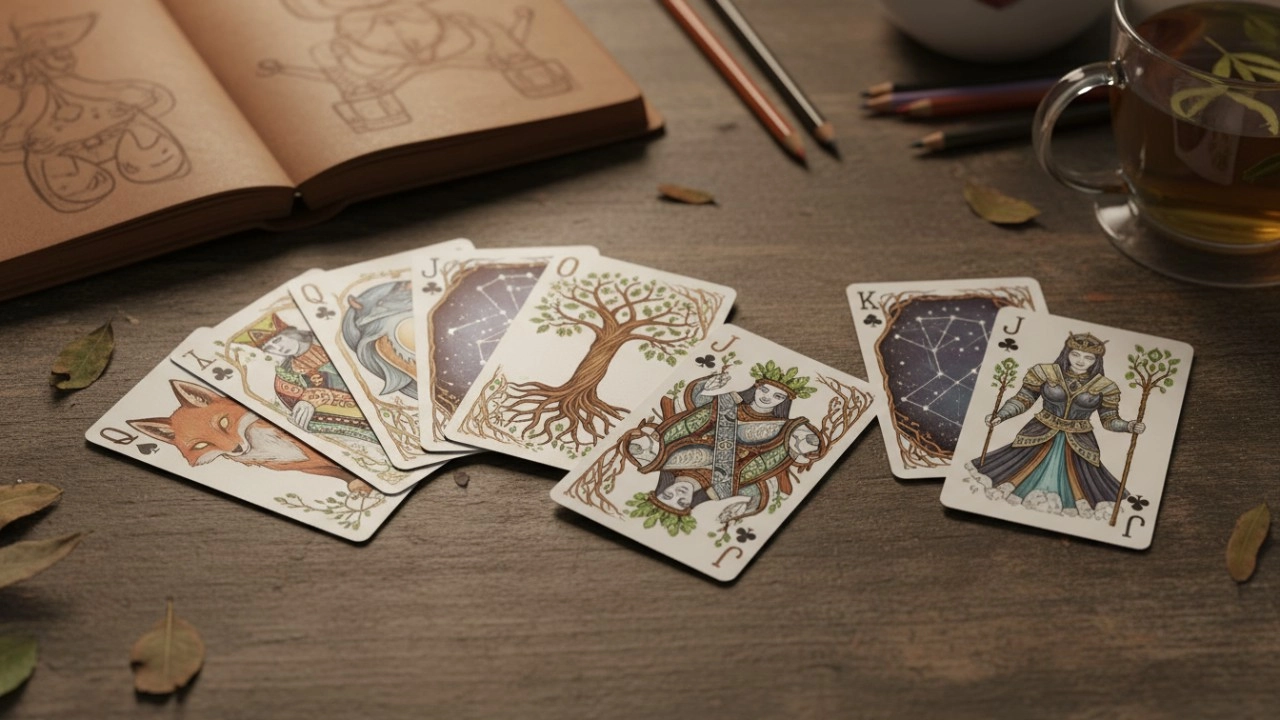
Custom Poker Card Printing: How to Choose a Professional Manufacturer for Your Brand

How to Create Your Own Custom Playing Cards: A Step-by-Step Design Tutorial (2026 Edition)

Beyond KEM: The 10 Best Professional Poker Card Brands You Didn't Know About (2026 Edition)
About cooperation process
How long does the OEM process take?
The time depends on the complexity of the project, but generally OEM orders take about 6 weeks from design confirmation to delivery.
About customized services
Can I see a proof before production?
Yes! We provide digital proofs for your approval before we start production. This ensures that everything meets your expectations.
About price and payment
What are the payment terms?
We require a 30% deposit upon order confirmation and the balance before shipment.
About logistics
Can you handle shipping and fulfillment?
Yes! We offer comprehensive fulfillment services, including storage, packing, and shipping. You can rely on us to ensure your cards reach their destination safely and on time.
How long does the production process take?
Production times can vary based on order complexity and volume. Typically, standard orders take 2-4 weeks. For urgent projects, we may offer expedited options—just ask!


WE’D LOVE TO  HEAR
HEAR
FROM YOU
Please send us your inquiry details; our team will contact you ASAP.
20+ years of experience in custom playing cards, game cards, tarot cards, flashcards, and board games, as well as paper and paperboard box manufacturing.