
Plastic vs. Paper Playing Cards: The Ultimate Guide to Material, Weight, and Feel
- Introduction: The Material Dilemma
- Deep Dive into Paper Card Stock: More Than Just Pulp
- Understanding Weights: 300gsm vs. 310gsm/330gsm
- The Core Difference: Grey, Blue, and Black
- Texture and Finish: Air-Cushion vs. Smooth
- Analyzing Plastic Playing Cards: PVC and Beyond
- Material Composition: 100% PVC vs. Cellulose Acetate
- Thickness and Snap
- Waterproof Capabilities
- Head-to-Head Comparison: Performance Metrics
- Durability & Lifespan
- Shuffling & Handling
- Printability
- Best Use Cases: Choosing by Application
- For Cardistry & Magic
- For Poker Rooms & Casinos
- For Kickstarter & Retail
- Cost Benefit Analysis
- Conclusion
- FAQs
- Contact Us
Introduction: The Material Dilemma
For casino operators, magicians, and game designers, the choice of playing card material is not merely a manufacturing detail—it is the foundation of the user experience. The snap of a card, the smoothness of a shuffle, and the visual opacity under bright casino lights all hinge on one critical decision: Paper vs. Plastic.
The impact of material choice extends beyond tactile satisfaction to brand perception and game integrity. A deck that creases easily or becomes marked after a few hands can ruin a high-stakes poker game, while a deck that is too slippery can destroy a magician's performance. This guide provides a technical breakdown of the industry's leading materials, from the traditional feel of custom playing card materials to the modern resilience of polymers.
Deep Dive into Paper Card Stock: More Than Just Pulp
When we talk about "paper" cards in a professional context, we are rarely discussing a single sheet of pulp. High-end paper cards are sophisticated laminates engineered for specific physical properties.
Understanding Weights: 300gsm vs. 310gsm/330gsm
The density of playing card paper is measured in GSM (Grams per Square Meter). This metric is the standard for paper density, defining the sheet's mass and, by proxy, its stiffness and thickness.
· 300gsm (Standard): widely used for promotional decks and board games. It offers decent snap but lacks the heft required for professional manipulation.
· 310gsm / 330gsm (Professional): This is the sweet spot for casino and magic use. The extra density provides a firmer "snap"—the ability of the card to return to its original flat state after being bent during a shuffle.
The Core Difference: Grey, Blue, and Black
The "snap" and opacity of a paper card come from the core. Professional card stock is composed of two sheets of paper laminated together with an opaque adhesive core.
· Grey Core: The budget option. It offers minimal light blocking and is prone to eventual layer separation.
· Blue Core: A significant step up, often found in retail decks like standard Bicycles. It offers good snap and opacity.
· German Black Core: This is the industry gold standard. Manufactured by leaders like Koehler Paper, 310gsm black core paper contains a high-graphite adhesive layer. This ensures 0% transparency even when held directly against a high-lumen light source—a non-negotiable security feature for casinos to prevent "spotting" cards.
Texture and Finish: Air-Cushion vs. Smooth
Paper cards are rarely left raw. The most famous texture is the "Air-Cushion" (or Linen) finish. This manufacturing process presses a grid of microscopic dimples into the paper. Much like the dimples on a golf ball reduce drag, these air pockets reduce the surface area contact between cards. This creates a cushion of air, allowing for the smooth fans and spreads essential for air-cushion finish durability. Conversely, a "Smooth" varnish finish provides a high-gloss look but tends to clump (stick) in humid environments.
Analyzing Plastic Playing Cards: PVC and Beyond
While paper holds the crown for tradition, plastic dominates in durability. However, not all plastics are created equal.
Material Composition: 100% PVC vs. Cellulose Acetate
· 100% PVC (Polyvinyl Chloride): The most common material for "indestructible" decks. Polyvinyl chloride is a synthetic plastic that is highly durable, waterproof, and cost-effective. It is rigid and snaps back instantly.
· Cellulose Acetate: Often associated with premium brands like KEM, Cellulose acetate is a semi-synthetic bioplastic. It is significantly more expensive to produce than PVC. Its texture is often described as "buttery" and slightly textured, bridging the gap between the plastic durability and the paper feel. However, rare instances show it can be dimensionally unstable in extreme humidity compared to PVC.
Thickness and Snap
Standard plastic cards usually range from 0.30mm to 0.32mm in thickness. The primary advantage here is "memory." A plastic card can be bent to a 90-degree angle (a "peek") thousands of times and spring back to perfectly flat, whereas casino grade card stock (paper) would eventually develop a crease.
Waterproof Capabilities
The decisive factor for poker rooms is liquid resistance. 100% PVC vs cellulose acetate cards share a common trait: they are washable. Spilled drinks, sticky fingers, and food debris can be wiped off with a damp cloth, returning the deck to a playable state immediately.
Head-to-Head Comparison: Performance Metrics
Durability & Lifespan
· Plastic: Lasts approximately 20 to 50 times longer than paper. It is virtually immune to tearing and humidity warping.
· Paper: Vulnerable to moisture. A single spill ruins the deck. High humidity can cause the paper to "swell," ruining the Air-Cushion glide.
Shuffling & Handling
· Friction: Paper cards with an embossed finish have higher friction, which provides control. This is why magicians universally prefer paper; they need the cards to "grip" each other for lifts and sleights.
· The Slide: Plastic cards have a lower coefficient of friction. They slide effortlessly across felt tables, making them ideal for dealers pitching cards across a long poker table. However, this "slipperiness" makes card towers or complex cuts difficult.
Printability
· Paper: Being porous, paper absorbs ink, allowing for deep, rich colors and intricate foil stamping (hot stamping) that fuses with the material.
· Plastic: Non-porous. Inks sit on top of the surface. While modern offset printing on plastic is excellent, it can sometimes lack the organic "warmth" and depth of ink on premium paper.
Best Use Cases: Choosing by Application
For Cardistry & Magic
310gsm Black Core paper is the undisputed champion here. The necessity for crimps (intentional bends), fans, and sleights requires the specific "crush" and friction that only paper provides. Plastic cards are simply too slippery for reliable manipulation.
For Poker Rooms & Casinos
Casinos prioritize game security and ROI. Casino grade card stock (paper) is used for Baccarat and Blackjack where cards are destroyed frequently (sometimes every shoe) to prevent card counting or marking. However, for Texas Hold'em poker rooms where players handle the cards, 100% PVC is the standard. It prevents players from marking cards with fingernails ("nailing") and withstands hours of bending.
For Kickstarter & Retail
For custom deck designers, the choice often comes down to the target audience. Collectors and cardists demand paper (often marketing the specific factory, like USPCC or Cartamundi). Board games often use 300gsm Blue Core paper as a cost-effective middle ground that still feels premium compared to budget grey core.
Cost Benefit Analysis
|
Feature |
Premium Paper (Black Core) |
100% PVC Plastic |
|
Initial Cost |
Moderate ($) |
High ($$$) |
|
Lifespan |
Low (Hours to Weeks) |
High (Months to Years) |
|
Security |
High (0% opacity) |
High (if opacity tested) |
|
Feel |
Superior (Tactile, textured) |
Synthetic (Smooth, cold) |
For a home game, a $5 paper deck might need replacing every month. A $15 plastic deck might last two years. The ROI heavily favors plastic for gameplay. However, for the art of cards, paper is irreplaceable.
Conclusion
Ultimately, the choice between plastic and paper playing cards depends on your end-user's environment. If you prioritize the tactile tradition of magic and cardistry, 310gsm Black Core paper is the undisputed champion. However, for high-traffic poker rooms requiring washable, indestructible durability, 100% PVC plastic offers the best long-term value. When manufacturing your custom playing card materials, consider requesting samples of both finishes to ensure the 'snap' meets your professional standards.
FAQs
What is the difference between PVC and Cellulose Acetate playing cards?
PVC cards are highly durable and resistant to bending, making them the standard for plastic decks. Cellulose Acetate (often used by brands like KEM) is a bio-plastic that feels more like paper and has superior texture, but it can be more sensitive to humidity and is significantly more expensive to produce.
Why do magicians prefer paper over plastic cards?
Magicians prefer paper cards, specifically those with an Air-Cushion finish, because the microscopic air pockets create friction. This allows for precise control during sleights, fans, and shuffles, whereas plastic cards are often too slippery for complex manipulation.
What does 'GSM' mean in playing card quality?
GSM stands for 'Grams per Square Meter' and measures paper density. A higher GSM (like 310gsm or 330gsm) generally indicates a thicker, stiffer, and more durable card with a better 'snap' than lower budget weights like 280gsm.
Are plastic playing cards worth the extra cost?
Yes, for gameplay purposes. While plastic decks cost 2-5 times more upfront than paper, they can last 20-50 times longer because they are waterproof, washable, and resistant to creasing, offering a better Return on Investment (ROI) for frequent players.
Contact Us
Ready to manufacture your perfect deck? Contact us today to request a material sample kit and let our experts guide you to the ideal card stock for your brand.
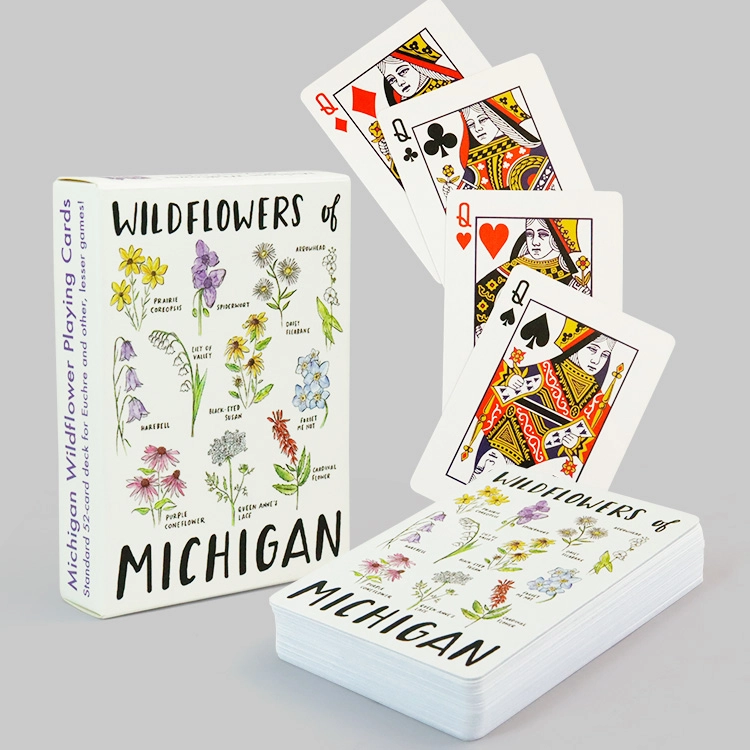
The Curated Wild: A Lifestyle Brand's Statement Piece – The Power of Custom Wildflower Playing Cards
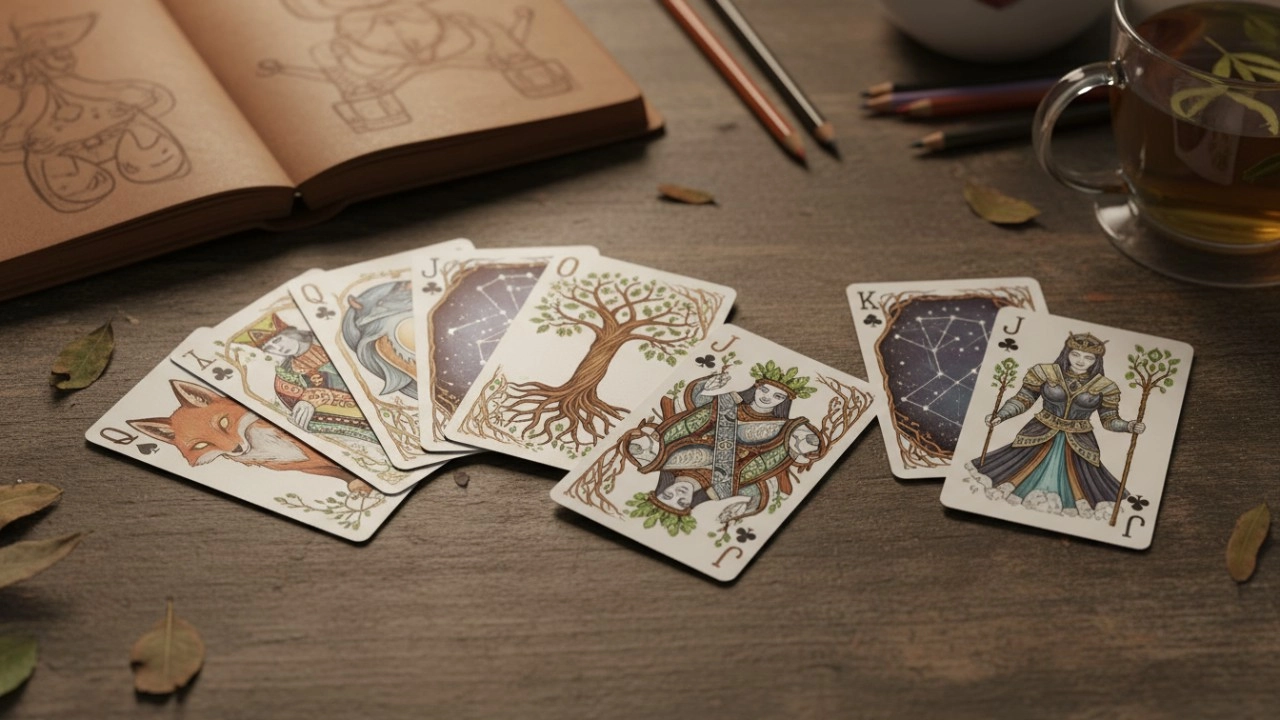
Custom Poker Card Printing: How to Choose a Professional Manufacturer for Your Brand
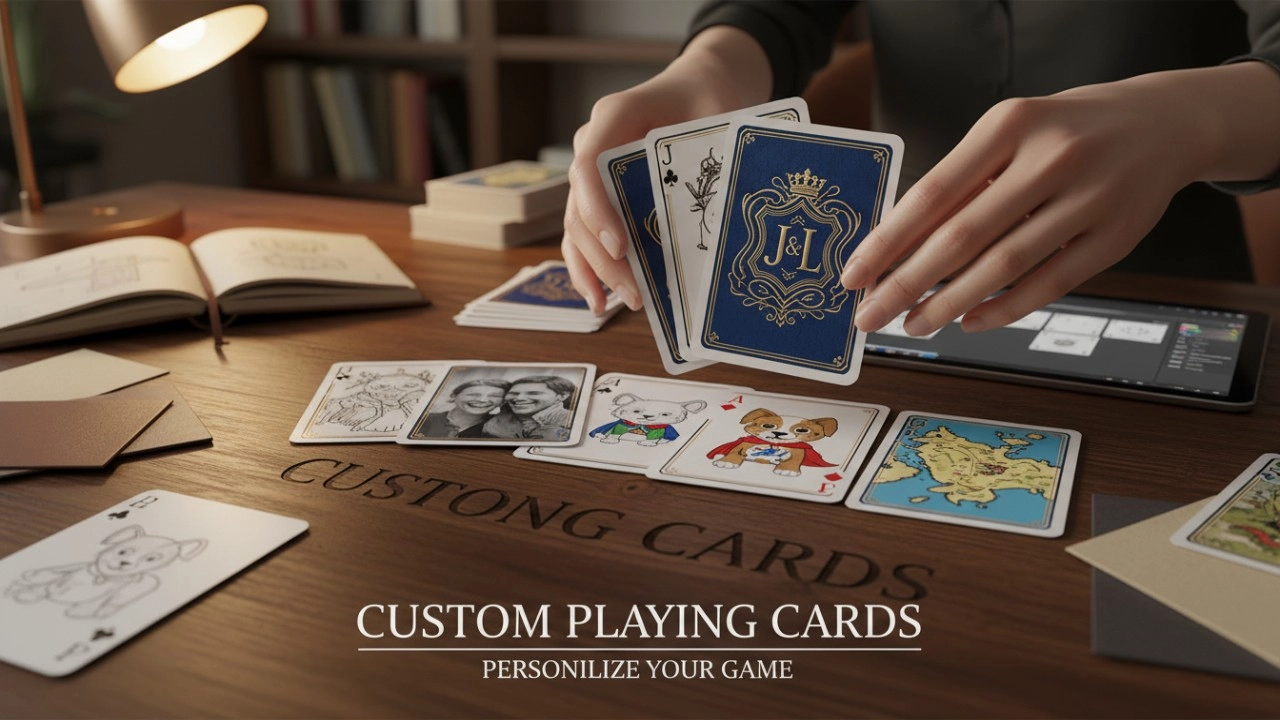
How to Create Your Own Custom Playing Cards: A Step-by-Step Design Tutorial (2026 Edition)

Beyond KEM: The 10 Best Professional Poker Card Brands You Didn't Know About (2026 Edition)
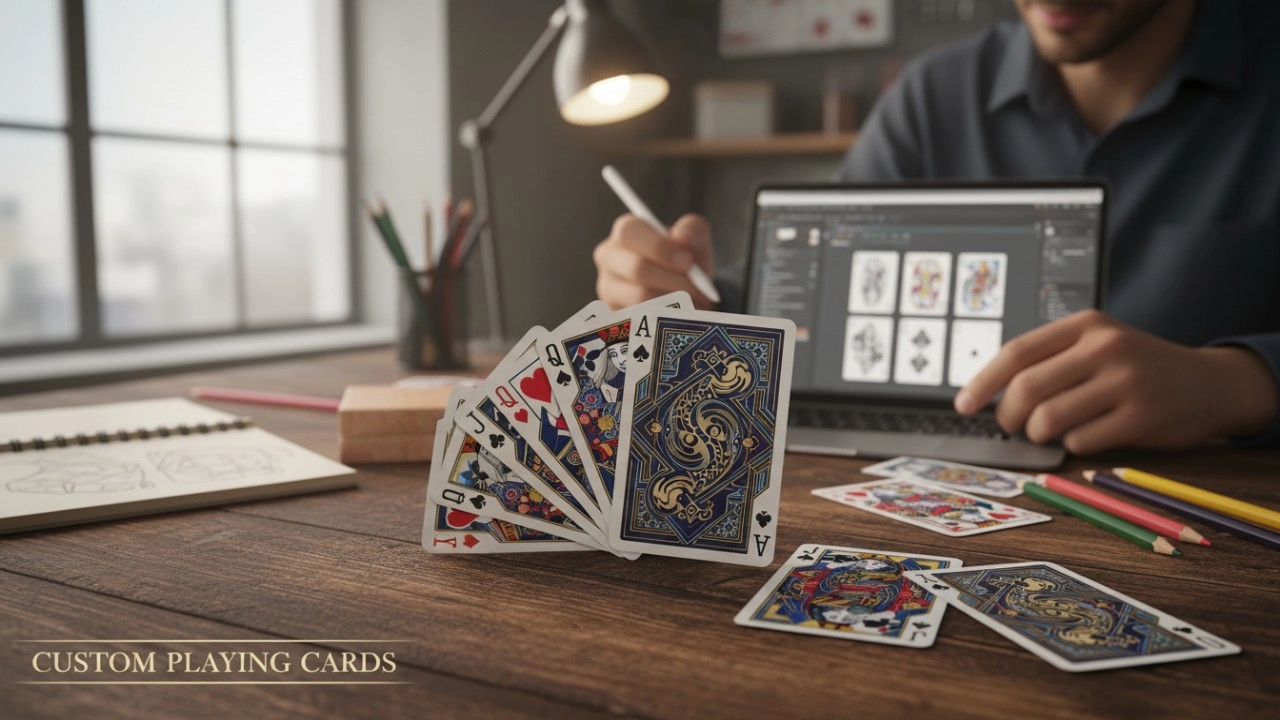
Custom Design Playing Cards: The Ultimate 2026 Guide to Manufacturing and Artistry
After-sales support
Do you offer eco-friendly options?
Yes, we do offer eco-friendly materials and printing options. Please inquire about our sustainable options.
What is your return policy?
We stand behind the quality of our products. If you receive a defective item, please contact us within 30 days for a replacement or refund. Customized orders are generally non-refundable unless there's an error on our part.
About customized services
Can I see a proof before production?
Yes! We provide digital proofs for your approval before we start production. This ensures that everything meets your expectations.
About product selection
Can I see a sample before a full order?
Yes, we will provide a prototype sample for your review to ensure you are satisfied with the final product.
Is there a design template I can use?
Yes, we provide design templates for different card types. You can download them from our website or request them directly from our team.

WE’D LOVE TO  HEAR
HEAR
FROM YOU
Please send us your inquiry details; our team will contact you ASAP.
20+ years of experience in custom playing cards, game cards, tarot cards, flashcards, and board games, as well as paper and paperboard box manufacturing.